- Call us Via Whatsapp: +84 (0) 832 126 699
4.9 stars on our site
(15,000 reviews)
- Monday - Sunday : 08:00 - 17:00
(15,000 reviews)

Deciding between two legendary mountain frontiers presents an extraordinary dilemma for adventure cyclists seeking the ultimate two-wheeled voyage across Southeast Asia. When evaluating Ha Giang vs Cao Bang Cycling: Which Is Better?, riders are forced to choose between two fundamentally distinct high-altitude worlds. On one side stands Ha Giang, a domain of sheer vertical drama, razor-sharp karst pinnacles, and world-famous alpine passes that demand raw physical exertion and iron resolve. On the other side lies Cao Bang, a serene paradise of rolling emerald valleys, rushing river basins, thunderous borderland waterfalls, and quiet backcountry tracks winding through ancient geological geoparks.
As your tires bite into damp granite gravel, crushed slate, and serpentine mountain tarmac, the crisp alpine air fills your lungs with the intoxicating scent of wild pine needles, damp earth, blooming mountain orchids, and fragrant woodsmoke drifting from remote timber stilt houses. The rhythmic, satisfying click of your cassette dropping gears echoes off sheer granite walls, blending with the crunch of road gravel under rubber, your own steady breathing, and the distant roar of mountain torrents. Every grueling climb and sweeping downhill descent turns into a visceral cinematic masterpiece, where every drop of sweat and every watt of power output is rewarded with breathtaking vistas across Vietnam's wild northern frontier.
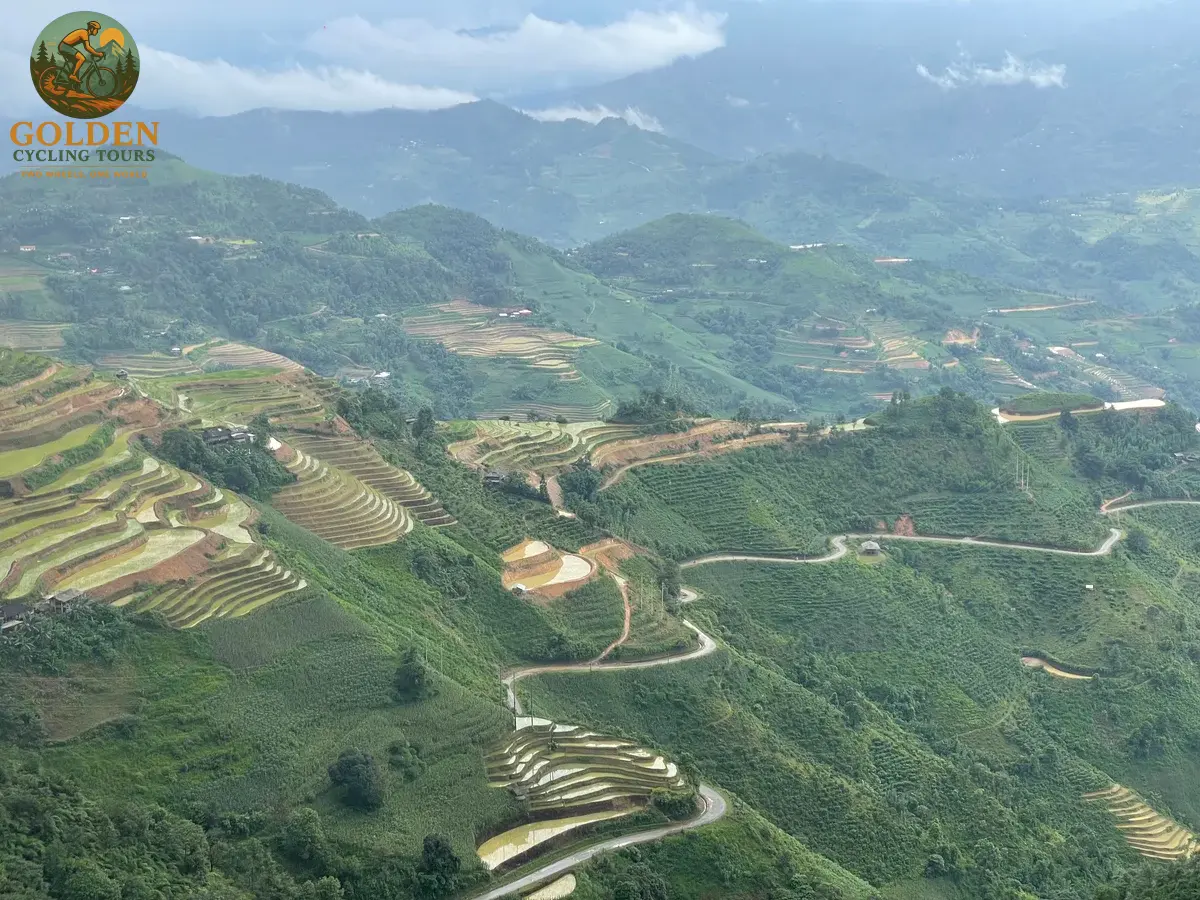
Reading this complete master travel guide prepares you for a life-changing expedition with Golden Cycling Tours. Understanding how these two frontier provinces compare allows you to align your journey with your personal riding style, physical conditioning, and cultural desires. When considering Ha Giang vs Cao Bang Cycling: Which Is Better?, the answer lies in whether your soul craves relentless vertical elevation or smooth, undulating karst exploration.
Comparing the physical riding conditions of Ha Giang and Cao Bang highlights two unique topography profiles engineered to test different aspects of a cyclist's athleticism.
Choosing Ha Giang means embracing a high-altitude arena celebrated as Asia's most demanding cycling test. The terrain inside Dong Van Karst Plateau Geopark consists of massive limestone monoliths rising abruptly out of deep gorges. Daily itineraries feature cumulative vertical climbs ranging from 1,500 to 2,500 meters, with relentless 10 to 14 percent gradients that force riders to drop into their lowest gears and maintain disciplined cadence control. Switchbacks ascend continuously into cloud-wrapped summit ridges, where single-track dirt bypasses and damp tarmac demand sharp bike handling skills and physical stamina. The descents are technical and exhilarating, dropping past vertical rock walls and canyon drop-offs that ignite your adrenaline.
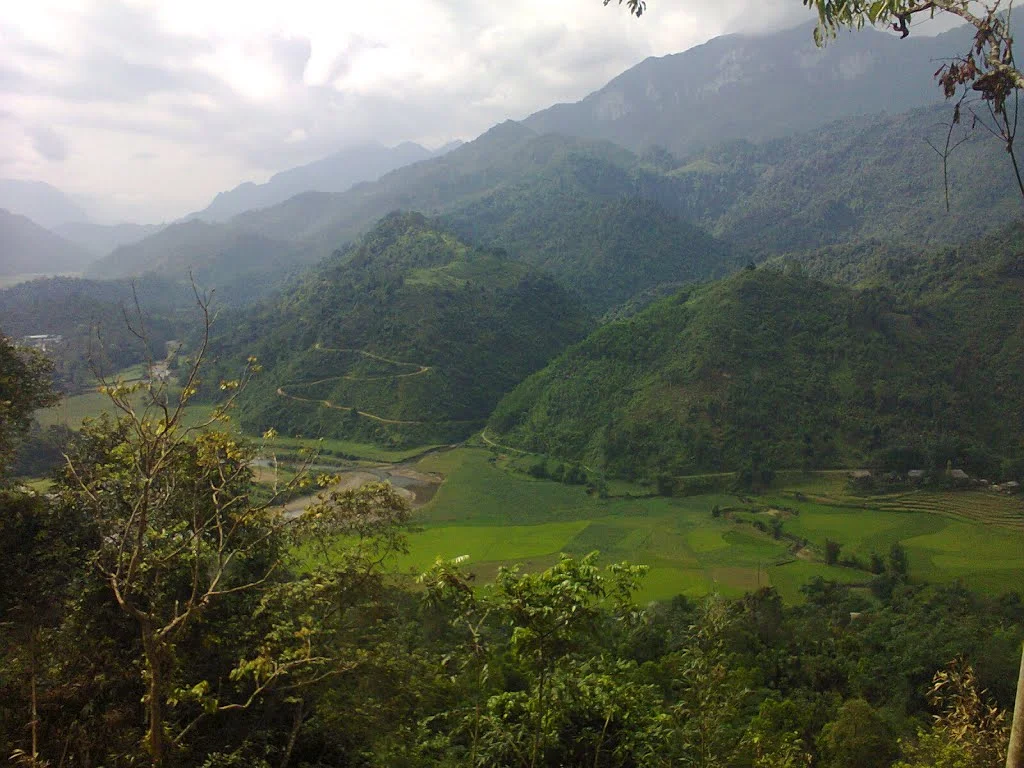
In contrast, Cao Bang delivers a fluid, harmonious riding experience through Non Nuoc Cao Bang Geopark. While Cao Bang features challenging climbs over mountain ridges, its daily elevation gains are more gradual, averaging 800 to 1,400 meters per day. The routes wind gracefully along sparkling river corridors like Qua Quay River, traversing smooth valley floors surrounded by dome-shaped karst towers and lush bamboo groves. The roads combine quiet asphalt connectors with unpaved double tracks and gravel country lanes, making Cao Bang an ideal terrain for long-distance endurance pacing, gravel frame efficiency, and riders who prefer sweeping valley vistas over sheer vertical drop-offs.
Evaluating Ha Giang vs Cao Bang Cycling: Which Is Better? ultimately comes down to physical pacing. Ha Giang tests your maximum power output and climbing resilience on steep ramps, while Cao Bang rewards rhythmic endurance riding, allowing you to absorb the surrounding natural beauty with less physical fatigue.
Timing your journey guarantees dry trail traction, comfortable riding temperatures, and breathtaking countryside horizons across both provinces.
Autumn is widely recognized as the undisputed peak season for cycling in Northern Vietnam. Crisp mountain air, stable sunny skies, and low humidity create ideal riding weather across high plateaus. During October and November, vibrant pink buckwheat blossoms bloom across stone-walled mountain slopes in Sung La Valley, while golden rice paddies cascade down Hoang Su Phi Terraced Rice Fields in Ha Giang and line the riverbanks of Trung Khanh in Cao Bang. Mild ambient temperatures keep physical overheating at bay during heavy climbing efforts.
Spring brings fresh energy to both provinces as winter mists recede. Wild pink peach blossoms, pristine plum blossoms, and bright yellow mustard fields carpet countryside hamlets. Gentle breezes and comfortable temperatures make long climbing days over Quan Ba Pass in Ha Giang or Ma Phuc Pass in Cao Bang exceptionally invigorating for road and gravel cyclists.
Summer offers lush green mountain landscapes, dramatic cloudscapes, and refreshing afternoon showers that clear the air quickly, leaving trail surfaces dust-free. Rushing cascades like Du Gia Waterfall and Ban Gioc Waterfall flow at full, roaring volume. Winter brings cooler alpine temperatures and ethereal mountain mists hanging over limestone crags, creating a cozy atmosphere for riders equipped with quality windproof thermal apparel.
Both regions showcase world-famous geographical wonders, dramatic mountain passes, and rich cultural monuments.
Starting from Ha Giang City, your route ascends toward Quan Ba Pass, famously known as Heaven Gate. Stopping at the ridge viewpoint, gaze down at the majestic Quan Ba Twin Mountains rising gracefully out of emerald rice paddies in the valley below.
Venturing deeper into the limestone kingdom, conquer the famous serpentine switchbacks of Tham Ma Pass. This climb leads directly into Sung La Valley, home to ancient clay-walled H'Mong houses and flower fields. Nearby, explore the historical Hmong King's Palace (Dinh Nho Vuong) in Sa Phin, constructed from solid pine timber and hand-carved stone.
The undisputed highlight of Ha Giang is conquering Ma Pi Leng Pass, recognized as one of Northern Vietnam's four great mountain passes. Hanging high above the cliff edge, pedal along the sky path as the turquoise waters of the Nho Que River carve through Tu San Canyon thousands of feet below. Extend your route north to Lung Cu Flag Tower, perched atop Dragon Mountain at Vietnam's northernmost border, before descending into Meo Vac Town and winding toward the natural spring pools of Du Gia Waterfall in Du Gia Village.
Beginning in Cao Bang City, the trails lead into the heart of Non Nuoc Cao Bang Geopark. Shift down gears to conquer the winding curves of Ma Phuc Pass and Khau Lieu Pass, where mountain roads cut through limestone towers.
Pedal along the banks of the turquoise Qua Quay River toward Trung Khanh, arriving at the thunderous Ban Gioc Waterfall, one of the world's most magnificent international border cascades. Pause your ride to explore Nguom Ngao Cave, a vast underground cavern filled with ancient stalactites.
Route west toward historical sanctuaries, pedaling quiet backroads to Pac Bo Cave, nestled at the foot of Karl Marx Mountain beside the crystal-clear waters of Lenin Stream. Continue through tranquil valley loops past Thang Hen Lake, where emerald mountain waters reflect sheer limestone crags.
Cycling at human speed fosters intimate cultural connections with local communities across both regions.
Ha Giang is home to high-altitude ethnic groups including the H'Mong, Dao, Tay, and Giay people. Observing local stilt-house villages and stone-walled homesteads gives cyclists an authentic glimpse into centuries-old traditions adapted to harsh mountain environments. Cao Bang is predominantly inhabited by the Tay and Nung communities, famous for their warm hospitality, wooden stilt houses built along river basins, and traditional handicraft villages like blacksmithing and incense-making hamlets.
Time your ride to experience traditional morning gatherings like Dong Van Market or Meo Vac Market in Ha Giang, or Trung Khanh Market in Cao Bang. Tribal villagers dressed in colorful, hand-embroidered attire gather to exchange handcrafted silver jewelry, woven textiles, mountain herbs, and farm goods.
Fueling your body with wholesome, dense nutrition is essential during demanding riding stages across Northern Vietnam.
Refuel after demanding passes with steaming bowls of free-range mountain chicken soup, tender local pork seasoned with wild mountain pepper (Mak Khen), fragrant bamboo-cooked sticky rice (Xoi Lam), and charcoal-grilled skewers. In Ha Giang, adventurous foodies can try traditional H'Mong dishes like Thang Co (spiced mountain herb stew) or steamed corn meal (Men Men). In Cao Bang, savor local specialties such as roasted duck with honey glaze (Vit Quay Cao Bang), sticky rice cakes (Banh Co Keng), and sour rice noodles (Pho Chua).
Warm up during ride stops with hot cups of local Shan Tuyet tea, harvested from ancient wild tea trees growing high on Tayson Mountain. In the evenings, join host families in enjoying small cups of aromatic corn wine (Ruou Ngo) or fermented cassava wine.
Restful nights guarantee you wake up energized for every morning climb.
Experience genuine mountain warmth in traditional wooden stilt houses in Du Gia Village, Tha Village, or Hoang Su Phi in Ha Giang, and Quang Uyen or Trung Khanh in Cao Bang. Enjoy comfortable mattresses, clean linens, hot showers, delicious family-style dinners, and the tranquil sounds of nature at night.
In regional centers like Dong Van Town, Meo Vac Town, or Cao Bang City, charming boutique hotels and eco-lodges offer plush beds, private bathrooms, Wi-Fi, and scenic balconies overlooking karst peaks and river valleys.
Executing a seamless expedition across Ha Giang or Cao Bang requires detailed planning, expert mechanics, and professional support fleets.
Comfortable sleeper buses and private limousine vans transfer cyclists and gear directly from Hanoi to Ha Giang City (approx. 6 hours) or Cao Bang City (approx. 6.5 hours), establishing a fast and comfortable start to your adventure.
Every expedition organized by Golden Cycling Tours is shadowed by a dedicated air-conditioned support vehicle. The support van transports all heavy luggage, carries spare mechanical parts and tools, stocks cold water and fresh fruit, and offers comfortable seating whenever a cyclist wants a rest.
Cyclists are equipped with high-performance hardtail or full-suspension mountain bikes and gravel frames featuring hydraulic disc brakes, wide gearing ratios, and tubeless tires. Modern pedal-assist electric options are also available on Vietnam e-bikes tours, allowing mixed-ability groups to tackle legendary climbs like Ma Pi Leng Pass or Ma Phuc Pass together.
Both regions seamlessly connect into broader regional biking expeditions across the country.
Combine your journey on dedicated ha giang bike tours or cao bang bike tours with comprehensive cycling Northern Vietnam routes or explore neighboring peaks on Vietnam Northeast bike tours.
Discover nearby high-altitude mountain trails on sapa bike tours under Fansipan Peak and over O Quy Ho Pass, or explore vibrant ethnic trading centers on bac ha bike tours.
Riders seeking lower-elevation valley transitions can explore historical mountain passes on Vietnam Northwest bike tours over Pha Din Pass and Khau Pha Pass, pedal gentle village paths on mai chau bike tours, cycle past giant bamboo water wheels on pu luong bike tours, or cruise around ancient limestone peaks on ninh binh bike tours.
Begin your adventure in the capital on hanoi bike tours before heading north. Embark on epic cross-country multi-week journeys like Cycling North to South Vietnam, follow historical mountain roads on ho chi minh trail cycling tours, or experience high-end eco-resort comfort on Vietnam luxury bike tours.
"When comparing Ha Giang vs Cao Bang Cycling: Which Is Better?, I realized both offer incredible rewards. Ha Giang gave us the ultimate mountain climbing rush over Ma Pi Leng Pass, while Cao Bang's ride to Ban Gioc Waterfall was breathtakingly serene. Golden Cycling Tours organized seamless van support for both!" — David M., United Kingdom
"We booked a combined Northern Vietnam tour. Cycling through Cao Bang's lush river valleys was a wonderful warm-up before tackling the intense vertical switchbacks of Tham Ma Pass in Ha Giang. Having full support van backup made the whole trip stress-free!" — Sarah & Liam T., Australia
For intermediate cyclists or those who prefer rolling terrain with manageable climbs, Cao Bang is generally easier and more forgiving. Ha Giang requires stronger climbing endurance due to continuous steep gradients and heavy elevation gains.
Yes! Golden Cycling Tours offers grand multi-day itineraries that link Ha Giang directly to Cao Bang via Bao Lac, allowing you to experience the extreme vertical peaks of Ha Giang followed by the lush river valleys and cascades of Cao Bang.
No. Main luggage remains secure inside the air-conditioned support vehicle and is delivered directly to your room each afternoon. You only carry personal items like a wind jacket or camera in a small daypack or handlebar bag.
Pack high-performance moisture-wicking jerseys, quality padded bib shorts, arm sun sleeves, sunglasses, a lightweight rain shell, cycling gloves, and sturdy footwear. Warm thermal layers are recommended for cool mountain evenings.
For detailed itineraries, custom training departures, and group bookings, contact Golden Cycling Tours to reserve your adventure today.

.jpg "Cycling in Vietnam in March")
.jpg "Vietnam mountain bikes Trail")
.jpg "Vietnam Biking Trails")
.jpg "Ha Giang Cycling Tours")
Leave a Reply
Your email address will not be published. Required fields are marked *