- Call us Via Whatsapp: +84 (0) 832 126 699
4.9 stars on our site
(15,000 reviews)
- Monday - Sunday : 08:00 - 17:00
(15,000 reviews)

Imagine the electric chill of early morning mountain mist brushing against your warm skin as you click into your pedals at the edge of Southeast Asia's most dramatic frontier. Your tires hum softly on smooth asphalt before biting into tight alpine curves. With every breath, your lungs fill with the crisp, resinous scent of high-altitude pine forests, damp limestone, and woodsmoke drifting from remote timber hamlets. Above you, towering black karst monoliths pierce the sky like giant jagged teeth. Below, deep river gorges echo with the thunder of pristine turquoise waters. Your legs find a rhythmic drive, your cassette clicks seamlessly through gears, and your heart surges with pure adrenaline as you tackle the legendary switchbacks of Northern Vietnam.
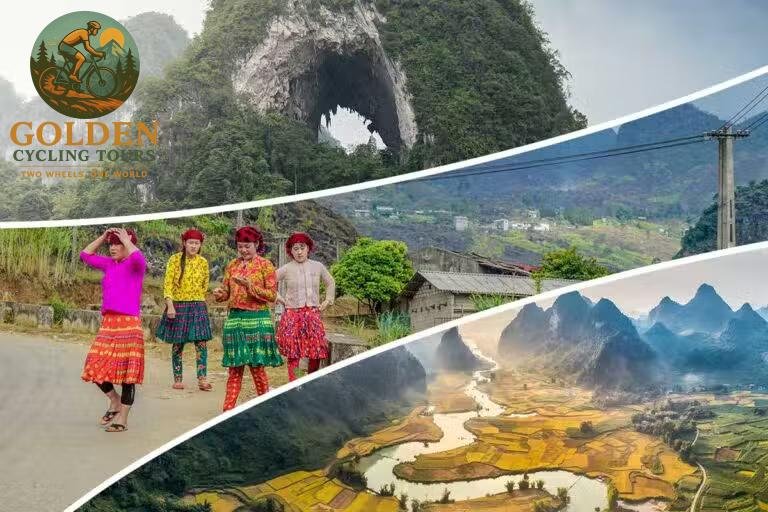
Embarking on a Ha Giang Loop Bike Tour: 5-Day Guided Adventure for Cyclists is far more than a physical challenge; it is an epic, sensory-rich pilgrimage through raw nature, ancient geological formations, and vibrant indigenous cultures. Designed for passionate riders, fitness enthusiasts, and adventurous souls, this carefully curated itinerary delivers five unforgettable days of world-class mountain riding supported by expert local guides and dedicated support vehicles.
Whether you prefer pushing your limits on lightweight gravel bikes or cruising over steep alpine ascents with high-performance pedal assistance from Golden Cycling Tours, this ultimate guide breaks down everything you need to know about navigating Vietnam's ultimate cycling bucket list.
Conquering the rugged terrain of extreme Northern Vietnam requires planning, technical support, and deep local insight. A structured 5-day itinerary offers the perfect balance between high-octane riding and immersive cultural discovery.
The limestone mountains of Northern Vietnam present continuous elevation challenges that demand respect. Across five action-packed days, riders cover roughly 350 to 400 kilometers while ascending thousands of vertical meters. Riding with a professional guide ensures optimal pacing, mechanical support, and expert navigation through complex mountain passes.
Navigating steep mountain descents is infinitely more enjoyable when you ride unencumbered by heavy panniers. A dedicated support van follows your group every kilometer of the way, carrying your luggage, mechanical spare parts, fresh fruit, cold water, and electrolyte hydration packs. Should fatigue or unpredictable weather strike, you can instantly step into the air-conditioned support vehicle and rest.
Traveling through the home of over 17 distinct ethnic minority groups requires cultural sensitivity and knowledge. Guided expeditions unlock authentic homestay experiences, private traditional meals, and meaningful interactions with local H'Mong, Tay, Red Dao, and Lolo families that solo travelers often miss.
Distance: Approximately 75 km | Elevation Gain: +1,650 m
Your multi-day expedition begins in Ha Giang City, where crisp morning valley air welcomes you at dawn. After a thorough equipment check and bike fitting by your lead mechanic, you roll out onto the winding tarmac following the emerald waters of the Lô River.
The road begins its relentless climb toward Quan Ba Heaven's Gate (Cổng Trời Quản Bạ). Your quads burn pleasantly as you conquer switchback after switchback, surrounded by steep limestone cliffs clad in wild bamboo. Cresting the summit at over 1,000 meters above sea level, a dramatic panorama opens below. The famous twin domes of the Quan Ba Twin Mountains (Núi Đôi Quản Bạ) rise gracefully from the fertile valley floor like sculpted green velvet.
After a refreshing descent into Tam Son Town for a lunch of fragrant wild herbs and grilled mountain pork, the afternoon route leads through narrow pine forests and quiet river canyons before ascending toward the highland settlement of Yen Minh. As dusk settles, you arrive at a peaceful eco-lodge nestled among timber trees, where hot showers and a feast of stir-fried forest mushrooms await.
Distance: Approximately 65 km | Elevation Gain: +1,850 m
Day two thrusts you directly into the heart of the UNESCO-protected Dong Van Karst Plateau UNESCO Global Geopark. Leaving Yen Minh, the road immediately tilts upward into the iconic S-curve ribbons of Tham Ma Pass. The rhythmic click of shifting gears echoes off vertical rock walls as local H'Mong children in bright hand-woven clothing wave from roadside flower patches.
Topping out on Tham Ma Pass, you pause to take in the dramatic serpentine pavement below before rolling down into Sung La Valley. Known as the "valley where flowers bloom on stone," this picturesque haven features traditional rammed-earth houses, vast fields of pink buckwheat blossoms, and the historic Pao's House (Nhà của Pao).
The afternoon ride pushes higher through the sharp switchbacks of Chin Khoanh Pass before entering the historic enclave of Dong Van Ancient Town. You will check into your charming boutique hotel or traditional H'Mong timber lodge before strolling through centuries-old stone streets lined with red paper lanterns and yellow adobe walls.
Distance: Approximately 85 km | Elevation Gain: +2,100 m
This is the undisputed crown jewel of the entire journey. Your morning begins with an optional loop toward Lung Cu Flag Tower, the symbolic northernmost point of Vietnam perched atop Dragon Mountain (Núi Rồng). Looking out from the top of the tower, you can gaze across the international border into mainland China while mountain breezes whip through the massive Vietnamese red flag above.
Returning through high-altitude karst fields, you tackle the grand monarch of Vietnamese mountain passes: Ma Pi Leng Pass. Carved directly into sheer vertical cliffs thousands of feet above the earth, this legendary 20-kilometer ledge offers jaw-dropping vistas into the abyssal depths of Tu San Canyon, the deepest canyon in Southeast Asia.
Below your handlebars, the unbelievable turquoise ribbon of the Nho Que River cuts through giant black cliffs. The wind rushes through your helmet, the scent of crushed granite lingers in the air, and every pedal stroke fills you with awe. A thrilling, technical descent leads down to the riverbank, where an optional wooden boat ride brings you right into the shadow of the colossal canyon walls. The day concludes in the bustling mountain trading hub of Meo Vac.
Distance: Approximately 75 km | Elevation Gain: +1,400 m
Leaving Meo Vac, the route veers into remote, off-the-beaten-path territory where concrete roads yield to rougher asphalt, loose gravel patches, and undulating roller-coaster ridges. You climb past dramatic geological terraces toward Mau Due, taking in panoramic views of deep agricultural valleys worked by hard-working Dao and Tay farmers.
The ride into Du Gia Valley is an sensory spectacle of pristine emerald nature. As you descend from high mountain ridges into lower alpine basins, the air grows warmer and carries the lush aroma of banana plants, wet ferns, and freshwater streams. Cascading mountain rivers cross beneath rustic wooden bridges, leading you into a idyllic realm of wooden stilt villages.
You arrive at a traditional Tay ethnic homestay elevated on tall wooden stilts beside shimmering rice paddies. After shedding your riding gear, take a refreshing plunge into the natural emerald pools of Du Gia Waterfall, followed by a hearty communal family dinner filled with laughter and endless toasts of local corn wine.
Distance: Approximately 70 km | Elevation Gain: +1,100 m
Your final morning opens with the soothing symphony of crowing roosters, trickling stream water, and morning birdsong. After a hearty breakfast of warm banana pancakes and strong Vietnamese drip coffee, you clip in for the final leg back toward the provincial capital.
The route climbs steady mountain passes before offering a long, thrilling descent through the deep bamboo canyons of Thuan Hoa. Your quads hum with five days of hard-earned strength, and a deep sense of accomplishment washes over you as the familiar outlines of Ha Giang City re-emerge along the riverbank.
Upon completing the loop, celebrate your epic achievement over a celebratory lunch with your guides and driver before boarding a luxury limousine van or overnight sleeper bus back to Hanoi.
To expand your regional journey across Vietnam, consider combining this tour with broader alpine circuits such as Cycling Northern Vietnam or exploring adjacent highland regions via Sapa bike tours and Bac Ha bike tours.
Timing your adventure correctly ensures dry road conditions, high visibility, and comfortable riding temperatures across the mountains.
Autumn is universally recognized as the absolute best season for high-altitude mountain cycling. As the summer monsoon rains recede, clear blue skies and cool daytime temperatures (15°C to 22°C) take over. September brings golden rice harvests across the steep terraces of Hoang Su Phi, while October and November showcase vibrant carpets of pink and purple buckwheat blossoms across Dong Van and Sung La Valley. Road surfaces are dry and grippy, ensuring safe descents.
Spring brings a refreshing surge of green vitality to Northern Vietnam. Daytime temperatures range between 18°C and 25°C, providing ideal conditions for long climbing miles. Mountainsides erupt in delicate white plum blossoms and soft pink peach flowers around Quan Ba and Meo Vac. Rain showers are infrequent during early spring, making it an exceptional window before summer heat arrives.
Winter brings raw, cold mountain conditions with temperatures dropping below 5°C at higher elevations near Lung Cu Flag Tower. Thick layers of mist often drift through Quan Ba Heaven's Gate, creating a mysterious, atmospheric atmosphere. While thermal layering and quality winter cycling gloves are essential, winter offers quiet roads and unforgettable evenings around warm hearth fires inside rammed-earth homestays.
Summer features heavy rain showers, high humidity, and temperatures reaching 30°C in valley floors. While sudden rainstorms require cautious riding on steep passes, summer transforms waterfalls like Du Gia Waterfall into roaring cascades and turns the terraced hillsides into shimmering emerald mirrors during the pouring water season.
Plan your optimal travel window with specialized region-wide itineraries through Ha Giang bike tours.
The journey from Hanoi to the starting hub in Ha Giang City takes roughly 5 to 6 hours via modern expressways. Professional tour operators coordinate seamless door-to-door transfers using comfortable VIP limousine vans or luxury sleeper buses equipped with spacious luggage holds for bicycle boxes and gear bags.
Riders looking to weave multiple destinations into one seamless journey can easily connect this itinerary with Hanoi bike tours, ride along ancient limestone riverways with Ninh Binh bike tours, or explore green valley sanctuaries with Mai Chau bike tours and Pu Luong bike tours.
Choosing the correct bike setup is critical when tackling several thousand meters of vertical climbing over multiple days.
Hardtail Mountain Bikes (MTB): Equipped with front suspension forks, hydraulic disc brakes, and wide knobby tires. They provide maximum comfort, stability, and traction across rough asphalt, potholes, and gravel detours.
Gravel Bikes: Ideal for lightweight, fit riders who enjoy fast-paced tarmac riding with wide gear ratios (1:1 or lower) to tackle 10% to 14% gradients effortlessly.
E-Bikes (Pedal-Assist Electric Mountain Bikes): Modern e-bikes have transformed mountain cycling in Northern Vietnam. High-torque mid-drive motors allow riders of all fitness levels to climb legendary passes like Ma Pi Leng Pass with ease, enabling couples and mixed-ability groups to ride together comfortably. Explore specialized options with Vietnam e-bikes tours.
If your appetite for adventure extends across the entire country, explore long-distance itineraries like Vietnam Northwest bike tours, Vietnam Northeast bike tours, cross-border excursions to Cao Bang bike tours, epic nationwide routes like Cycling North to South Vietnam, or historic rides along Ho Chi Minh Trail cycling tours.
Burning thousands of calories daily on steep mountain climbs requires hearty, flavorful sustenance. Mountain cuisine in Northern Vietnam offers unique regional flavors built around fresh organic produce, free-range livestock, and aromatic wild spices.
Thang Co: A legendary H'Mong horse meat soup simmered for hours in large iron cauldrons with cardamom, lemongrass, roasted cinnamon, and star anise. Rich, warming, and deeply savory, it is the ultimate recovery meal after a cold mountain ride.
Au Tau Porridge: Made from the carefully prepared root of the aconite plant grown on high peaks, cooked with tender pork trotter and herbs. Locals value this rich dish for its ability to relieve muscle fatigue and promote deep sleep.
Men Men: Steamed sweet cornmeal that serves as a dense, carbohydrate-rich staple for highland H'Mong families, perfect for sustaining energy on long climbs.
Smoked Mountain Pork and Black Chicken: Cured over hardwood fires with wild forest peppers and garlic, offering intense smoky flavors paired with steamed mountain rice.
Grilled Sticky Rice in Bamboo (Com Lam): Glutinous rice packed inside fresh green bamboo tubes and roasted over open coals, providing a convenient, natural power bar for jersey pockets.
Corn Wine (Ruou Ngo): Fermented with natural forest yeast and distilled from mountain corn. Smooth, sweet, and fiery, sharing a small glass with your hosts at night creates instant friendships.
Restful sleep and good hygiene are vital for muscular recovery during a multi-day mountain tour.
Staying in local homestays offers unforgettable cultural immersion. In Thon Tha Village and Du Gia Valley, guests sleep in spacious wooden stilt houses built by Tay families, surrounded by palm-thatched roofs and lush gardens. In Dong Van and Meo Vac, H'Mong homestays constructed with thick rammed-earth walls keep rooms cozy and warm during cool nights. Communal family-style dinners around open hearths are a highlight of every evening.
For riders seeking private rooms, plush mattresses, hot rain showers, and spa services, boutique eco-lodges and luxury hotels are available in major hubs like Dong Van, Meo Vac, and Pan Hou. You can easily integrate upscale accommodations into your itinerary through tailored Vietnam luxury bike tours.
Riding through this remote region offers a privileged look into living ethnic traditions that have endured for centuries.
Try to align your ride with vibrant weekly morning markets, such as the Dong Van Market or Meo Vac Market held every Sunday morning. Thousands of villagers dressed in colorful embroidered skirts walk from high mountain hamlets to trade livestock, hand-woven textiles, silver jewelry, and mountain honey. The air buzzes with laughter, sizzling food stalls, and lively bargaining.
Always ask permission before taking close-up photographs of local children or elders. Remove your shoes when entering ethnic homestays or private living spaces, and accept offered tea or hospitality using both hands as a token of mutual respect. Avoid handing out plastic candy or money directly to young children along the road; instead, support local communities by purchasing handmade crafts or booking through ethical tour agencies.
Every kilometer of this circuit presents breathtaking scenery. Make sure your tour includes these standout destinations:
Quan Ba Heaven's Gate: The dramatic mountain gateway offering high-altitude views over Quan Ba Twin Mountains.
Tham Ma Pass: The world-famous serpentine pass featuring iconic S-shaped curves built into steep cliff walls.
Dong Van Karst Plateau UNESCO Global Geopark: Hundreds of square kilometers of breathtaking carbonaceous limestone pinnacles dating back millions of years.
Lung Cu Flag Tower: The northernmost border landmark standing proudly on the apex of Dragon Mountain.
Ma Pi Leng Pass & Tu San Canyon: The undisputed king of Vietnamese mountain passes, dropping into the deepest canyon gorge in Southeast Asia along the Nho Que River.
Du Gia Waterfall: A jungle oasis with natural crystal-clear swimming pools surrounded by green mountain peaks.
Phao Tau & Sung La Valley: Cultural preserves filled with ancient rammed-earth timber homes, buckwheat fields, and quiet rural life.
"Completing the Ha Giang Loop Bike Tour: 5-Day Guided Adventure for Cyclists with Golden Cycling Tours was the absolute trip of a lifetime. Standing atop Ma Pi Leng Pass after climbing thousands of meters under my own power was a spiritual experience. The support van, mechanics, and local guide made us feel safe and supported every second. Do not hesitate—just book it!" — David Miller, Auckland, New Zealand
"As an avid cyclist who has ridden across the Alps and Pyrenees, I can honestly say Northern Vietnam blew my expectations out of the water. The combination of dramatic karst mountains, technical switchbacks, rich culture, and mouthwatering food makes this a world-class tour. The pedal-assist e-bikes provided for my partner made it possible for us to conquer every climb together!" — Sarah & Marcus Thorne, Bristol, United Kingdom
How difficult is the 5-day cycling tour in Ha Giang? The route features steep, continuous mountain climbs with daily elevation gains ranging between 1,100 m and 2,100 m. Moderate to high cardiovascular fitness is recommended for standard road or gravel bikes. However, choosing high-performance pedal-assist e-bikes through options like Vietnam e-bikes tours makes the tour accessible to casual riders and mixed-fitness groups.
Do I need a special border permit to ride in Ha Giang? Yes. Because the loop travels through border regions adjacent to China, foreign travelers require a travel permit issued by the local immigration authority in Ha Giang. When you book a guided trip with professional operators like Golden Cycling Tours, all permits and paperwork are arranged for you in advance.
What happens if I get too tired to climb a mountain pass? A dedicated air-conditioned support vehicle accompanies your cycling group throughout the entire journey. You can board the van at any time to rest, enjoy fresh fruit and cold drinks, or bypass steep climbs without slowing down the rest of the group.
What gear should I pack for a multi-day mountain ride? Pack high-visibility cycling jerseys, padded bib shorts, breathable arm/leg sun sleeves, a lightweight windproof and waterproof rain jacket, thermal base layers for cold descents, full-finger gloves, and comfortable walking shoes for homestays and evening market strolls.
Is it safe to cycle through the mountain passes? Yes, provided you ride cautiously and follow your guide's instructions. Mountain roads are paved but can feature sharp switchbacks, oncoming local traffic, and occasional gravel patches. Reliable hydraulic disc brakes and controlled riding speeds on descents are essential for total safety.
Are vegetarian or dietary-restricted meals available? Yes. Local homestays and restaurants easily accommodate vegetarian, vegan, gluten-free, or pescatarian diets using fresh mountain vegetables, tofu, eggs, wild mushrooms, and rice dishes. Be sure to inform your tour operator prior to departure.

.jpg "Thai Binh Vietnam Bicycle")
.jpg "Phu Tho Vietnam Cycling")
.jpg "Thai Nguyen Cycling Vietnam")
.jpg "Tuyen Quang Cycling Vietnam")
.jpg "Vinh Phuc Cycling Vietnam")
Leave a Reply
Your email address will not be published. Required fields are marked *