- Call us Via Whatsapp: +84 (0) 832 126 699
4.9 stars on our site
(15,000 reviews)
- Monday - Sunday : 08:00 - 17:00
(15,000 reviews)

Ha Giang Gravel Cycling Loop: Dirt Roads, Karst & Remote Passes delivers an extraordinary, high-altitude journey into Southeast Asia's most breathtaking limestone wilderness. Tackling steep dirt climbs, traversing raw black karst ridges, and plunging into misty valleys lost to time provides an exhilarating feeling of total freedom. Guided by native experts from Golden Cycling Tours, you will conquer challenging dirt passes, experience authentic highland hospitality in remote ethnic hamlets, and discover an off-the-grid paradise. Embarking on the Ha Giang Gravel Cycling Loop: Dirt Roads, Karst & Remote Passes is the ultimate way to test your physical limits while absorbing pristine mountain beauty.
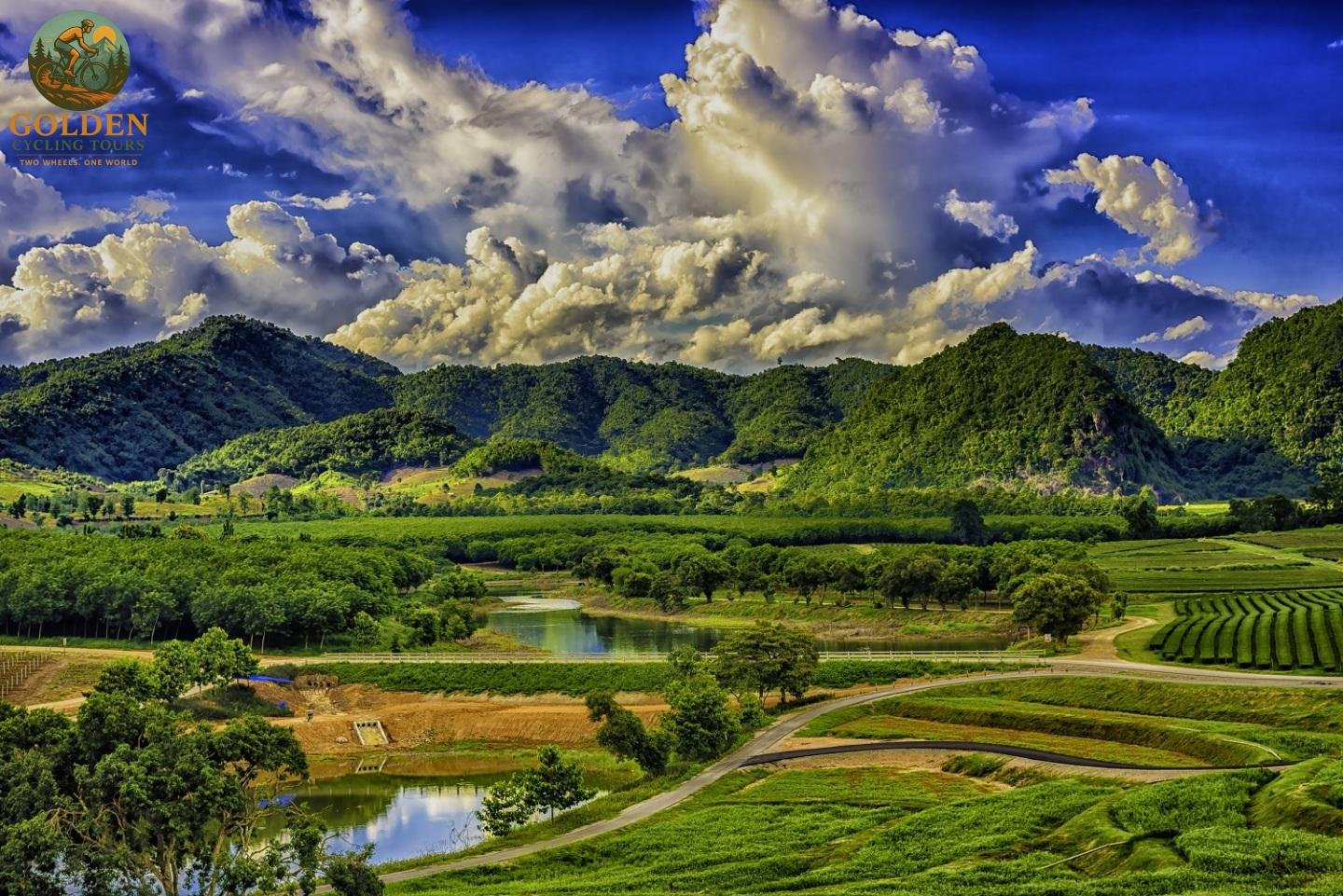
Riding a drop-bar gravel machine through the rugged crown of Northern Vietnam is a raw, multi-sensory masterclass in mountain exploration. As early morning fog peels back off the Dong Van Karst Plateau Geopark, crisp alpine air infused with the fragrance of wet limestone, crushed pine needles, and woodsmoke from distant hearths fills your lungs.
Listen intently as your wide, tubeless gravel tires crunch rhythmically over damp gravel chips and packed red clay:
The crisp, sharp metallic click of your rear derailleur dropping gears echoes against towering vertical rock faces as you lean weight over your handlebars into another sweeping, off-camber switchback.
Your quads burn with gratifying power, your lungs draw in cool mountain oxygen, and sweat beads on your brow as you grind up steep dirt gradients toward cloud-shrouded peaks.
Cresting a remote ridge brings instant sensory awe. Cool alpine breezes refresh your sun-warmed skin, revealing panoramic views of jagged black limestone pinnacles and terraced corn fields cascading thousands of feet down to the turquoise waters of the Nho Que River.
The frontier province of Ha Giang features an intricate web of unpaved logging paths, agricultural doubletracks, and remote cliffside trails perfectly suited for modern gravel bikes.
Your expedition begins in the historic capital with Hanoi Bike Tours, where you prepare your gear before private transfer vans carry you north toward the frontier. Arriving at the gateway of the province, riders adjust their tyre pressure for the rough terrain ahead.
Heading north out of Ha Giang City, the road climbs dramatically through Quan Ba Heaven Gate, opening sweeping views of the iconic Twin Mountains. Riders transition off the main road onto loose dirt paths weaving through Yen Minh Pine Forest.
Continuing deeper into the karst landscape, riders navigate agricultural trails through Sung La Valley, home to historic timber homes and blooming flower fields. Pausing to explore the historical Hmong King's Palace (Dinh Vua H'Mong), you pedal onwards into the ancient stone alleys of Dong Van Old Quarter.
On our comprehensive Ha Giang Bike Tours, cyclists tackle remote dirt spurs leading toward Lung Cu Flag Tower, the northernmost point of Vietnam, offering panoramic views across the borderlands.
The undisputed highlight of the route lies between Dong Van and Meo Vac. Here, riders take on cliffside gravel tracks running parallel to Ma Pi Leng Pass, hanging dramatically above Tu San Canyon, the deepest gorge in Southeast Asia.
Descending down sharp gravel switchbacks brings you to the emerald shore of the Nho Que River Canyon, where icy mountain water mist cools your face after an intense descent. Reclimbing out of the canyon leads to the mountain outpost of Meo Vac before loop trails head south toward the tranquil waterfalls of Du Gia Village.
Cyclists looking to expand their gravel epic can link Ha Giang with neighboring regions through our specialized itineraries:
To the east, Vietnam Northeast Bike Tours extend into Cao Bang province. On Cao Bang Bike Tours, cyclists ride unpaved riverbank tracks to the thundering cascades of Ban Gioc Waterfall.
To the west, Vietnam Northwest Bike Tours explore giant alpine passes. You can combine Sapa Bike Tours and Bac Ha Bike Tours to tackle technical singletrack trails through ancient tea trees and Flower Hmong villages, or climb the colossal gravel approaches surrounding O Quy Ho Pass and Khau Pha Pass near Mu Cang Chai.
Further south in the lush valleys, Mai Chau Bike Tours connect with Pu Luong Bike Tours inside Pu Luong Nature Reserve, where dirt trails weave between giant bamboo water wheels and emerald rice paddies.
For historic long-distance journeys, trace hidden jungle tracks on Ho Chi Minh Trail Cycling Tours, or take on the ultimate epic across the nation on Cycling North to South Vietnam.
Riders seeking maximum comfort can book Vietnam Luxury Bike Tours with high-end lodges and private support, while those who desire extra climbing assistance on steep dirt gradients can choose Vietnam E-Bikes Tours.
Choosing the right time of year ensures dry dirt tracks and crystal-clear mountain vistas.
Autumn (September to November) is the absolute prime season for gravel riding in Ha Giang. Temperatures range between 18°C and 25°C, rainfall is minimal, and golden rice harvests transform high-altitude valley terraces into brilliant golden landscapes. October and November also bring blooming pink buckwheat flowers across the karst plateaus.
Spring (March to May) offers pleasant warmth, wild peach blossoms, and firm, dry gravel conditions.
Winter (December to February) brings cold, misty conditions to high passes, requiring warm thermal layers. Summer (June to August) brings vibrant green foliage, but heavy monsoon rains can render dirt tracks muddy and technical.
Replenishing calories with rich highland cuisine is an essential highlight of every gravel expedition.
In remote hamlets, dinners are enjoyed family-style around open wooden hearths. Sample free-range hill chicken grilled with wild mountain pepper, savory smoked water buffalo meat, stir-fried wild jungle greens, and sticky rice cooked in bamboo tubes (Cơm Lam). In Ha Giang, try Thắng Cố, a traditional herbal Hmong dish, accompanied by a small sip of fragrant local corn wine.
Mornings start with steaming bowls of local Phở filled with fresh herbs, sliced chili, and lime. When riding through lowland karst valleys, enjoy crispy rice paired with pan-seared goat meat on Ninh Binh Bike Tours near Trang An Landscape Complex.
Restful sleep is vital for multi-day mountain endurance.
In remote villages like Du Gia Village or Sung La Valley, stay in traditional wooden stilthouses hosted by Tay, White Thai, Red Dao, or Hmong families. You will sleep comfortably on plush mattresses under clean mosquito netting, falling asleep to the peaceful sounds of mountain streams.
In major mountain hubs, unwind at boutique eco-resorts featuring infinity pools overlooking mist-filled canyons, providing the perfect setting to soothe tired muscles after a challenging ride.
Your journey begins seamlessly with private, air-conditioned transfer vans picking you up in Hanoi. High-performance gravel bikes fitted with wide tubeless tires are custom-tuned to your measurements by expert mechanics.
Throughout the ride, support vehicles carry all heavy luggage, spare parts, medical kits, fresh tropical fruit, and electrolyte hydration fluids, allowing you to ride light with only a small frame bag or hydration pack.
Respecting local customs fosters warm, genuine interactions with mountain villagers:
Always ask politely before taking photos of local villagers, especially elders and young children.
Dress modestly when walking through villages by keeping shoulders and knees covered.
Remove your shoes before entering traditional wooden stilthouse homes.
Accept offered cups of green tea or corn wine with both hands as a traditional gesture of respect.
Ma Pi Leng Pass: A dramatic mountain road carved directly into vertical limestone cliffs above the Nho Que River.
Dong Van Karst Plateau Geopark: A UNESCO Global Geopark featuring dramatic black limestone pinnacles.
Tu San Canyon: The deepest river canyon in Southeast Asia, carved by the emerald waters of the Nho Que River.
Lung Cu Flag Tower: The iconic national landmark marking the northernmost border point of Vietnam.
Quan Ba Heaven Gate: A high mountain pass offering views of the famous Twin Mountains.
Du Gia Village: A serene valley village surrounded by waterfalls, rice terraces, and traditional Tay stilthouses.
"Cycling the Ha Giang gravel loop with Golden Cycling Tours was the ride of a lifetime. The dirt climbs above Ma Pi Leng Pass were wild, the scenery was unbelievable, and the local homestay meals were fantastic!" — Marcus V., Germany
"An unforgettable off-road journey. Riding remote gravel backroads through Dong Van and Sung La Valley gave us a perspective of Northern Vietnam that few travelers ever get to see." — Claire T., United Kingdom
A dedicated gravel bike equipped with 40mm to 50mm tubeless tires, hydraulic disc brakes, and a wide-range drivetrain is ideal. Hardtail mountain bikes are also well-suited for rougher dirt sections and loose karst gravel.
The route features steep, sustained climbs with daily elevation gains ranging between 800m and 1,800m. A solid level of fitness is recommended, though full support vehicles accompany the main access routes, and Vietnam E-Bikes Tours are available.
Yes. Local homestay hosts and tour cooks prepare fresh vegetarian, vegan, gluten-free, and allergy-friendly meals using fresh mountain vegetables, tofu, eggs, and rice.
Yes. Northern Vietnam is very safe. Guided expeditions with Golden Cycling Tours include certified first-aid guides, mechanical backup vans, quality safety equipment, and real-time trail condition monitoring.
Pack padded bib shorts, breathable jerseys, a windproof/waterproof rain jacket, gravel/MTB cycling shoes, gloves, UV sunglasses, sunscreen, insect repellent, and a small hydration pack. Layered clothing is essential for changing mountain temperatures.
Ready to conquer wild dirt passes and dramatic karst canyons? Book your slot on Cycling Northern Vietnam routes with Golden Cycling Tours today and experience the ultimate Asian gravel adventure!

.jpg "Thai Binh Vietnam Bicycle")
.jpg "Phu Tho Vietnam Cycling")
.jpg "Thai Nguyen Cycling Vietnam")
.jpg "Tuyen Quang Cycling Vietnam")
.jpg "Vinh Phuc Cycling Vietnam")
Leave a Reply
Your email address will not be published. Required fields are marked *