- Call us Via Whatsapp: +84 (0) 832 126 699
4.9 stars on our site
(15,000 reviews)
- Monday - Sunday : 08:00 - 17:00
(15,000 reviews)

The road narrows as it climbs into the mountains of northern Vietnam. Cool air rushes across your face, the bicycle chain clicks through the gears, and your breathing settles into the steady rhythm of the ascent. Ahead, a sharp bend hides the view. You pedal a little harder, round the corner, and suddenly the world opens: towering limestone peaks, deep green valleys, tiny villages clinging to mountainsides, and ribbons of road disappearing into the clouds.
This is the unforgettable appeal of Ha Giang Cycling Tours. Here, cycling is more than a way to travel. It is an invitation to experience Vietnam at ground level, to feel every climb, hear every village wake up, and discover landscapes that reveal their beauty one turn at a time.
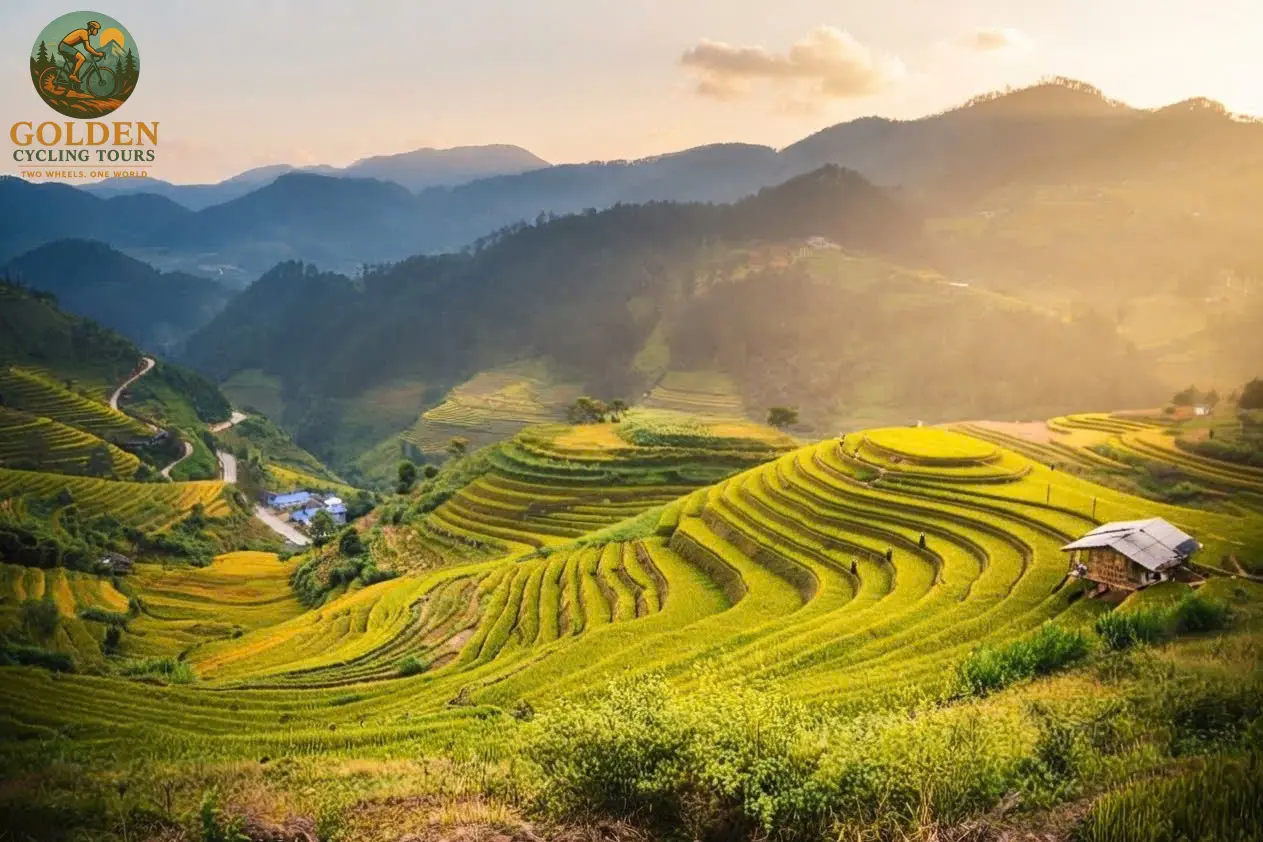
Located in Vietnam's far north, Ha Giang is a remarkable destination for adventurous cyclists. Its legendary mountain passes, spectacular karst formations, traditional ethnic-minority villages, and quiet rural roads create an extraordinary setting for a cycling holiday.
With Golden Cycling Tours, you can explore the dramatic scenery of the Dong Van Karst Plateau, ride through the winding roads around Ma Pi Leng Pass, admire the emerald waters of the Nho Que River, and discover the distinctive culture of northern Vietnam's mountain communities.
Whether you are an experienced cyclist looking for demanding climbs or an active traveler who prefers a supported journey with time to enjoy the scenery, Ha Giang Cycling Tours offer a powerful combination of adventure, culture, nature, and authentic local experiences.
Start planning your journey with Golden Cycling Tours or explore the dedicated Ha Giang cycling tour collection.
Ha Giang is one of Vietnam's most compelling destinations for travelers who want to experience dramatic mountain scenery without losing their connection to local life.
Unlike a journey spent entirely inside a vehicle, cycling allows you to feel the landscape change around you. You notice the temperature drop as the road climbs into the mountains. You smell woodsmoke drifting from a village kitchen, hear water flowing beneath a roadside bridge, and feel the difference between a gentle valley road and a demanding mountain ascent.
Every day brings a different perspective on northern Vietnam.
The scenery of Ha Giang is shaped by immense limestone formations, narrow valleys, steep slopes, and winding mountain roads.
As you climb, the landscape gradually opens. Forested hills give way to rugged stone peaks, while distant villages appear as small clusters of houses surrounded by terraces and rocky fields.
The famous mountain roads are particularly rewarding for cyclists who enjoy the sense of progress that comes with every climb. Each bend reveals another view, and each summit offers an opportunity to stop, catch your breath, and appreciate the scale of the surrounding mountains.
The experience is not simply about reaching the top. It is about the quiet satisfaction of earning the view through your own effort.
The Ha Giang region is home to diverse ethnic communities, including Hmong, Dao, Tay, and Nung people.
Their traditional architecture, agricultural practices, clothing, food, and local markets contribute to the cultural richness of the region. Cycling between villages offers opportunities to observe everyday life at a respectful distance and, when appropriate, interact with residents.
You might pass a family working in a field, see colorful fabrics hanging outside a home, or stop at a small market where vegetables, herbs, and locally produced goods are sold.
These moments often become the most meaningful memories of a cycling holiday.
Not every Ha Giang cycling route requires the same level of experience.
Some itineraries focus on demanding mountain roads and sustained climbs. Others combine selected cycling sections with support vehicles, sightseeing, and more flexible daily distances.
Before choosing a tour, consider your riding experience, comfort with descents, preferred daily distance, and ability to handle several consecutive days in the saddle.
A well-matched itinerary allows you to enjoy the scenery without turning every stage into a physical struggle.
The best route depends on what you want from your trip: legendary mountain passes, cultural encounters, remote villages, sweeping viewpoints, or a longer expedition through the northeastern highlands.
The following highlights can help you choose the right Ha Giang Cycling Tour.
Ma Pi Leng Pass is one of the most celebrated mountain passes in Vietnam and a defining highlight of many journeys through Ha Giang.
The road follows steep mountainsides above the spectacular Nho Que River, passing towering limestone cliffs and dramatic viewpoints that reveal the scale of the surrounding landscape.
The ascent demands concentration. Your breathing deepens as the gradient rises, your legs press steadily against the pedals, and the gears click into a lower ratio. The road curves sharply around the mountainside, briefly hiding the view before revealing another wall of limestone and another stretch of climbing.
Depending on the route, the effort can be substantial. Experienced riders may relish the challenge, while less experienced cyclists may prefer to use a support vehicle for selected sections or choose an itinerary with shorter riding distances.
The key is to ride at a sustainable pace. There is no need to race toward the summit when the landscape itself is the reward.
From suitable viewpoints along Ma Pi Leng Pass, the Nho Que River appears as a narrow ribbon of green water flowing between towering cliffs.
The contrast between the pale rock, deep green river, and distant mountain ridges is extraordinary. On a clear day, the landscape seems almost sculptural, with layers of stone stretching toward the horizon.
Stop only at safe, designated places. Mountain roads can be narrow, and traffic may approach unexpectedly around bends.
For many travelers, this is the moment that defines their entire Ha Giang cycling adventure.
The Dong Van Karst Plateau Geopark is a major natural highlight of northern Vietnam. Its dramatic limestone formations, rugged slopes, rocky fields, and remote settlements create a landscape unlike the lush lowland scenery found elsewhere in the country.
Cycling through the plateau reveals a remarkable contrast between the toughness of the terrain and the resilience of the communities who live there.
The road winds between jagged peaks, crosses exposed ridges, and descends into small valleys where houses and cultivated plots appear between the rocks.
The air can feel crisp in the morning, especially during cooler months. As sunlight reaches the mountain walls, shadows move across the stone and bring out subtle changes in color and texture.
The terrain can be challenging, with climbing and descending sections that require good bicycle control. Riders should remain alert to road surfaces, weather, and traffic.
Dong Van Ancient Town is a rewarding stop for travelers interested in history, architecture, and local culture.
Its traditional buildings and compact streets create a different atmosphere from the surrounding mountain roads. After a day of riding, you can take a gentle walk, explore local shops, or enjoy a Vietnamese coffee while watching the town's daily rhythm unfold.
If your itinerary includes an overnight stay, the evening can be a pleasant opportunity to rest and prepare for the next day's ride.
The Nho Que River is one of the most visually striking features of the Ha Giang landscape. Its emerald-colored water flows through steep limestone mountains, creating a dramatic contrast between the river below and the high road above.
Nearby, Tu San Canyon is renowned for its towering rock walls and spectacular river scenery.
Cycling along elevated roads provides a remarkable perspective on the depth and scale of the gorge.
From a safe viewpoint, look down toward the water as it curves between the cliffs. The wind may carry the scent of vegetation from the valley, while distant sounds from the river and surrounding landscape rise faintly through the air.
This is a place to pause rather than hurry. The view changes with the light, and even a short stop can feel unforgettable.
Some itineraries may offer a boat excursion on the Nho Que River, providing a closer view of the canyon from the water.
A boat trip is usually a separate activity from cycling and may require a transfer, additional time, or an extra fee. Confirm availability and inclusions with your tour operator before departure.
For travelers with sufficient time, combining cycling with a river excursion can create a richer experience of the region.
Quan Ba Heaven Gate is one of the best-known scenic areas on the approach to the highlands of Ha Giang.
The surrounding mountains, valleys, and winding roads create an impressive introduction to the region's dramatic terrain.
As the road climbs, the view gradually expands across green valleys and mountain ridges. Depending on the weather, clouds may drift between the peaks or lift to reveal the countryside below.
The Quan Ba Twin Mountains, a distinctive pair of rounded hills, are among the area's most recognizable landmarks.
This section can be a rewarding stop early in a cycling itinerary, offering time to adjust to the terrain and enjoy panoramic scenery before continuing deeper into the mountains.
Lung Cu Flag Tower, near Vietnam's northern border, is an important landmark in the Dong Van area.
The surrounding countryside features rugged limestone terrain, cultivated slopes, and small settlements. Visiting the tower adds a geographical and cultural dimension to a cycling journey through the northern frontier.
Access and sightseeing arrangements depend on the route, road conditions, and time available. If visiting the tower is a priority, check whether it is included in your chosen tour.
Du Gia offers a more peaceful side of the Ha Giang experience, with rural settlements, green valleys, and mountain scenery.
Depending on the chosen route, cycling in this area may include rolling roads, climbs, and descents through landscapes that feel more intimate than the dramatic exposed passes.
The beauty of Du Gia lies partly in its quieter rhythm. You may see rice fields, gardens, livestock, and homes set against a backdrop of wooded hills.
A village stop or homestay can provide an opportunity to enjoy local food, rest after a long ride, and learn about everyday life in the mountains.
Road conditions and available services vary, so confirm the exact route and accommodation arrangements before traveling.
The Ha Giang Loop is widely known as a spectacular road journey through northern Vietnam. For cyclists, it can become an especially rewarding adventure, combining physical challenge with cultural encounters and dramatic scenery.
A cycling itinerary may follow parts of the familiar loop or use alternative roads to suit the group's ability, available time, and sightseeing interests.
The journey is defined by constant change.
One moment, you may be climbing through exposed limestone mountains. A few kilometers later, the road may descend into a valley where fields, villages, and roadside cafés create a more relaxed atmosphere.
The weather can shift quickly, particularly at higher elevations. A sunny climb may lead into mist, and a cool morning can turn into a warm afternoon.
These changing conditions are part of the adventure, but they also make preparation essential.
The ideal duration depends on how much of the region you want to explore and how demanding you want the cycling to be.
Three to four days: A shorter introduction to selected highlights, subject to route design and fitness.
Five to eight days: More time for mountain roads, village visits, and scenic stops.
Nine to ten days or longer: A deeper journey that may combine Ha Giang with nearby regions such as Hoang Su Phi.
Do not judge an itinerary by distance alone. Elevation gain, road surface, sightseeing stops, and the amount of time spent in the saddle all affect the overall difficulty.
Explore the 8-day Northern Vietnam cycling tour featuring an epic Ha Giang Loop adventure.
For travelers who want a longer journey, the 10-day Ha Giang Loop and Hoang Su Phi cycling adventure is another option to consider.
Review each itinerary carefully to confirm daily distances, elevation gain, accommodation, support services, and the attractions included.
Choosing the right season can make a significant difference to your cycling experience. Ha Giang has a mountainous climate, and conditions can vary considerably between valleys, exposed ridges, and high passes.
For many travelers, autumn and spring offer attractive conditions, but each season has its own character.
Autumn is often considered one of the most appealing periods for cycling in Ha Giang.
Temperatures can be comfortable for outdoor activity, and mountain views may be especially clear on favorable days. In nearby agricultural areas, rice terraces can display beautiful golden tones around harvest time.
The landscape feels crisp and expansive. Cool air moves across the road, the sunlight highlights the limestone ridges, and long views make the mountain climbs particularly rewarding.
Harvest timing varies by location and altitude, so travelers hoping to see golden terraces should check local conditions for their travel dates.
Spring often brings fresh vegetation and greener countryside to the region.
Temperatures may be suitable for cycling, although mist, humidity, and occasional rain can affect visibility and road conditions.
This season is appealing to travelers who enjoy green mountain scenery and want to combine riding with visits to local villages.
Pack layers and rain protection, as weather can change quickly in the highlands.
Winter creates a different mood in Ha Giang. Mornings can be cold, and mist may soften the outlines of mountain ridges.
For travelers who enjoy quiet landscapes and cooler temperatures, this season can be atmospheric. However, high elevations can become very cold, and fog may reduce visibility on exposed roads.
Warm clothing, gloves, a windproof jacket, and careful route planning are essential. Before a demanding ride, check the weather and road conditions with your guide.
Summer brings intense greenery, but also heat, humidity, and heavier rainfall.
Wet roads can make descents more difficult, while severe rain may cause landslides, flooding, or temporary road closures in mountainous areas.
Cycling may still be possible when conditions are suitable, but flexibility is essential. It is better to modify an itinerary than to continue onto an unsafe road.
For many visitors, September to November is a strong choice for mountain scenery and comfortable riding conditions, while March to May is attractive for fresh green landscapes.
However, the best month depends on your chosen route, preferred scenery, and tolerance for cold, rain, and humidity.
Contact Golden Cycling Tours to discuss your preferred travel dates and the conditions typically encountered along your selected itinerary.
Food is an important part of the journey. After hours of climbing and descending, a warm meal can be as memorable as a mountain viewpoint.
The cuisine of Ha Giang reflects the region's ethnic diversity, agricultural traditions, and cooler mountain climate. Meals may feature rice, noodles, fresh vegetables, herbs, pork, chicken, freshwater fish, and locally produced ingredients.
Thang co is a traditional dish associated with some Hmong communities in northern Vietnam.
Recipes and preparation methods vary. The dish has a distinctive cultural history and may appeal to adventurous eaters interested in regional cuisine.
If you are curious about local food, ask your guide where it is traditionally prepared and whether it is available during your visit.
Au tau porridge is a regional specialty associated with Ha Giang. It is traditionally prepared with rice and au tau, a plant ingredient that requires careful processing.
Because preparation matters, visitors should eat it only from reputable local establishments that know how to prepare the dish safely.
The flavor is distinctive and may not suit every palate, but trying a regional specialty can add another layer to your travel experience.
Buckwheat is associated with the agricultural landscapes of the northern highlands, and visitors may encounter buckwheat-based foods in local markets and small eateries.
These simple snacks can be an appealing stop during a sightseeing day, particularly when paired with a warm drink in cooler weather.
Availability varies by season and location.
Pho, bun, and other Vietnamese noodle dishes are widely enjoyed throughout the country.
A hot bowl of noodle soup can provide a satisfying breakfast or recovery meal before another day of cycling. In larger towns, travelers generally have more choice, while remote villages may offer a smaller selection.
Depending on your itinerary, meals may be arranged at local restaurants, family-run eateries, homestays, or hotels.
For an authentic experience, consider:
Eating at a small local restaurant in Ha Giang City or Dong Van.
Asking your guide about regional dishes and seasonal ingredients.
Enjoying a home-cooked dinner during a village homestay.
Stopping for Vietnamese coffee or a light snack between rides.
Carrying suitable energy snacks on remote cycling sections.
Food availability and meal inclusions differ by tour. If you have allergies or dietary restrictions, inform your operator before departure.
Accommodation is an important part of a successful cycling holiday. After a long day on the road, a comfortable place to shower, eat, and rest can make the next morning's climb much more enjoyable.
In Ha Giang, options range from hotels and guesthouses to traditional homestays and selected boutique properties.
A homestay offers an opportunity to experience local hospitality and learn more about everyday life in the highlands.
Depending on the property, you may stay in a traditional wooden house, a family-run guesthouse, or a private room in a village setting.
Some stays include home-cooked dinners and breakfast, while facilities vary considerably between locations. Ask about bathrooms, heating, bedding, room privacy, and meals before booking.
Ha Giang City provides a convenient starting point for many regional itineraries.
Hotels and guesthouses here can be useful for an arrival night, bicycle preparation, or a final overnight stay before traveling onward.
Compared with remote villages, travelers may find a wider range of services, restaurants, and accommodation choices.
Dong Van is a practical base for exploring the surrounding karst plateau and nearby mountain roads.
Staying overnight gives you time to explore the town, enjoy local food, and prepare for the next cycling stage without rushing.
Accommodation options vary in comfort and availability, particularly during popular travel periods.
Before booking, consider the following:
Location: Is the property close to your planned route?
Comfort: Do you prefer a hotel room, a boutique lodge, or a traditional homestay?
Meals: Are breakfast and dinner included?
Bicycle security: Is there a suitable place to store your bicycle?
Weather: Will you need heating, warm bedding, or additional protection from damp conditions?
Recovery: Does the itinerary allow sufficient time to rest between demanding cycling days?
Ask Golden Cycling Tours to confirm the accommodation associated with your chosen itinerary and whether specific room preferences can be accommodated.
Getting to Ha Giang generally involves traveling from Hanoi to the northern mountains, then beginning your cycling itinerary from an agreed meeting point.
The best arrangement depends on your arrival time, group size, bicycle requirements, and whether you prefer a private transfer or public transport.
Hanoi is a common gateway for visitors arriving in northern Vietnam.
Travelers can usually consider road transfers by bus, limousine-style vehicle, or private car. Journey times vary according to the service, traffic, road conditions, and departure point.
For a cycling holiday, a private transfer can be convenient because it may simplify luggage handling and the transport of bicycles. Confirm whether bicycle transport is included and whether the vehicle has enough space for your group.
Allow additional time for international arrivals and avoid scheduling a demanding ride immediately after a long journey if you are tired.
A guided cycling tour may include transfers between Hanoi and the cycling region, as well as support vehicles during selected stages.
Support arrangements vary. Some itineraries provide luggage transport and assistance along the route, while others may include support only for specific sections.
Before booking, ask about:
Airport pickup and drop-off.
Transfers between accommodation and the cycling route.
Luggage transport.
Bicycle transportation.
Assistance in case of mechanical problems or fatigue.
The procedure for changing the route because of unsafe weather.
Once the ride begins, the bicycle becomes your main way of experiencing the region.
Road conditions can vary from smooth pavement to rougher rural sections, with occasional roadworks, sharp bends, steep gradients, and traffic near towns.
Ride predictably, maintain a safe speed on descents, and avoid stopping where visibility is limited. A helmet, suitable lights, and appropriate clothing are essential.
An electric bike can make selected routes more accessible by providing pedal assistance on climbs.
However, Ha Giang is mountainous, so battery performance depends on elevation gain, rider weight, assistance settings, temperature, and road conditions.
If you are considering an e-bike, confirm the bicycle model, battery range, charging arrangements, and availability of support before booking.
You can explore the Vietnam e-bike tour collection to compare available electric-assisted cycling options.
The cultural richness of Ha Giang is as important as its dramatic scenery.
The region is home to diverse ethnic communities, including Hmong, Dao, Tay, and Nung people. Their traditions, languages, clothing, farming practices, and architectural styles vary between communities and villages.
Cycling creates opportunities to experience this diversity, but meaningful encounters depend on respect and sensitivity.
Markets can offer a lively glimpse into local life, with produce, household goods, clothing, and regional foods brought together in one place.
If your itinerary includes a market visit, take time to observe rather than treating the experience as a photo opportunity.
Always ask permission before photographing individuals, especially children. Be respectful of homes, religious spaces, and cultural ceremonies.
Choosing local restaurants, homestays, guides, and craftspeople can help distribute tourism income more widely.
When buying locally made products, ask about their origins and production methods. A respectful conversation can be more meaningful than purchasing an item simply because it appears traditional.
Your guide can help explain local customs and identify appropriate opportunities to engage with the community.
The karst landscapes of Ha Giang are beautiful but require careful stewardship.
Travel responsibly by carrying your waste, using refillable water bottles where safe drinking water is available, avoiding damage to vegetation, and following local guidance in sensitive areas.
Do not leave litter beside mountain roads, in villages, or near rivers. Keep a safe distance from livestock and avoid disturbing wildlife.
Responsible travel helps protect the landscape and communities that make the region special.
Mountain cycling requires preparation for changing temperatures, demanding physical activity, and occasional rain.
Even when the weather feels warm in the valley, exposed mountain roads can be cold and windy.
Consider bringing:
A properly fitted cycling helmet.
Padded cycling shorts.
Breathable cycling jerseys or shirts.
Comfortable cycling gloves.
Suitable cycling shoes.
Sunglasses and sunscreen.
A lightweight waterproof jacket.
Warm layers for early mornings and descents.
Front and rear bicycle lights.
Reusable water bottles or a hydration system.
Energy snacks for longer rides.
A small first-aid kit and blister care.
Personal medication.
A phone, navigation tools, and a power bank.
If your tour includes bicycle rental, ask which equipment is supplied and whether you should bring your own pedals, saddle, or helmet.
Mountain weather can change quickly. A climb may leave you hot and sweaty, while a long descent exposes you to cool wind.
Layering is therefore more practical than relying on one heavy garment. A breathable base layer, an insulating layer, and a windproof or waterproof outer layer help you adapt to changing conditions.
Waterproof bags can also protect electronics, clothing, and travel documents during rainy periods.
You do not need to be an elite cyclist, but preparation will make your trip more enjoyable.
If possible, ride regularly before traveling. Include longer rides and moderate climbs, and gradually increase your time in the saddle.
If your itinerary involves several consecutive days of mountain cycling, practicing back-to-back rides can help you understand how your body responds to accumulated fatigue.
Be honest about your fitness level when selecting a tour. The right itinerary should be challenging and rewarding without making every day feel overwhelming.
Choosing a tour involves more than comparing photographs or the number of destinations included. The most suitable itinerary should match your ability, interests, travel dates, and expectations for comfort.
Two routes covering the same distance can feel completely different when one includes long climbs and the other follows a relatively flat valley.
Ask for the daily cycling distance, approximate elevation gain, road surface, and expected time in the saddle.
Find out whether the itinerary includes optional riding sections, rest days, or support-vehicle alternatives.
Before confirming a booking, clarify whether the price includes:
Bicycle rental and helmet.
Guide services.
Accommodation.
Specified meals.
Support vehicle and luggage transport.
Transfers to and from the cycling region.
Entrance fees and planned sightseeing activities.
Drinking water during rides.
Mechanical support and emergency assistance.
Inclusions differ between itineraries, so check the specific tour description and obtain confirmation of important details in writing.
A guided tour can provide local knowledge, route assistance, cultural context, and support if weather or mechanical problems affect the ride.
A self-guided trip offers more independence but requires stronger navigation skills, route planning, and preparation for limited services in remote areas.
For riders unfamiliar with the region, a guided itinerary may be the more straightforward option.
If independent cycling is important to you, ask Golden Cycling Tours whether a suitable self-guided arrangement is available for your chosen route.
Travelers with additional time may want to combine Ha Giang with other destinations in northern Vietnam.
The 15-day Best Vietnam Cycling Northeast Tour is an option to explore if you want a longer regional journey.
You can also compare the Northern Vietnam cycling destinations and the Vietnam Northeast cycling collection.
If you prefer a broader itinerary, destinations such as Cao Bang, Mai Chau, Pu Luong, and Ninh Binh offer different combinations of landscapes, culture, and cycling difficulty.
Explore the Cao Bang cycling tours, Mai Chau cycling tours, Pu Luong cycling tours, and Ninh Binh cycling tours to compare possible extensions.
Customer feedback can be useful when comparing cycling operators, particularly for trips that involve remote roads, changing weather, and several consecutive days of riding.
For Golden Cycling Tours, review recent and verifiable customer feedback on the company's website and independent review platforms before making a booking decision.
Look for reviews that discuss specific details rather than relying only on general praise.
Useful topics include:
Guide quality: Was the guide knowledgeable, attentive, and clear about safety?
Route planning: Did the daily distances and difficulty match the description?
Scenery: Were the selected roads and viewpoints rewarding?
Support: Was assistance available for mechanical issues, fatigue, or weather changes?
Accommodation: Did the rooms and facilities match expectations?
Food: Were meals enjoyable, and were dietary needs handled appropriately?
Organization: Were transfers, timings, and inclusions communicated clearly?
Reviews describing the exact itinerary you are considering are particularly helpful.
Start with the official Golden Cycling Tours website and look for published testimonials or links to independent review profiles.
You can also ask the company for recent feedback relating to the Ha Giang Loop, mountain cycling, guide services, or the specific itinerary you plan to book.
Editorial note: No verified customer quotation was supplied for this article, so the following is a placeholder rather than a real testimonial. Replace it only with a genuine review that you have permission to publish.
Suggested format:
“[Insert an authentic customer quotation describing the Ha Giang route, guide, support, and overall experience.]”
— [Verified customer attribution], [Tour name and travel date]
Using real customer feedback helps build trust while avoiding misleading claims.
Some itineraries may suit active beginners, but Ha Giang is a mountainous destination with steep climbs, winding descents, and variable road conditions.
Beginners should choose routes with manageable distances and suitable support. Discuss your cycling experience with the operator before booking.
A shorter itinerary can introduce you to selected highlights, while an eight-day trip provides more time for mountain roads, sightseeing, and village visits.
Travelers who want a deeper exploration may prefer a nine- or ten-day journey, particularly if the itinerary includes Hoang Su Phi or additional northeastern destinations.
The ideal duration depends on your fitness, travel schedule, and preferred pace.
September to November is often an attractive period for mountain scenery and cycling, while March to May can offer fresh green landscapes and pleasant conditions on many days.
Weather varies by elevation and route, so check local conditions before departure.
The Ha Giang Loop can be challenging because of steep gradients, sustained climbs, technical descents, and changing weather.
Difficulty depends on the route, daily distance, elevation gain, bicycle type, and rider experience. Choose an itinerary that matches your abilities and ask about support arrangements.
Cycling Ma Pi Leng Pass is possible on suitable itineraries, but the road is mountainous and requires careful riding.
Traffic, road width, visibility, and weather conditions can affect safety. Follow your guide's instructions, use appropriate equipment, and stop only in safe locations.
Yes. Some longer itineraries combine Ha Giang with Hoang Su Phi, allowing travelers to experience both dramatic karst mountains and spectacular rice terraces.
Explore the 10-day Ha Giang Loop and Hoang Su Phi cycling adventure and confirm the exact route and inclusions.
Electric-assisted bicycles may be available on selected tours, but availability depends on the itinerary and bicycle arrangements.
Ask about battery range, charging facilities, suitable terrain, and support options. You can also browse the Vietnam e-bike tours collection.
Wear breathable cycling clothing, padded shorts, gloves, and comfortable cycling shoes. Bring a helmet, sunscreen, sunglasses, and a waterproof jacket.
Warm layers are particularly important for early mornings, high mountain passes, and long descents.
Regional specialties may include au tau porridge, thang co, buckwheat-based foods, and a variety of noodle dishes.
Availability varies by location and season. Ask your guide for recommendations and inform your operator about allergies or dietary restrictions in advance.
Options include hotels and guesthouses in Ha Giang City and Dong Van, as well as traditional homestays in some rural areas.
Accommodation standards vary. Confirm room types, bathroom facilities, meals, heating, and bicycle storage before booking.
Travelers commonly reach Ha Giang from Hanoi by road, using a bus, limousine-style service, or private transfer.
A private transfer may be convenient for groups with bicycles or substantial luggage. Confirm journey arrangements and allow enough time for rest before cycling.
Cycling can be rewarding when planned carefully, but mountain roads require attention and appropriate riding skills.
Wear a helmet, maintain a safe speed on descents, follow traffic rules, and obey local guidance. Heavy rain, fog, roadworks, and landslides can affect conditions, so itineraries should remain flexible when necessary.
Visit Golden Cycling Tours or browse the dedicated Ha Giang cycling tours page.
Choose an itinerary that matches your preferred dates, fitness, and travel style. Contact the team to confirm availability, route difficulty, accommodation, bicycle options, inclusions, and payment conditions before making your booking.
There are places you visit, and there are places you feel. Ha Giang belongs to the second category.
You feel it in the cool morning air before the first climb, in the pressure of the pedals as the road rises toward Ma Pi Leng Pass, and in the sudden stillness that follows when you stop above the Nho Que River. You hear it in the quiet sounds of village life, taste it in a warm bowl of regional food, and remember it in the mountain views that remain with you long after the ride is over.
Ha Giang Cycling Tours offer a remarkable way to discover northern Vietnam through movement, exploration, and meaningful encounters with the landscape.
Whether you dream of conquering mountain passes, exploring the Dong Van Karst Plateau Geopark, discovering remote villages, or combining cycling with a longer northeastern Vietnam journey, the right itinerary can turn your travel plans into an unforgettable adventure.
Let Golden Cycling Tours help you find a route that matches your ambitions.
Explore the Ha Giang cycling tour collection, consider the 8-day Ha Giang Loop cycling adventure, or discover the 10-day Ha Giang and Hoang Su Phi journey.
For more inspiration, browse the complete Golden Cycling Tours collection.
The mountains are waiting. Your adventure begins with the first turn of the pedals.

.jpg "Cycling in Vietnam in March")
.jpg "Vietnam mountain bikes Trail")
.jpg "Vietnam Biking Trails")
.jpg "Ha Giang Cycling Tours")
Leave a Reply
Your email address will not be published. Required fields are marked *