- Call us Via Whatsapp: +84 (0) 832 126 699
4.9 stars on our site
(15,000 reviews)
- Monday - Sunday : 08:00 - 17:00
(15,000 reviews)

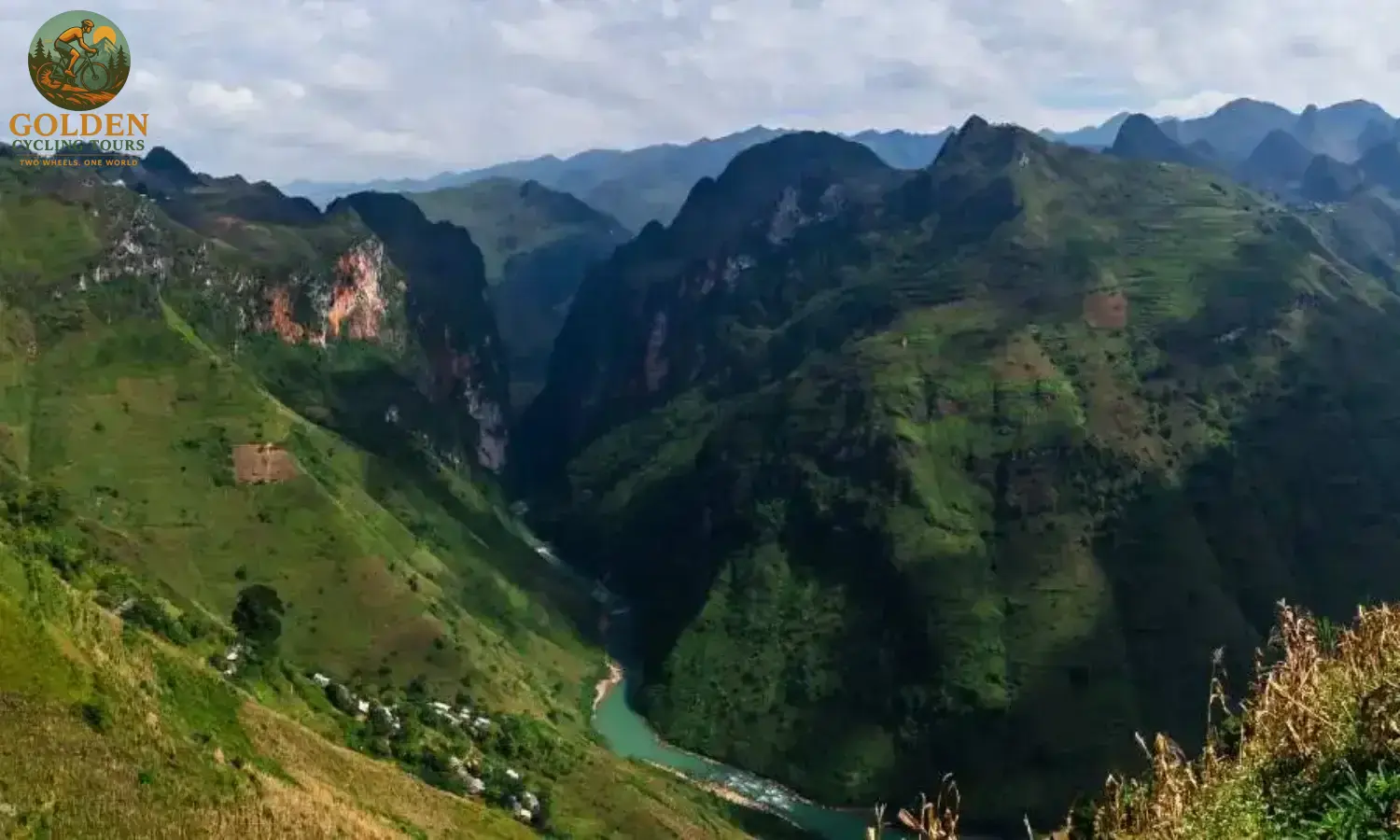
As your front tire slices through a blanket of swirling mountain fog at 1,600 meters elevation, the air suddenly turns sharp, cold, and electric. Your lungs expand, drawing in the sweet, crisp scent of wild mountain pine, damp moss, and faint woodfire smoke drifting up from a Hmong village nestled in the valley floor far below. Every stroke of your pedal sends a surge of energy through your legs, while the steady metallic hum of your chain and the rhythmic click of your rear cassette echo off vertical granite walls. Far below, framed by sheer limestone cliffs, the turquoise ribbon of the Nho Que River slithers through the abyss of Tu San Canyon, reminding you that you are pedaling across the roof of Indochina.
Riding across the alpine passes of the northern frontier is an unforgettable adventure, but selecting the right vehicle for these dramatic elevation shifts is crucial. Evaluating a Gravel vs E-Bike for Touring Northern Vietnam: A Detailed Comparison helps you decide whether lightweight mechanical efficiency or smooth battery-assisted power best matches your physical goals, riding style, and desire for adventure.
Whether you are an athletic purist eager to conquer every gradient spike under your own muscle power or a leisure cyclist seeking smooth assistance over towering mountain crests with Golden Cycling Tours, understanding how gravel bikes and electric bikes perform across variable mountain terrain ensures every mile remains thrilling, comfortable, and deeply rewarding.
The geography of Northern Vietnam is characterized by dramatic vertical terrain. Continuous ascents like O Quy Ho Pass, Ma Pi Leng Pass, and Khau Pha Pass climb from humid valley bottoms to mountain summits over 1,500 to 2,000 meters above sea level.
Riding here requires handling 10% to 14% pitch spikes, tight hairpin switchbacks, smooth asphalt, and sudden transitions to broken limestone gravel or clay dirt tracks. Deciding between a gravel bike and an e-bike comes down to how you want to manage these steep vertical gains and variable surfaces.
Choosing between a gravel bike and an e-bike shapes your physical experience, pacing, and overall journey across the northern highlands.
Gravel bikes are the ultimate multi-terrain mechanical machines. Built with drop handlebars, lightweight aluminum or carbon frames, wide tire clearance (38c to 45c), and low climbing gear ratios (34t or 30t chainrings paired with 11-34t or 11-42t cassettes), gravel bikes offer precise handling and efficient energy transfer.
Tactile Responsiveness and Speed on Descents: Weighing between 8.5kg and 10.5kg, a gravel bike reacts instantly to every steering input. Descending from summits like Sky Gate Pass or Quan Ba Pass feels nimble, allowing experienced riders to carve crisp lines around mountain switchbacks.
Pure Athletic Fulfillment: Conquering 1,500 vertical meters of climbing solely through your own stamina produces a deep sense of physical accomplishment. Every summit reached feels earned.
Simplicity and Reliability: With no battery or electrical system to manage, gravel bikes offer total mechanical autonomy. They are easy to load onto support vehicles and simple to service in remote frontier towns.
Modern mid-drive electric all-terrain bikes feature intelligent pedal-assist technology. With powerful motors (delivering 60Nm to 85Nm of torque) and long-range lithium batteries (500Wh to 750Wh), e-bikes multiply your pedaling effort, flattening steep 12% ramps into manageable spins.
Equalizing Fitness Levels: E-bikes allow riders of varying physical conditioning to pedal together smoothly. Couples, friends, or multi-generational family members can ride side-by-side up high-altitude passes without anyone feeling left behind.
Enhanced Sightseeing Focus: Because pedal-assist reduces physical exhaustion, your heart rate remains steady and your breathing controlled. This leaves you with plenty of energy to look around, absorb the scenery, interact with local villagers, and enjoy photos along cliffside viewpoints.
Effortless Climbing Power: Pitch spikes that would force traditional riders out of the saddle become smooth climbs. You can maintain a comfortable 80 RPM cadence while gliding effortlessly past towering limestone spires.
When evaluating a Gravel vs E-Bike for Touring Northern Vietnam: A Detailed Comparison, consider how each bike type performs across key operational factors:
Climbing Effort: Gravel bikes demand high physical stamina, sustained heart rate exertion, and strategic gear shifting. E-bikes offer adjustable assist modes (Eco, Tour, Turbo) that let you control your exertion level on demand.
Luggage Capacity: Gravel bikes perform best when kept lightweight, making them ideal for supported tours where luggage travels in a SAG-wagon. E-bikes carry their motor and battery weight easily, allowing riders to carry handlebar or trunk bags without noticing the extra load on climbs.
Technical Descents: Gravel bikes provide sharp, responsive handling and fast acceleration out of corners. E-bikes, with their heavier frame weight (20kg to 24kg) and low center of gravity, offer exceptional stability and road contact through high-speed turns.
Battery Logistics vs Mechanical Freedom: Gravel bikes require no electrical power. E-bikes require daily overnight battery charging at homestays or hotels, which is easily managed on guided tours with support vehicle charging setups.
By matching your personal riding goals with expert route curation from Golden Cycling Tours, you can select the perfect machine to explore the routes of Cycling Northern Vietnam.
Different geographic regions in the north present unique terrain challenges that highlight the strengths of both gravel bikes and e-bikes.
Located along the northern border with China, Ha Giang features dramatic karst landscapes, steep mountain passes, and deep river canyons.
Route Topography: Ascend into the UNESCO-listed Dong Van Karst Plateau, conquer Quan Ba Pass and Sky Gate Pass, and ride along the cliffside road of Ma Pi Leng Pass overlooking Tu San Canyon. To the west, Hoang Su Phi offers winding dirt tracks across steep terraced hillsides.
Bike Performance: Gravel bikes excel on the dirt tracks and broken gravel roads of Hoang Su Phi, offering sharp maneuverability. E-bikes shine on the long, steep climbs of Ma Pi Leng Pass, allowing riders to glide up 12% ramps while enjoying views of the Nho Que River.
Recommended Tours: Experience these iconic passes on a 10-day Ha Giang Loop & Hoang Su Phi Cycling Adventure or explore curated Ha Giang bike tours.
In the northeast, Cao Bang features undulating terrain surrounded by sugarloaf limestone formations, pristine rivers, and mountain valleys.
Route Topography: Ride through Thong Nong and Quang Uyen toward Ban Gioc Waterfall, a massive multi-tiered cascade straddling the border with China. Continue south toward Ba Be National Park, where primary rainforest trails encircle Ba Be Lake.
Bike Performance: Gravel bikes offer fast, efficient rolling performance along the undulating asphalt and smooth dirt roads connecting rural villages. E-bikes make short work of rolling hills, allowing riders to cover longer daily distances with minimal fatigue.
Recommended Tours: Book the comprehensive 15-day Best of Northeast Vietnam Cycling Tour, explore targeted Cao Bang bike tours, relax on Ba Be Lake bike tours, or browse all regional Vietnam Northeast bike tours.
For cyclists seeking gentle rolling terrain through green rice basins, the southwest circuit from Hanoi provides a tranquil journey.
Route Topography: Cycle through the tranquil valley of Mai Chau, ride along singletrack nature paths in Pu Luong Nature Reserve, and finish among the limestone monoliths of Ninh Binh and Tam Coc.
Bike Performance: Gravel bikes provide an agile, lively feel over singletrack rice paddy dikes and rural dirt paths. E-bikes allow leisure riders to cruise smoothly through valley basins and over gentle ridgelines without overexertion.
Recommended Tours: Ride these scenic valleys on a 4-day Mai Chau to Pu Luong cycling adventure or customize your trip with Mai Chau bike tours and Pu Luong bike tours.
For smooth pedaling assistance across rolling countryside, book the premium 6-day Mai Chau, Pu Luong & Ninh Binh e-bike tour or select from modern Vietnam e-bike tours.
Proper nutrition fuels your body whether you are riding a mechanical gravel bike or an electric pedal-assist bike.
Highland meals feature fresh, nutrient-rich ingredients prepared over wood fires.
High-Carbohydrate Foods: Fuel your ride with steaming bowls of beef Pho infused with star anise, sticky rice baked inside bamboo tubes, charcoal-roasted mountain pork seasoned with wild mac khen pepper, and stir-fried jungle ferns with garlic.
Hydrating Soups and Teas: Start mornings with hot noodle broths to replenish sodium levels. Enjoy local green tea or warm ginger tea at homestays to stimulate digestion and warm up after chilly mountain descents.
In mountain hubs like Dong Van, Meo Vac, Sapa, and Cao Bang, choose busy morning markets where food is freshly cooked to order. At rural homestays in Pu Luong Nature Reserve and Mai Chau, hosts serve wholesome farm-to-table meals on woven bamboo trays.
Quality sleep allows your body to recover after long hours in the saddle.
Authentic Stilt Homestays: Stay inside wooden stilt houses built by Tay, White Thai, or Hmong families. Sleep under cozy mosquito netting, enjoy genuine hospitality, and wake up to sweeping views of misty mountain valleys.
Luxury Eco-Resorts: Riders seeking high-end comfort can unwind at boutique eco-lodges featuring infinity pools overlooking deep valleys, spa services for sore legs, and fine dining. Explore luxury options with Vietnam luxury bike tours.
Transporting bicycles and equipment across high mountain passes requires experienced logistics support.
Dedicated support vehicles equipped with custom bike racks protect delicate gear during transit over rugged mountain roads.
For e-bike riders, support vehicles carry extra charging stations and spare battery packs, ensuring continuous power throughout multi-day mountain routes. For gravel riders, support vans carry spare tires, tubes, chains, and mechanical tools for quick roadside repairs.
The high-altitude routes of the north cross the ancestral lands of over 30 distinct ethnic minority groups, including the Hmong, Red Dao, Tay, Nung, and White Thai communities.
Modest Dress: Wear modest clothing when riding through mountain hamlets or entering local homestays.
Respectful Photography: Always ask for permission with a friendly smile or gesture before taking photos of village elders, weavers, or children.
Accepting Local Hospitality: If offered a warm cup of green tea or corn wine by your homestay host, accept with both hands as a polite gesture of gratitude.
Timing your trip ensures comfortable temperatures, lower humidity, and optimal road safety.
Autumn is widely considered the best time for mountain cycling. Summer rains fade away, leaving clear blue skies, low humidity, and pleasant daytime temperatures between 18°C and 25°C.
This window coincides with the golden rice harvest across Mu Cang Chai, Hoang Su Phi, and Mai Chau, filling the mountain valleys with vibrant color and fresh mountain air.
Spring brings pleasant temperatures and fresh flora back to the highlands. Wild peach blossoms, plum trees, and yellow mustard flowers blanket the slopes of Dong Van Karst Plateau. Clear morning skies provide excellent visibility over high mountain passes.
Winter (December to February) brings cold temperatures and dense mountain fog to high passes like O Quy Ho Pass. Thermal base layers, winter gloves, and high-visibility LED tail lights are mandatory.
Summer (June to August) brings warm temperatures and brief afternoon rain showers. Riding with support vehicle backup provides flexibility to rest or bypass heavy rain safely.
Here is what global cyclists say after exploring the northern passes with Golden Cycling Tours:
"Riding a gravel bike up Ma Pi Leng Pass was the ultimate athletic test! The mechanical responsiveness of the bike on mountain switchbacks was incredible, and reaching the summit under my own power felt amazing." – Thomas B., Germany
"Choosing an e-bike for our trip through Mai Chau and Pu Luong Nature Reserve was the best decision we made. My wife and I rode together comfortably, climbing steep hills with ease while enjoying every bit of the scenery!" – David & Susan M., USA
An e-bike is ideal for beginners or leisure cyclists. The pedal-assist motor lowers physical exertion on steep climbs, allowing riders to navigate mountain passes like Khau Pha Pass comfortably regardless of fitness level.
Yes. Modern 500Wh to 750Wh batteries provide sufficient range for 60km to 90km of mountain riding when using assist modes strategically (using Eco or Tour mode on flats and Turbo on steep ramps). On guided tours, support vehicles carry backup batteries and chargers.
Yes! Tour operators like Golden Cycling Tours encourage riders to bring their own clipless pedals and familiar saddles to ensure maximum personal comfort over multi-day rides.
A tire width between 38c and 45c with tubeless setup or puncture-resistant casing is ideal. This provides excellent traction on unpaved dirt tracks in Hoang Su Phi while maintaining low rolling resistance on paved mountain passes.
E-bikes weigh more than gravel bikes due to the motor and battery. However, their low center of gravity provides excellent stability and traction on paved descents like O Quy Ho Pass. Disc brakes ensure consistent, effortless stopping power.

.jpg "Thai Binh Vietnam Bicycle")
.jpg "Phu Tho Vietnam Cycling")
.jpg "Thai Nguyen Cycling Vietnam")
.jpg "Tuyen Quang Cycling Vietnam")
.jpg "Vinh Phuc Cycling Vietnam")
Leave a Reply
Your email address will not be published. Required fields are marked *