- Call us Via Whatsapp: +84 (0) 832 126 699
4.9 stars on our site
(15,000 reviews)
- Monday - Sunday : 08:00 - 17:00
(15,000 reviews)

Imagine dropping into a narrow forest trail as your tires bite into damp earth. Your chain clicks through the gears, your breathing deepens, and a curtain of mist drifts across towering limestone cliffs. Somewhere below, a river winds through a green valley while the trail ahead disappears beneath bamboo, ferns, and tangled roots.
This is the spirit of Extreme Vietnam MTB Tours: mountain biking that brings riders closer to Vietnam’s wild landscapes, remote communities, and unforgettable mountain terrain.
From the dramatic limestone mountains of Ha Giang and Cao Bang to the forested hills of Sapa, the quiet valleys of Mai Chau, and the tropical karst scenery of Ninh Binh, northern Vietnam offers an extraordinary variety of cycling experiences. Expect rugged climbs, muddy tracks after rainfall, winding mountain roads, rocky paths, and occasional opportunities to explore natural singletrack where local access and trail conditions permit.
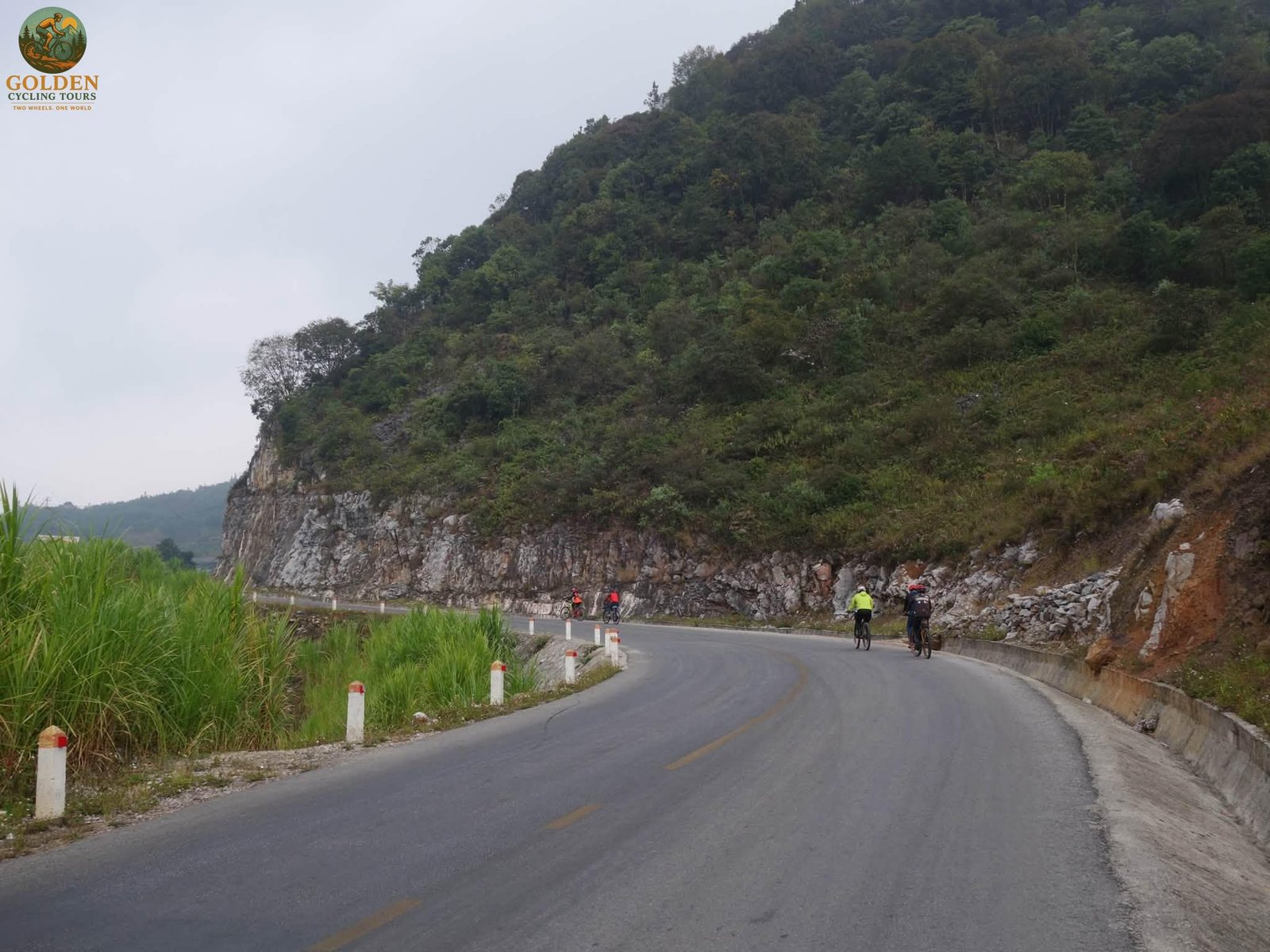
For riders who want more than a conventional sightseeing holiday, Vietnam offers a journey that challenges the legs, sharpens the senses, and rewards every climb with a new perspective.
Whether you are an experienced mountain biker searching for technical terrain or an adventurous cyclist hoping to combine off-road riding with cultural discovery, Extreme Vietnam MTB Tours can be the starting point for planning a memorable ride through northern Vietnam.
Vietnam is a country of dramatic contrasts. In a single journey, riders may travel from humid rice-growing valleys to cool mountain passes, from limestone pinnacles rising above emerald fields to remote villages surrounded by forest.
What makes mountain biking here special is not simply the scenery. It is the constantly changing relationship between rider, terrain, weather, and landscape.
After a night of rain, a forest trail can become a ribbon of slick red earth. The front tire searches for grip, the rear wheel flicks small drops of mud against your calves, and every turn demands careful judgment.
On drier sections, loose stones rattle beneath the tires. Exposed roots cross the trail like natural steps, while short, steep climbs require a smooth pedal stroke and controlled breathing.
Not every route in Vietnam is a purpose-built mountain-bike trail. Many cycling journeys combine paved mountain roads, rural lanes, gravel tracks, farm paths, and selected off-road sections. Riders should confirm the actual surface conditions and technical difficulty of their chosen itinerary before booking.
For riders seeking genuine singletrack, the best approach is to discuss specific trail requirements with the tour operator rather than assume that every mountain route contains technical descents.
Northern Vietnam’s limestone formations create some of Southeast Asia’s most distinctive cycling scenery.
In Ha Giang, immense rock walls rise above deep valleys and winding mountain roads. In Cao Bang, forested karst hills frame rivers, caves, and waterfalls. In Ninh Binh, limestone towers emerge from flooded fields and quiet waterways.
As the bicycle climbs, the landscape opens gradually. A bend reveals a new ridge; another brings a view of villages scattered beneath cliffs. The wind cools the sweat on your forehead, while the smell of wet leaves and freshly turned soil drifts from the roadside.
These are the moments that make a challenging ride feel worthwhile.
A mountain-bike journey is also a way to experience rural Vietnam at a human pace.
You may pass farmers tending rice terraces, children walking home from school, market vendors arranging vegetables, or families gathering around a roadside kitchen. In highland areas, communities from different ethnic groups maintain distinctive clothing traditions, languages, architecture, and food cultures.
A respectful cycling experience allows time to stop, greet residents, buy refreshments, and learn about local life without turning everyday activities into a spectacle.
The best rides balance adventure with curiosity.
Choosing the right destination depends on the type of riding you want. Some regions are known for dramatic mountain roads and demanding climbs, while others are better suited to mixed-surface cycling, forest exploration, or scenic rides through rural landscapes.
Ha Giang is one of northern Vietnam’s most spectacular destinations for adventurous cyclists. Its high mountains, deep valleys, and winding roads create a landscape that feels immense even when viewed from the saddle.
The legendary Ma Pi Leng Pass is a highlight of the Dong Van Karst Plateau Geopark. The road follows steep mountainsides above the turquoise waters of the Nho Que River, with towering limestone cliffs stretching toward the horizon.
Climbing here is a lesson in patience. Your breathing settles into a rhythm, your legs press steadily against the pedals, and the gears click as you search for a comfortable cadence. The road bends around the mountainside, revealing another section of ascent.
Then comes the view.
The valley opens beneath you, the river glimmers far below, and the immense rock formations appear to fold into one another. Even experienced riders may find themselves stopping simply to absorb the scale of the landscape.
Ma Pi Leng Pass is primarily a paved mountain road, not a dedicated singletrack trail. It is an outstanding destination for challenging road cycling and mixed adventure itineraries, but riders seeking technical off-road descents should verify the availability of suitable trails separately.
The historic town of Dong Van offers stone-built architecture, local markets, and a glimpse into highland life. Nearby, Meo Vac is surrounded by rugged peaks and remote valleys.
Depending on the route, cyclists may encounter rural tracks and smaller roads leading through agricultural land and traditional settlements. These sections can be rewarding for riders who enjoy varied surfaces and a slower pace.
For route inspiration, explore Ha Giang bike tours and the wider collection of Northern Vietnam cycling destinations.
Cao Bang is an excellent destination for cyclists drawn to quiet landscapes, limestone mountains, and natural attractions.
The magnificent Ban Gioc Waterfall, located near the Vietnam–China border, is among the region’s most recognizable natural landmarks.
Water spills over several limestone levels into a broad river, creating a thunderous sound that grows louder as you approach. Mist hangs above the water, the air feels cool against your skin, and green hills frame the scene.
Cycling in the surrounding countryside may include paved roads, village lanes, and sections of gravel or rural track, depending on the itinerary. The area rewards riders who enjoy combining outdoor activity with photography and sightseeing.
Nguom Ngao Cave reveals another side of the region’s limestone geology. Inside, mineral formations create intricate shapes and textures, while the temperature feels noticeably cooler than the humid air outside.
A visit can add variety to a cycling itinerary, especially after several days of climbing.
Beyond the main attractions, Cao Bang offers peaceful agricultural valleys, streams, forested slopes, and villages where daily life remains closely connected to the land.
Review Cao Bang bike tours to explore destination options and discuss whether your preferred route includes off-road riding.
Sapa is famous for its terraced hillsides, cool mountain climate, and dramatic views of Vietnam’s northwestern highlands.
In the early morning, mist gathers between the ridges. Terraces curve across the mountainsides, reflecting soft light where water remains in the fields.
On a bicycle, the landscape changes with every turn. One moment you are climbing beside cultivated slopes; the next, a valley opens below you, revealing small settlements and narrow roads following the contours of the mountains.
Some rural routes include uneven surfaces and steep gradients. After rain, clay-rich sections may become slippery, and visibility can change quickly as clouds move across the hills.
Villages around Ta Van and Lao Chai are known for their terraced landscapes and local cultural traditions. Depending on the route, riders may pass through agricultural areas and small settlements.
Not every footpath is suitable for bicycles. Some trails are used by pedestrians and farmers, and certain sections may require permission, a guide, or a short walk rather than riding.
For destination information, see Sapa bike tours.
Bac Ha offers a quieter alternative to some of northern Vietnam’s more heavily visited mountain destinations.
The surrounding countryside includes hills, valleys, agricultural land, and villages connected by rural roads. Depending on the chosen itinerary, riders may encounter gravel sections, rolling climbs, and tracks that become muddy after rainfall.
Bac Ha Market is known for its lively atmosphere and the arrival of local residents from surrounding communities. Depending on the day and season, stalls may display produce, textiles, household goods, and regional specialties.
Market schedules and local conditions can change, so confirm the operating day before planning a visit around the market.
Arrive with time to walk rather than rushing through with your bicycle. Ask before photographing people, and consider buying a local snack or small handmade item as a way to support the community.
Hoang A Tuong Palace is a notable architectural landmark in Bac Ha. Its distinctive design and historical associations make it a worthwhile stop for travelers interested in regional history.
Explore Bac Ha bike tours for ideas on combining rural cycling with local sightseeing.
Mai Chau is surrounded by green mountains, rice fields, and traditional stilt-house villages. Compared with the steepest highland regions, parts of the valley offer gentler cycling, making it attractive for riders who want scenic exploration with a mix of physical challenge and cultural experiences.
The valley floor offers a peaceful setting for warm-up rides or recovery days. Narrow rural lanes lead between fields, gardens, and villages, while limestone hills form a dramatic backdrop.
The soundscape is different from a mountain pass: bicycle tires roll over compacted earth, birds call from the trees, and the breeze moves softly through the rice plants.
More demanding rides can be planned in the surrounding hills, subject to route access, terrain, and the rider’s experience.
Traditional stilt houses, family-run guesthouses, and local meals are important parts of the Mai Chau experience. Staying overnight provides more time to enjoy the valley after the day’s riding ends.
Discover Mai Chau bike tours and the four-day Mai Chau to Pu Luong cycling adventure when comparing possible itineraries.
Pu Luong Nature Reserve is known for forested mountains, terraced fields, traditional villages, and quiet valleys.
For riders who value atmosphere as much as speed, Pu Luong can be a rewarding destination. Rural routes pass through cultivated landscapes, while the surrounding hills create opportunities for more demanding cycling where access and route conditions allow.
A shaded section of road can feel cool after a sustained climb. Water trickles beside a stone wall, leaves brush against the edge of the track, and the scent of damp earth rises from the forest floor.
After rain, expect changing traction and the possibility of muddy sections. Riders should be prepared to walk their bicycles when a path is too steep, slippery, narrow, or sensitive to environmental damage.
Explore Pu Luong bike tours and ask the operator to clarify the balance between paved roads, gravel, farm tracks, and technical singletrack.
Ba Be National Park is a striking destination where forested limestone mountains surround a freshwater lake and connected waterways.
Although not every route around the lake is technical mountain biking, the area offers a distinctive nature-focused experience that can complement a longer northern Vietnam cycling expedition.
Depending on the itinerary, a day may combine cycling through rural settlements with a boat excursion or a visit to nearby natural attractions.
The contrast is memorable: a morning of pedaling along undulating roads, followed by the quiet movement of a boat across the lake. Water laps against the hull, forested slopes rise beyond the shoreline, and the pace of travel becomes noticeably slower.
For destination planning, see Ba Be Lake bike tours.
Ninh Binh provides a different type of cycling adventure. Instead of high mountain passes, the landscape features dramatic karst formations, rice fields, waterways, and rural roads.
The scenic areas around Trang An and Tam Coc are known for limestone scenery and boat routes through waterways and caves.
Cycling here is often more about exploration than extreme technical riding. It can be an excellent way to add variety to a longer trip, especially for travelers who want to balance challenging mountain days with cultural and landscape-focused experiences.
Learn more through Ninh Binh bike tours.
The word “extreme” means different things to different mountain bikers. For one rider, it may mean a long climb followed by a fast descent. For another, it may mean steep, rocky singletrack with tight switchbacks and limited room for error.
Understanding the distinction helps you choose the right trip.
Mud changes everything. Braking distances increase, tires can lose lateral grip, and even a familiar corner may become unpredictable.
Loose gravel and stones create a different challenge. Riders must stay relaxed through the arms, look ahead, and avoid abrupt steering inputs.
Long climbs demand pacing. Starting too hard can leave your legs exhausted before the most demanding section begins.
On descents, maintain a controlled speed, keep your eyes on the trail, and use smooth braking. Blind corners, vehicles, livestock, pedestrians, and changing surfaces are all reasons to avoid racing on shared roads.
Singletrack is a narrow trail, often just wide enough for one bicycle. Depending on the location, it may include roots, rocks, drainage channels, tight turns, and short technical steps.
However, the existence of a mountain landscape does not guarantee the presence of legal or rideable singletrack. Some narrow paths are footpaths, farm access routes, or environmentally sensitive areas.
Before booking Extreme Vietnam MTB Tours, clarify:
Whether the itinerary includes purpose-built or natural singletrack.
The expected technical grade and typical trail width.
The proportion of paved road, gravel, farm track, and off-road terrain.
Whether walking sections or hike-a-bike are expected.
Whether a support vehicle is available and where it can access the route.
Whether trail access is permitted and whether local guides are required.
These questions help match the adventure to your actual riding ability.
Northern Vietnam’s weather varies considerably by elevation and region. There is no single perfect month for every destination, and the best season depends on whether you prioritize dry traction, green landscapes, cooler temperatures, or quieter roads.
Autumn is often a rewarding period for cycling in northern Vietnam. Conditions can be comfortable in many areas, visibility may be good, and the landscapes remain visually rich after the summer growing season.
Mountain weather can still change rapidly, and occasional rain may affect trail conditions.
Best for: scenic mountain rides, mixed-surface routes, photography, and multi-day cycling journeys.
Spring often brings greener hillsides, fresh vegetation, and pleasant cycling conditions across many northern destinations.
Cloud, drizzle, and damp trails are possible, especially at higher elevations. Riders should pack layers and remain flexible with daily plans.
Best for: valley cycling, cultural exploration, and itineraries that combine mountain regions with lower-elevation countryside.
Summer can deliver vivid green landscapes, but it also brings heat, humidity, heavy rainfall, and a greater risk of slippery trails.
Rain may increase the challenge of off-road sections, but it can also make some routes unsafe or impassable. Landslides and road disruptions are possible in mountainous areas.
Best for: experienced riders who are comfortable with changing conditions and flexible itineraries, provided local guides confirm the route is safe.
Winter can bring cold mornings, mist, and limited visibility in northern highlands. Some days are clear and beautiful, while others feel damp and chilly.
Higher elevations may be significantly colder than valleys, particularly during early starts and long descents.
Best for: riders who are prepared for cold weather and want to experience the mountains in a quieter season.
For the most reliable experience, choose a destination and approximate travel period first, then confirm recent weather and route conditions with your tour operator.
For general destination comparisons, explore Vietnam Northwest bike tours and Vietnam Northeast bike tours.
Food is part of the adventure. After hours in the saddle, a hot meal can feel as restorative as a rest day.
Pho, Vietnam’s famous noodle soup, combines rice noodles, fragrant broth, herbs, and meat or other regional variations.
A warm bowl before a ride can be comforting in cool mountain weather. If you have a sensitive stomach or a demanding day ahead, choose food that is freshly prepared and suits your dietary needs.
Com lam is rice cooked inside bamboo tubes, traditionally associated with several mountainous regions.
The rice has a gentle aroma and a slightly chewy texture. It is often served with grilled meat, sesame salt, or other local accompaniments.
Thang co is a traditional specialty associated with some northern highland communities, including areas around Bac Ha. Ingredients and preparation vary, and the dish is not suitable for every palate.
Markets and small local restaurants may offer regional soups, grilled foods, vegetables, rice dishes, and seasonal produce. Ask about ingredients if you have allergies or dietary restrictions.
In rural guesthouses, meals may include steamed rice, stir-fried greens, tofu, eggs, meat, soup, and dipping sauces.
These simple dishes can be especially satisfying after a long day on the bike. For sustained riding, combine regular meals with snacks and adequate hydration rather than relying on a single large meal at the end of the day.
In larger towns such as Ha Giang City, Sapa, and Cao Bang City, you will generally find a broader range of restaurants and cafés. In rural areas, family-run eateries and guesthouses may provide the most convenient meals.
For remote cycling days, ask whether lunch is planned at a local restaurant, arranged by the support team, or carried as a picnic. Restaurant availability, opening hours, and menus can vary by season and location.
Accommodation affects recovery, comfort, and the overall character of a cycling trip. The best option depends on your preferred level of service, your route, and how remote the itinerary becomes.
Homestays offer an opportunity to experience local hospitality and village life. In destinations such as Mai Chau, Pu Luong, and parts of the northern highlands, some properties feature traditional architecture and shared meals.
Facilities vary. Confirm bathroom arrangements, hot water, bedding, heating or air conditioning, and whether secure bicycle storage is available.
Guesthouses are practical for riders who want a private room and convenient access to restaurants or transport.
In towns along popular cycling routes, they can provide a comfortable place to shower, recharge devices, wash clothing, and prepare for the next day.
Travelers who prefer a more comfortable experience may choose boutique lodges or higher-end properties where available. These can be useful for rest days or at the beginning and end of a demanding expedition.
Explore Vietnam luxury bike tours to investigate higher-comfort cycling options, while confirming the exact properties and inclusions for your chosen itinerary.
Before booking, check whether the accommodation is included in the tour price and whether rooms are private or shared. Ask about bicycle storage, laundry, meals, transfers, and the distance between the property and the planned riding route.
In remote areas, the most scenic place to stay may have simpler facilities. Flexibility is often part of the adventure.
Planning transportation is essential for a multi-day mountain biking holiday, especially when routes cross remote valleys and high mountain regions.
Many international travelers begin in Hanoi, Vietnam’s capital. From there, onward travel may involve a private transfer, shared vehicle, bus, or train depending on the destination and itinerary.
Travel times can vary significantly because of traffic, road conditions, weather, and the final destination.
A private transfer can simplify bicycle transport and reduce the stress of navigating unfamiliar roads. On supported cycling trips, a vehicle may carry luggage, supplies, and spare equipment.
Support arrangements differ by tour. Confirm whether the vehicle follows the riders, meets the group at scheduled points, or is available only for selected transfers.
Public transport can be useful for reaching some towns, but carrying a bicycle may require advance arrangements, suitable packaging, or additional fees.
Check the current operator rules before traveling with a bike.
Some itineraries connect destinations by bicycle; others include vehicle transfers to avoid long stretches of busy roads or to make the route more practical.
When reviewing Extreme Vietnam MTB Tours, ask for a day-by-day route plan, estimated riding distances, elevation gain, transfer details, and the expected surface types.
The most memorable cycling experiences often happen away from famous viewpoints. A greeting from a roadside shopkeeper, a conversation over tea, or an invitation to taste a regional dish can bring a destination to life.
Northern Vietnam is home to diverse ethnic communities, each with its own histories, languages, customs, and local traditions. Clothing, architecture, festivals, and food can vary considerably from one area to another.
A few simple practices help make a cycling trip more respectful:
Ask permission before photographing people, homes, ceremonies, or private spaces.
Dress appropriately when visiting religious or culturally significant places.
Follow local guidance around farms, footpaths, and village land.
Avoid blocking narrow roads or paths while taking photographs.
Buy refreshments and handicrafts directly from local businesses when possible.
Learn a few basic Vietnamese greetings and thank-you phrases.
Stay on permitted routes and avoid creating new lines around muddy sections. Riding off-trail can damage vegetation, accelerate erosion, and disturb wildlife.
In protected areas such as Pu Luong Nature Reserve and Ba Be National Park, follow local regulations and the guidance of authorized guides.
Leave gates as you find them, carry out your rubbish, and give pedestrians and farm animals plenty of space.
A successful expedition starts long before the first pedal stroke. Preparation helps you enjoy the terrain without turning every climb into a struggle.
Train with a combination of longer rides, sustained climbs, and back-to-back riding days. If your itinerary includes steep or technical terrain, practice handling your bike on loose surfaces and uneven trails.
Do not focus only on speed. Long mountain days often reward consistent pacing more than explosive efforts.
A well-maintained mountain bike with reliable brakes, suitable tires, and a wide enough gear range is essential for genuinely technical off-road terrain.
For itineraries that combine paved roads, gravel, and occasional trails, the most suitable bicycle may differ from the ideal setup for steep singletrack.
Confirm the intended route before choosing between a hardtail, full-suspension bike, gravel bike, or another option. If renting, ask about frame sizes, maintenance, pedals, helmet availability, and repair support.
Useful items include:
A properly fitted helmet and riding gloves.
Cycling clothing suitable for warm days and cool mountain mornings.
A waterproof jacket and a pack cover or dry bags.
Shoes with reliable grip.
Sunglasses and sunscreen.
Insect repellent where appropriate.
A reusable water bottle or hydration pack.
Basic personal medication and blister care.
A small repair kit appropriate to your bicycle.
Your operator may supply some equipment, so confirm what is included before packing.
Humidity can make it difficult to judge how much fluid you are losing. Drink regularly and consider electrolytes on hot or demanding days.
Carry snacks that you can eat while riding safely or during scheduled stops. After a hard day, prioritize a proper meal, adequate sleep, and time to recover.
If a descent looks beyond your ability, walk it. If the trail is washed out or visibility is poor, follow the guide’s decision to modify the route.
Mountain biking is not a competition against the landscape. The objective is to finish safely and enjoy the journey.
The following is an illustrative itinerary showing how a trip could combine mountain scenery, rural cycling, cultural visits, and recovery time. It is not a confirmed Golden Cycling Tours departure or a promise of technical singletrack on every day. Final routes, riding distances, trail access, and accommodation must be confirmed with the operator.
Arrive in Hanoi, meet your local team if arranged, check the bicycle, and review the route plan.
Spend the evening enjoying Vietnamese food and getting a good night’s rest before the journey north.
Travel toward Ha Giang by the transport arrangement confirmed for your trip. Use the day to acclimatize to the region, inspect equipment, and prepare for the mountain stages.
A short warm-up ride may be possible if time, weather, and the itinerary allow.
Begin riding through the mountainous countryside. The day may include sustained climbs, winding roads, village stops, and selected rural tracks, depending on the route.
Settle into a steady rhythm and save energy for the following stages.
Explore the landscapes around Dong Van and the spectacular Ma Pi Leng Pass.
Stop at safe viewpoints to take in the cliffs and the distant Nho Que River. Any technical off-road section should be planned separately and confirmed for legal access and current trail conditions.
Depending on the confirmed itinerary, travel toward Cao Bang by bicycle, support vehicle, or a combination of both.
The region’s limestone formations, rivers, and quiet rural roads provide a contrasting landscape to the high passes of Ha Giang.
Explore the countryside around Cao Bang and, where the itinerary permits, visit Ban Gioc Waterfall or Nguom Ngao Cave.
Allow time for sightseeing rather than trying to squeeze every attraction into a single riding day.
Travel toward Mai Chau or Pu Luong, depending on the selected route. A day in these lower, greener landscapes can offer a welcome change of pace after the more mountainous stages.
Enjoy village scenery, local food, and an overnight stay that supports recovery.
Finish with a relaxed ride or a cultural visit before the planned transfer toward Hanoi or another agreed departure point.
This sample itinerary can be shortened, extended, or redesigned to match your experience, preferred terrain, travel dates, and available tour arrangements.
Planning a mountain-bike trip across northern Vietnam involves more than choosing a beautiful destination. The route needs to match your riding ability, the season, your preferred accommodation, and the type of terrain you want to experience.
Golden Cycling Tours provides a starting point for exploring cycling destinations and tour options across Vietnam. Use the links below to compare regions and discuss an itinerary that suits your goals.
Best Vietnam Cycling Northeast Tour – 15 Days: explore a longer northern cycling journey and confirm the route, riding surfaces, and technical difficulty.
10-Day Ha Giang Loop and Hoang Su Phi Cycling Adventure: investigate a mountain-focused itinerary through Ha Giang and Hoang Su Phi.
8-Day Epic Ha Giang Loop Cycling Adventure: compare an eight-day option centered on the dramatic landscapes of Ha Giang.
12-Day North Vietnam Cycling Adventure from Hanoi to Ninh Binh: consider a longer journey combining northern countryside with landscapes farther south.
4-Day Mai Chau to Pu Luong Cycling Adventure: explore a shorter countryside cycling option.
6-Day Mai Chau, Pu Luong, and Ninh Binh E-Bike Tour: consider an e-bike itinerary for a different balance of effort and exploration.
These tours should not automatically be treated as extreme MTB or technical singletrack packages. Ask Golden Cycling Tours to confirm the actual bicycle type, terrain, route profile, technical sections, guide support, and suitability for your experience before booking.
Explore these destination pages to help narrow down your options:
Before confirming a booking, share your riding experience and be specific about what “extreme” means to you.
Ask for the expected daily distance, cumulative elevation gain, longest climb, steepest descent, technical trail grade, and approximate percentage of paved road versus off-road terrain.
Also confirm the group size, bicycle rental, helmet policy, accommodation, meals, transfers, support vehicle arrangements, cancellation terms, and what happens if weather makes a route unsafe.
The best itinerary is not necessarily the hardest one. It is the one that offers the right challenge while leaving enough time to enjoy the landscapes and people along the way.
It depends on the route. Some cycling trips include manageable rural roads and rolling countryside, while technical mountain-bike routes may require strong handling skills, endurance, and experience on steep or loose terrain.
Beginners should choose a suitable itinerary and avoid booking a technical expedition based on scenery alone.
No. Many cycling itineraries combine paved roads, gravel, rural lanes, and occasional off-road sections. A mountainous destination does not guarantee legal, accessible, or technical singletrack.
Ask the operator for a route description and confirmation of the actual trail sections before booking.
There is no single answer for every rider. Ha Giang is famous for dramatic mountain roads and sustained climbs; Sapa and Pu Luong offer mountainous and rural landscapes; Cao Bang provides karst scenery and countryside routes.
The best technical riding option depends on confirmed trail access, local conditions, and your skill level.
September to November and March to May are often good starting points for planning, although weather varies by region and elevation.
Summer can be wetter and muddier, while winter can be cold and misty in highland areas. Confirm current conditions before departure.
Difficulty depends on gradient, length, road surface, weather, traffic, and your fitness. Long climbs may be physically demanding even when the surface is paved.
For technical off-road routes, ask for the trail grade and whether walking sections are expected.
For steep, rocky singletrack, a properly fitted mountain bike with reliable brakes and suitable tires is generally appropriate. For itineraries dominated by paved mountain roads and light gravel, a different bicycle may be more suitable.
Confirm the route before deciding whether to bring your own bike or rent one locally.
Bicycle rental availability and equipment quality vary by destination and operator. Ask about frame sizes, suspension, brake condition, tire type, maintenance support, helmets, pedals, and spare parts.
Do not assume a rental fleet includes high-performance full-suspension bikes unless confirmed.
Some guided tours include support vehicles, while others provide more limited assistance or self-supported riding. The exact arrangement depends on the itinerary and road access.
Confirm luggage transfers, emergency pickup arrangements, and whether the vehicle can reach remote trail sections.
Bring a waterproof layer, gloves, suitable shoes, spare clothing, basic repair equipment, and hydration supplies. A small first-aid kit and personal medication are also useful.
For technical routes, confirm the required protective equipment with the operator.
Options range from guesthouses and homestays to boutique hotels and lodges. Remote regions may have simpler facilities than major cities.
Check the accommodation list, room arrangements, meal provisions, and bicycle storage before booking.
Cycling can be rewarding when the route matches your ability and local conditions. Risks include traffic, steep descents, wet surfaces, changing weather, livestock, and remote access to medical assistance.
Ride defensively, use appropriate equipment, follow local guides, and change the plan when conditions are unsafe.
Yes. Many northern Vietnam itineraries can combine cycling with local markets, village visits, caves, waterfalls, lakes, and regional food.
The exact attractions depend on the route and schedule, so discuss your priorities before confirming a trip.
Start by exploring the Golden Cycling Tours website. Share your travel dates, group size, riding experience, preferred destinations, and the level of technical difficulty you want.
Ask for a detailed itinerary and written confirmation of the included services before making payment.
The most memorable mountain-bike journeys are built from moments: the first cool breath of mountain air, the crunch of gravel under your tires, the rhythmic click of the drivetrain on a long climb, and the sudden silence that arrives when you stop at a ridge overlooking a vast green valley.
Northern Vietnam offers all the ingredients for an extraordinary cycling holiday: rugged mountains, limestone karst formations, forested slopes, rural communities, and landscapes that change dramatically from one region to the next.
Extreme Vietnam MTB Tours is an invitation to explore these places with curiosity, preparation, and respect. Whether you want challenging mountain roads, muddy rural tracks, carefully selected singletrack, or a multi-region cycling journey, the right route begins with an honest assessment of your ability and a clear understanding of what is included.
Visit Golden Cycling Tours, compare the available itineraries, and contact the team to discuss your preferred terrain, travel dates, and riding goals.
Ask for a route tailored to your experience, confirm the actual technical sections, and prepare for a journey where every climb reveals another side of Vietnam.

.jpg "Thai Binh Vietnam Bicycle")
.jpg "Phu Tho Vietnam Cycling")
.jpg "Thai Nguyen Cycling Vietnam")
.jpg "Tuyen Quang Cycling Vietnam")
.jpg "Vinh Phuc Cycling Vietnam")
Leave a Reply
Your email address will not be published. Required fields are marked *