- Call us Via Whatsapp: +84 (0) 832 126 699
4.9 stars on our site
(15,000 reviews)
- Monday - Sunday : 08:00 - 17:00
(15,000 reviews)

Imagine the metallic rhythm of your cassette clicking into a lower gear, echoing against vertical walls of black limestone. The air is cold and thin, rich with the sharp resin scent of high-altitude pine needles and mountain mist. Your heart pounds in your chest, a steady drumbeat matching the cadence of your pedals as your quad muscles burn with satisfying intensity. Down below, thousands of feet in the abyss, the emerald vein of a alpine river carves through colossal gorges. This is not just a ride; it is a raw physical showdown with Asia's most dramatic mountain frontier.
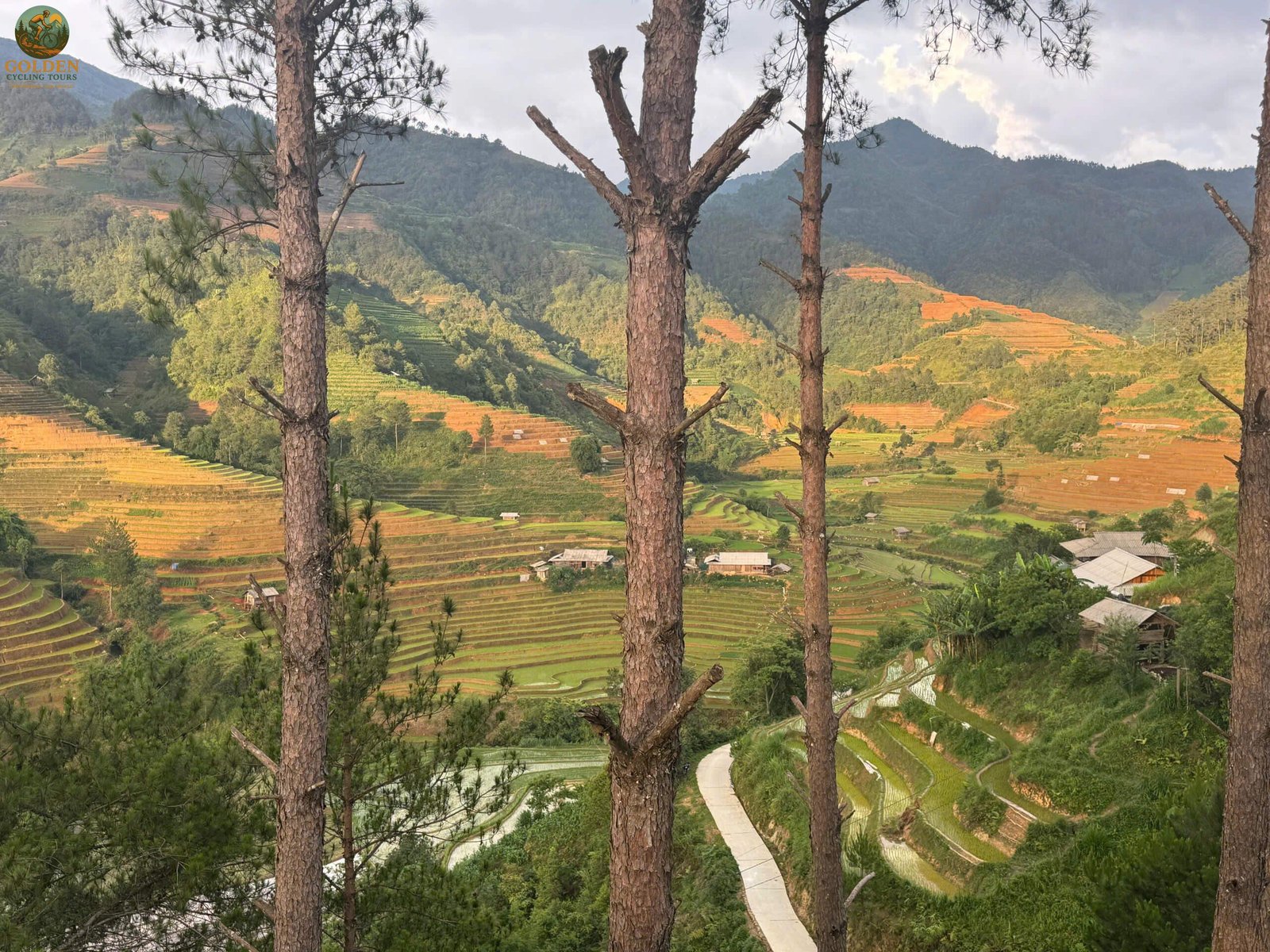
To master this multi-day expedition, understanding the Elevation Profile and Road Conditions for the 15-Day Northeast Vietnam Bike Tour is essential for every endurance cyclist and adventurer. Crafted by the local route specialists at Golden Cycling Tours, this signature journey takes riders deep into Cycling Northern Vietnam, offering an epic challenge where steep vertical gain meets pristine smooth asphalt, technical descent switchbacks, and isolated concrete backroads.
Whether you are an ambitious road rider preparing for long mountain ascents or seeking a premium pedal-assist adventure, analyzing the Elevation Profile and Road Conditions for the 15-Day Northeast Vietnam Bike Tour will equip you to conquer every mountain pass with confidence.
Riding across Northern Vietnam demands physical resilience, technical bike handling, and smart pacing. Across the 15-day itinerary, cyclists conquer over 12,000 meters of cumulative vertical elevation gain while traversing wildly changing road conditions.
The geography of Vietnam Northeast Bike Tours transitions from soft rolling hills near urban outposts to sharp karst canyons, serpentine cliffside switchbacks, and alpine passes reaching elevations well over 1,500 meters above sea level.
For riders seeking an extra tier of support or comfort, navigating these challenging elevation profiles via Vietnam luxury bike tours guarantees top-tier mechanical support, van escorts, and luxury accommodations. Meanwhile, our specialized Vietnam e-bikes tours feature high-torque electric mountain bikes that flatten steep gradients, enabling riders of all fitness levels to savor the jaw-dropping vistas without physical exhaustion.
To help you prepare your legs and gear, here is a detailed breakdown of what to expect on the road, phase by phase.
The initial phase begins with a transfer away from Hanoi to smooth asphalt backroads alongside the peaceful Ky Cung River. Gradients here remain gentle, averaging 2% to 4%, giving your legs a chance to warm up.
The true physical test arrives on the climb to Mau Son Mountain. Rising sharply over 1,500 meters above sea level, this 15-kilometer continuous uphill climb features gradients oscillating between 7% and 11%. The road surface consists of old French-era asphalt mixed with weathered concrete slabs, demanding good traction and steady gear ratios. As you climb past mossy stone ruins, the air cools dramatically, and swirling mountain fog adds a breathtaking atmosphere to your effort.
On Day 3, riding along historic Highway 4 toward Cao Bang, the terrain shifts to rolling hill profiles. Expect smooth asphalt with occasional patches of loose gravel, requiring vigilant bike control on quick, sweeping downhills.
Riding through Cao Bang bike tours plunges cyclists into the magical realm of the Non Nuoc Cao Bang UNESCO Global Geopark. The elevation profile here is characterized by rhythmic rolling hills, short punchy climbs (5% to 8% gradients), and fast valley descents.
The road surface leading toward Ban Gioc Waterfall and Nguom Ngao Cave is smooth, freshly paved asphalt that rolls effortless under your tires. Side excursions to traditional artisan hamlets like Phia Thap Village introduce quiet concrete singletracks and packed dirt trails where the scent of drying incense sticks fills the warm breeze.
As you head toward Angel Eye Mountain and Lake Thang Hen, the terrain becomes slightly technical with compressed gravel paths navigating around peaceful turquoise lakes. The ride to Pac Bo Cave offers silky smooth tarmac with flat valley profiles, before pitching upward into steep, serpentine backroads on the push toward Bao Lac, where climbs reach sustained 8% gradients over sharp mountain spurs.
This phase is the absolute highlight of Ha Giang bike tours, featuring the most spectacular vertical profiles in Southeast Asia.
Leaving Bao Lac, you cross into the jagged heart of Meo Vac. Day 9 brings the ultimate climax of the tour: conquering the legendary Ma Pi Leng Pass. Hanging precariously over vertical cliff faces, this world-renowned pass climbs to nearly 1,500 meters above sea level with steep gradients ranging from 8% to 14%. The road surface is immaculate asphalt, engineered with banked hairpin turns that cling directly to the mountain wall.
As you grind up the switchbacks, the sheer drop-off into the Nho Que River Canyon below provides an unforgettable rush of adrenaline. Looking down at the emerald turquoise waters of the Nho Que River, every pedal revolution feels like flying.
Continuing across the high stone forests of the Dong Van Karst Plateau Geopark, riders encounter sharp rolling ascents on smooth asphalt road surfaces. A northbound detour climbs steadily toward Lung Cu Flag Tower, the northernmost pinnacle of Vietnam, where high-mountain winds roar across the flag platform.
Descending toward Ha Giang City, you scale Quan Ba Heaven Gate, catching sight of the iconic Twin Mountains shrouded in morning mist. The descent features over 20 kilometers of technical downhills on smooth, wide tarmac, testing your braking control and cornering lines as you drop rapidly into the valley floor.
Transitioning south, the route enters Ba Be Lake bike tours within Ba Be National Park. The elevation profile flattens into gentle rolling hills with short, shady climbs through dense tropical foliage.
Road conditions consist of narrow rural asphalt and paved village lanes free from motor traffic. Riding beneath the humid canopy of old-growth rainforest trees, you are serenaded by wild cicadas before swapping your bike frame for a serene wooden boat cruise across the calm waters of Ba Be Lake.
To ensure dry road surfaces, optimal traction, crisp mountain air, and spectacular photographic conditions, aligning your journey with the northern seasons is vital:
Considered the absolute prime window for cycle touring. Autumn brings crisp blue skies, low humidity, and mild temperatures ranging between 18°C and 25°C (64°F to 77°F). October is legendary as the terraced rice fields in Hoang Su Phi turn a brilliant golden yellow just before harvest.
Spring brings lush flora, blossoming wild orchids, and fresh green mountain landscapes across the Dong Van Karst Plateau Geopark. Temperatures remain comfortably cool for climbing high passes without overheating.
Winter brings dramatic cloud inversions, atmospheric fog, and chilly alpine temperatures that can drop below 10°C (50°F) atop peaks like Mau Son Mountain. Cyclists should pack windproof thermal layers for cold pass descents.
Rebuilding glycogen stores after pedaling thousands of vertical meters requires rich, authentic mountain cuisine cooked with fresh local ingredients:
Thang Co: A fragrant, slow-simmered herbal stew spiced with wild cardamom and lemongrass, traditional to high mountain markets in Meo Vac.
Pho Chua (Sour Noodle Soup): A delicious specialty in Cao Bang featuring soft rice noodles topped with roasted duck, char siu pork, crushed peanuts, and warm sweet potato gravy.
Roasted Duck with Mac Khen Berries: Tender local duck marinated in forest peppercorns and roasted over charcoal embers along the Ky Cung River in Lang Son.
Five-Color Sticky Rice: A fragrant glutinous rice dish naturally colored using magenta plant leaves, pandan, and turmeric.
Smoked Buffalo Meat (Thit Trau Gac Bep): Strips of beef or buffalo cured over kitchen fires, offering a savory, high-protein snack for long mountain rides.
Lang Son City Center: Vibrant local eateries along riverbank promenades serving crispy roasted duck and steamed rice rolls.
Cao Bang Town & Trung Khanh: Authentic family kitchens near Ban Gioc Waterfall specializing in wild bamboo shoots, river fish, and mountain greens.
Dong Van & Meo Vac Old Quarters: Cozy stone-built cafes and homestay dining tables serving piping hot hotpots and rich egg coffee overlooking jagged karst peaks.
Restful sleep is vital for muscle recovery when tackling daily mountain gains. Golden Cycling Tours curates exceptional lodgings across the entire route:
In traditional hamlets like Phia Thap Village (Cao Bang) or Du Gia Village (Ha Giang), guests stay in handcrafted Tay and Dao wooden stilt houses. Expect spotlessly clean bedding, hot showers, mosquito netting, and unforgettable family-style dinners with your local hosts.
In larger hubs like Cao Bang City, Dong Van, and Ha Giang City, stay in comfortable 3-star and 4-star boutique hotels featuring plush mattresses, hot soaking showers, Wi-Fi, and panoramic mountain views to revitalize your body.
Cycling through Northeast Vietnam offers an intimate window into ancient ways of life preserved across minority communities, including the Tay, Nung, H'mong, Dao, and Lolo peoples.
At the end of every challenging riding stage, local villagers welcome you with genuine smiles, warm herbal tea, and homemade rice wine. Staying in stilt villages allows you to hear traditional stringed instrument music and learn about centuries-old agricultural customs.
Timing your ride to coincide with weekend trading posts like the Meo Vac Sunday Market or Dong Van Market is a cultural revelation. Thousands of ethnic villagers gather in hand-woven brocade attire to trade horses, mountain honey, hand-forged tools, and colorful textiles.
Navigating remote alpine topography requires bulletproof logistical execution so you can enjoy every mile stress-free:
We provide high-performance hardtail mountain bikes and gravel bikes fitted with hydraulic disc brakes for maximum stopping power on steep pass descents, wide-range cassette gearing for effortless climbing, and front suspension forks. Premium electric mountain bikes (E-MTBs) are also available for seamless pedal assistance.
A dedicated air-conditioned support truck and passenger van follow the group throughout the trip. Transporting your luggage, spare wheels, repair tools, medical supplies, cold water, and local fruits, the van offers a comfortable seat whenever you wish to rest your legs.
Our native English-speaking lead guides are veteran cyclists who understand every curve, gradient shift, weather pattern, and cultural nuance of Northern Vietnam, keeping you safe and inspired on every stage.
If you are seeking alternate or shorter biking adventures across Northern Vietnam, explore our popular itineraries:
Take on our flagship 15-day Vietnam Northeast cycling tour for the ultimate grand expedition.
Try the dramatic 10-day Ha Giang loop & Hoang Su Phi adventure focusing on steep passes and golden rice terraces.
Explore peaceful emerald valleys on Mai Chau bike tours or scenic Pu Luong bike tours.
Book our popular 4-day Mai Chau to Pu Luong cycling adventure or the relaxing 6-day Mai Chau, Pu Luong & Ninh Binh e-bike tour for an ideal shorter getaway.
"Analyzing the elevation profiles before booking had me nervous, but the support van, excellent gearing, and expert pacing by Golden Cycling Tours made climbing Ma Pi Leng Pass an absolute dream!" — Marcus V., Germany
"The road conditions were surprisingly smooth on the high passes, and descending into Ban Gioc Waterfall after days on the saddle is something I will cherish forever. An absolute bucket-list trip!" — Elena R., Canada
While average climb gradients range between 6% and 8%, steep sections on Ma Pi Leng Pass and Mau Son Mountain reach punchy ramps between 10% and 14%.
While major mountain passes feature smooth asphalt, gravel bikes or hardtail mountain bikes with wider tires (38c to 2.1 inches) are recommended to comfortably handle minor road repairs, concrete village paths, and rural trails.
Yes! Our premium E-MTBs provide smooth pedal assistance, allowing riders to comfortably master challenging vertical profiles regardless of physical conditioning.
Our air-conditioned support van trails the cycling group at all times. You can hop into the support vehicle at any point along the route to rest and rejoin the ride whenever you feel ready.

.jpg "Thai Binh Vietnam Bicycle")
.jpg "Phu Tho Vietnam Cycling")
.jpg "Thai Nguyen Cycling Vietnam")
.jpg "Tuyen Quang Cycling Vietnam")
.jpg "Vinh Phuc Cycling Vietnam")
Leave a Reply
Your email address will not be published. Required fields are marked *