- Call us Via Whatsapp: +84 (0) 832 126 699
4.9 stars on our site
(15,000 reviews)
- Monday - Sunday : 08:00 - 17:00
(15,000 reviews)

As your front tire cuts through the dense mountain mist at 1,800 meters elevation, the world narrows to a stark contrast of dark asphalt and vertical limestone cliffs. Cold drizzle clings to your shell jacket, while the scent of damp moss, wild pine, and woodfire smoke fills your lungs. Your heart thuds rhythmically in your chest—a steady drumbeat echoing the metallic rhythm of your rear cassette as you negotiate a hairpin curve on Ma Pi Leng Pass. Far below, through a gap in the swirling clouds, the turquoise ribbon of the Nho Que River slithers through Tu San Canyon, thousands of feet in the abyss.
Then comes the sound: a deep horn blast echoing off the granite walls, warning you that a local transport truck is swinging around the blind corner ahead. You gently modulate your hydraulic disc brakes, shift your body weight, and track a smooth, safe line along the inner asphalt edge.
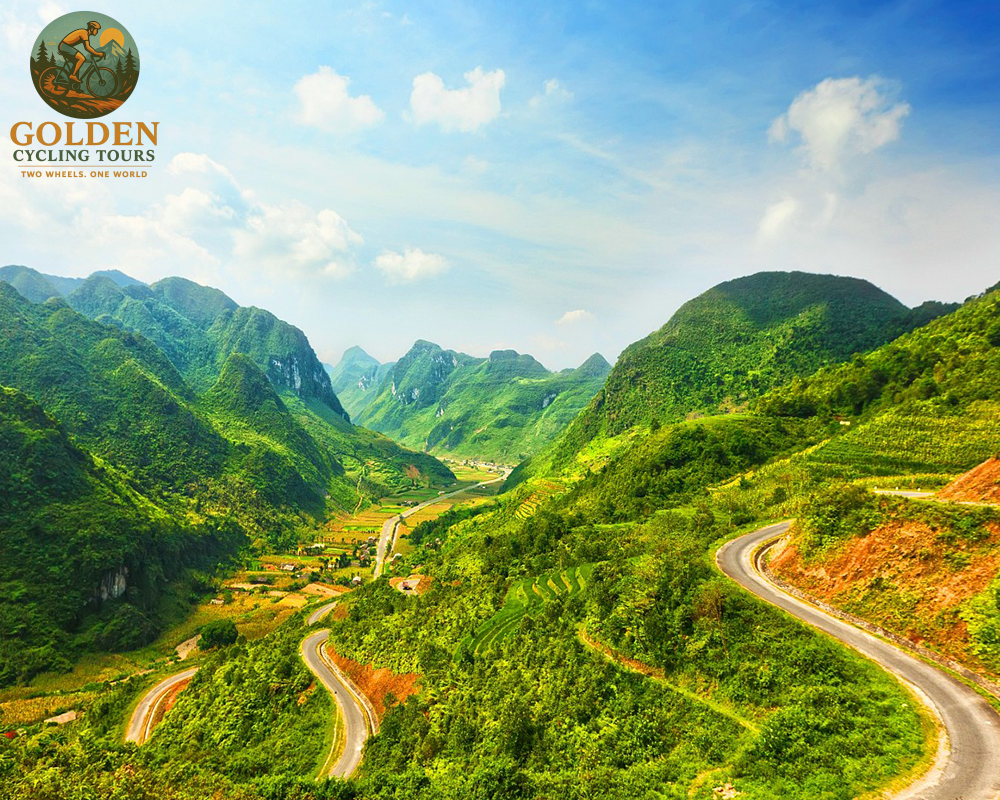
Riding through the majestic highlands of Indochina is an exhilarating bucket-list journey. However, conquering these high-altitude corridors safely requires preparation, vigilance, and spatial awareness. This complete Cycling Northern Vietnam Safety Guide: Traffic, Passes & Weather provides the tactical insights, traffic strategies, alpine weather protocols, and regional wisdom necessary to navigate Southeast Asia’s most spectacular mountain roads with total confidence.
Whether you are planning a solo bikepacking voyage or preparing for a supported expedition with Golden Cycling Tours, understanding how to handle mountain traffic, technical descents, and sudden microclimates ensures your ride remains thrilling, memorable, and safe.
Understanding traffic patterns in the northern highlands requires shedding Western road expectations and adapting to local driving habits. On mountain passes in Ha Giang, Lao Cai, and Yen Bai, the rhythm of the road relies on visual awareness and audible cues.
In Western countries, a car horn often signals frustration. In the high mountains of Vietnam, the horn is a polite, vital safety tool used to declare presence around blind curves.
Deciphering Horn Blasts: When a truck, bus, or motorbike sounds its horn while approaching a mountain switchback, it means: "I am here, stay in your lane."
How Cyclists Should Respond: Always acknowledge audible signals by holding your lane on the far right side of the road. Never swing wide into the center of the lane when approaching a blind bend.
Using Your Own Audible Warning: Equipping your bicycle with a loud brass bell or carrying a compact whistle allows you to signal your presence to pedestrians, livestock, and motorbikes when emerging from foggy corners.
Mountain roads like O Quy Ho Pass and Khau Pha Pass serve as key commercial corridors between provincial capitals like Sapa and Lai Chau. Large trucks and local agricultural vehicles require wide turning radiuses on tight hairpin turns.
Give Way to Ascending Heavy Vehicles: Heavy trucks climbing steep 12% gradients lose momentum quickly. Always give ascending trucks plenty of space to negotiate switchbacks.
Positioning on Technical Bends: When descending toward a blind curve, stay crisp and tight on the inside corner of your lane. Avoid overtaking other cyclists or slow vehicles near switchbacks.
Watch for Agricultural Traffic: Local farmers driving wooden-bed motorbikes or herding water buffalo often enter mountain routes from hidden side trails. Keep your eyes scanning 50 meters ahead to spot unexpected obstacles early.
Descending from high pass summits like Sky Gate Pass down into deep valley basins requires precise bike control, proper weight distribution, and heat management for your braking system.
Long descents spanning 20 to 30 continuous kilometers test mechanical equipment to its limits. Overheated brake rotors or glazed pads can reduce stopping power when you need it most.
Avoid Continuous Dragging: Never hold both brake levers down continuously during long descents. Dragging brakes creates extreme thermal buildup, which can boil brake fluid or warp disc rotors.
Use Pulsed Cadence Braking: Apply firm pressure to both front and rear brakes before entering a turn, then release the levers as you lean into the curve. Let the front brake handle 70% of your stopping force while using the rear brake for speed control.
Leverage Low Climbing Gears Early: When shifting from descents into steep pitch spikes reaching 14%, shift into your easiest chainring combination before your momentum drops. This prevents chain drops and strain on rear derailleurs under high pedaling loads.
Highland roads endure extreme weather, resulting in variable road surfaces ranging from smooth asphalt to loose gravel patches and wet clay soil.
Identifying Wet Limestone Dust: Fine limestone dust mixed with light drizzle creates a slick layer on asphalt. Exercise extra caution on shadowed forest corners where moisture lingers throughout the day.
Navigating Seasonal Roadworks: Mountain roads undergoing repairs may feature loose crushed rock or dirt sections. Keep your grip loose, soften your elbows, and pedal with a steady cadence to maintain rear-wheel traction.
Crossing Bridge Drainage Joints: Wooden plank bridges and metal expansion joints become slippery when wet. Cross them with your bike held completely upright, avoiding sudden steering movements or heavy braking.
Weather in the northern frontier can change rapidly. A sunlit climb through a tropical valley can turn into a cold alpine rainstorm at a high summit pass in under 30 minutes. Following a detailed Cycling Northern Vietnam Safety Guide: Traffic, Passes & Weather helps you stay dry, warm, and focused through every climate transition.
Altitude changes bring significant temperature variations. As a general rule, temperatures drop approximately 6.5°C for every 1,000 meters of elevation gained.
Handling Summit Cloud Inversion: High passes such as Heaven's Gate Summit on O Quy Ho Pass are frequently shrouded in dense clouds. Visibility can drop below 10 meters, requiring high-visibility cycling wear and active LED lights.
Managing Wind Gusts in Deep Canyons: Riding along exposed cliffs like Ma Pi Leng Pass above Tu San Canyon exposes cyclists to sudden crosswinds. Keep a firm grip on your handlebars and stay centered over your top tube.
Mitigating Hypothermia Risk on Descents: Sweating during a strenuous climb followed by a cold, wet descent can cause rapid body heat loss. Put on a windproof or waterproof jacket at the pass summit before starting your descent.
Carrying the right gear in your handlebar bag or support vehicle guarantees protection against sudden mountain shifts:
High-Visibility Outerwear: Bright yellow, neon green, or orange waterproof jackets featuring reflective strips.
Active Safety Lighting: High-lumen front headlights (minimum 500 lumens) and flashing red rear tail lights, turned on during foggy pass crossings.
Thermal Layers: Lightweight merino wool base layers, windproof cycling vests, and full-finger thermal gloves for high-altitude descents.
Emergency Repair Essentials: Spare inner tubes, tubeless tire plugs, a compact hand pump, multi-tool with chain breaker, spare disc brake pads, and extra derailleur hangers.
Every region in the north features unique terrain, distinct cultural landscapes, and specific safety considerations. Explore top routes across Cycling Northern Vietnam to choose the right journey for your experience level.
The extreme north presents dramatic mountain scenery along the border with China.
Terrain Overview: The route climbs through the UNESCO-listed Dong Van Karst Plateau, passing Quan Ba Pass and Sky Gate Pass before traversing Ma Pi Leng Pass between Dong Van and Meo Vac. To the west, Hoang Su Phi offers scenic dirt roads through terraced hills.
Safety Focus: Narrow cliff roads, steep 12% ramps, and vertical drop-offs mean careful speed control and precise line choice are required on descents.
Recommended Tours: Experience this loop with full support vehicle back-up on a 10-day Ha Giang Loop & Hoang Su Phi Cycling Adventure or browse specialized Ha Giang bike tours.
Located in the northeast, Cao Bang features limestone karst formations, quiet border valleys, and forest streams.
Terrain Overview: Rolling routes lead through Thong Nong and Quang Uyen to Ban Gioc Waterfall, a multi-tiered waterfall straddling the border between Vietnam and China. Southward routes pass through Ba Be National Park, encircling Ba Be Lake.
Safety Focus: Moderate climbs with occasional loose gravel on rural tracks. Watch for farm animals and agricultural equipment near small hamlets.
Recommended Tours: Book the comprehensive 15-day Best of Northeast Vietnam Cycling Tour, explore targeted Cao Bang bike tours, relax on Ba Be Lake bike tours, or review all regional Vietnam Northeast bike tours.
For cyclists seeking smooth valley riding through peaceful green countryside, the valley route southwest of Hanoi is ideal.
Terrain Overview: Cycle through the quiet valley of Mai Chau, traverse the nature paths of Pu Luong Nature Reserve, and finish among the limestone monoliths of Ninh Binh and Tam Coc.
Safety Focus: Gentle rolling terrain with low traffic density. Main safety considerations include navigating narrow singletrack bridges and wet cobblestone pathways through rural villages.
Recommended Tours: Ride these scenic valleys on a 4-day Mai Chau to Pu Luong cycling adventure or customize your itinerary with Mai Chau bike tours and Pu Luong bike tours.
For smooth pedaling assistance across rolling hills, try the premium 6-day Mai Chau, Pu Luong & Ninh Binh e-bike tour or select from modern Vietnam e-bike tours.
Choosing the right season ensures optimal road friction, clear pass visibility, and comfortable riding temperatures.
Autumn is widely recognized as the safest and most enjoyable time to cycle in the northern mountains. Summer rains fade away, leaving dry asphalt, clear skies, and stable daytime temperatures between 18°C and 25°C.
This window coincides with the golden rice harvest across Mu Cang Chai, Hoang Su Phi, and Mai Chau, offering stunning scenery across every mountain valley.
Spring brings mild temperatures and clear mountain air. Peach blossoms and wild mustard flowers bloom along the slopes of Dong Van Karst Plateau. Morning fogs clear early, providing good visibility over high mountain passes.
Winter (December to February) brings cold temperatures and dense fog to high passes like O Quy Ho Pass. Thermal base layers, winter gloves, and high-output LED tail lights are essential.
Summer (June to August) brings warm temperatures along with afternoon rainstorms that can make mountain roads slippery. Flexible scheduling and support vehicle backup ensure you can bypass difficult weather safely.
Proper nutrition and clean hydration keep your body energized during multi-day mountain rides.
Highland food offers nutritious, energy-dense meals made with fresh local ingredients.
Nutritious Mountain Staples: Fuel up with bowls of hot beef Pho infused with star anise, charcoal-grilled mountain pork seasoned with wild mac khen pepper, stir-fried jungle ferns with garlic, and sticky rice baked inside bamboo trunks.
Hydration Practices: Drink clean, bottled or filtered water enriched with electrolyte powders to prevent cramping during long alpine ascents. Avoid drinking untreated stream water.
In regional hubs like Dong Van, Meo Vac, Sapa, and Cao Bang, choose busy market stalls and popular local eateries where food is cooked fresh over high heat. At rural homestays in Pu Luong Nature Reserve, hosts prepare fresh, wholesome family meals served on woven bamboo trays.
Quality sleep accelerates muscle recovery after demanding vertical climbs.
Authentic Stilt Homestays: Stay inside wooden stilt houses built by Tay, White Thai, or Hmong families. Enjoy local hospitality, sleep under mosquito netting, and wake up to sweeping views over mountain valleys.
Luxury Eco-Resorts: Riders seeking high-end comfort can relax at eco-lodges featuring infinity pools overlooking deep valleys, spa services for tired legs, and fine dining. Explore luxury options with Vietnam luxury bike tours.
Transporting bikes safely from Hanoi to remote starting points requires care to protect derailleurs, brake lines, and frames.
Dedicated support vehicles equipped with custom roof racks ensure your bike arrives in top condition. Having a support vehicle behind you on mountain passes offers peace of mind, providing hydration, snacks, and mechanical aid whenever needed.
A dedicated SAG-wagon support vehicle acts as a mobile safety hub. If fatigue sets in, sudden weather arrives, or a mechanical issue occurs on high climbs like Khau Pha Pass, you can step into the climate-controlled van and rest safely until conditions improve.
The northern mountains are home to over 30 ethnic minority groups, including the Hmong, Dao, Tay, Nung, and White Thai communities. Respectful cultural interactions create warm welcomes in every village.
Modest Dress Code: Wear appropriate attire when riding through rural villages or visiting homestays.
Respectful Photography: Ask for permission with a friendly smile or gesture before taking photos of village elders or children.
Warm Hospitality: If invited to share a cup of green tea or corn wine with your homestay host, accept with both hands as a polite gesture of respect.
Here is what global cyclists say after riding the northern passes with Golden Cycling Tours:
"Descending Ma Pi Leng Pass was breathtaking. Knowing our guide was managing the group's pace while the support van followed behind made me feel completely safe throughout the ride!" – Rachel & Mark K., Canada
"The fog on O Quy Ho Pass was thick, but our guide equipped us with high-output rear lights and guided us safely down into Sapa. The safety standards and local route knowledge were exceptional." – Gareth P., United Kingdom
Yes, provided you understand local traffic patterns, ride defensively, and maintain proper brake modulation on descents. Booking a guided tour with Golden Cycling Tours adds an extra layer of safety with professional leaders, mechanical support, and dedicated support vehicles.
Hydraulic disc brakes with 160mm or 180mm rotors are strongly recommended. They provide reliable, consistent stopping power with minimal hand effort during long alpine descents like Khau Pha Pass and O Quy Ho Pass.
Wear bright, reflective waterproof jackets, activate front headlights and rear flashing LED tail lights, reduce speed on descents, and use pulsed braking. If weather becomes severe, step into your support vehicle until conditions improve.
While helmet laws primarily apply to motorbikes, wearing a high-quality, properly fitted cycling helmet is mandatory on all guided tours and essential for safety on mountain routes.
Yes! Bringing your own familiar helmet, clip-in pedals, and favorite riding lights ensures maximum personal comfort and safety throughout your trip.

.jpg "Thai Binh Vietnam Bicycle")
.jpg "Phu Tho Vietnam Cycling")
.jpg "Thai Nguyen Cycling Vietnam")
.jpg "Tuyen Quang Cycling Vietnam")
.jpg "Vinh Phuc Cycling Vietnam")
Leave a Reply
Your email address will not be published. Required fields are marked *