- Call us Via Whatsapp: +84 (0) 832 126 699
4.9 stars on our site
(15,000 reviews)
- Monday - Sunday : 08:00 - 17:00
(15,000 reviews)

The morning air at 1,500 meters is so cold and pure that every inhalation feels like swallowing crushed crystal. Thick sea-of-cloud mists wrap around vertical limestone towers, smelling intensely of damp mountain earth, pine needles, and sweet woodsmoke wafting up from distant H'Mong hearths. You click into your clipless pedals, the sharp metallic snap echoing through the silent abyss. Your tires grip the cool pavement, and the rhythmic, synchronized click-clack of your rear cassette sings like a mechanical hymn against vertical stone walls. Ahead lies a narrow asphalt ledge carved directly into vertical cliffs—the legendary pass that local tribes historically named "the nose of the horse."
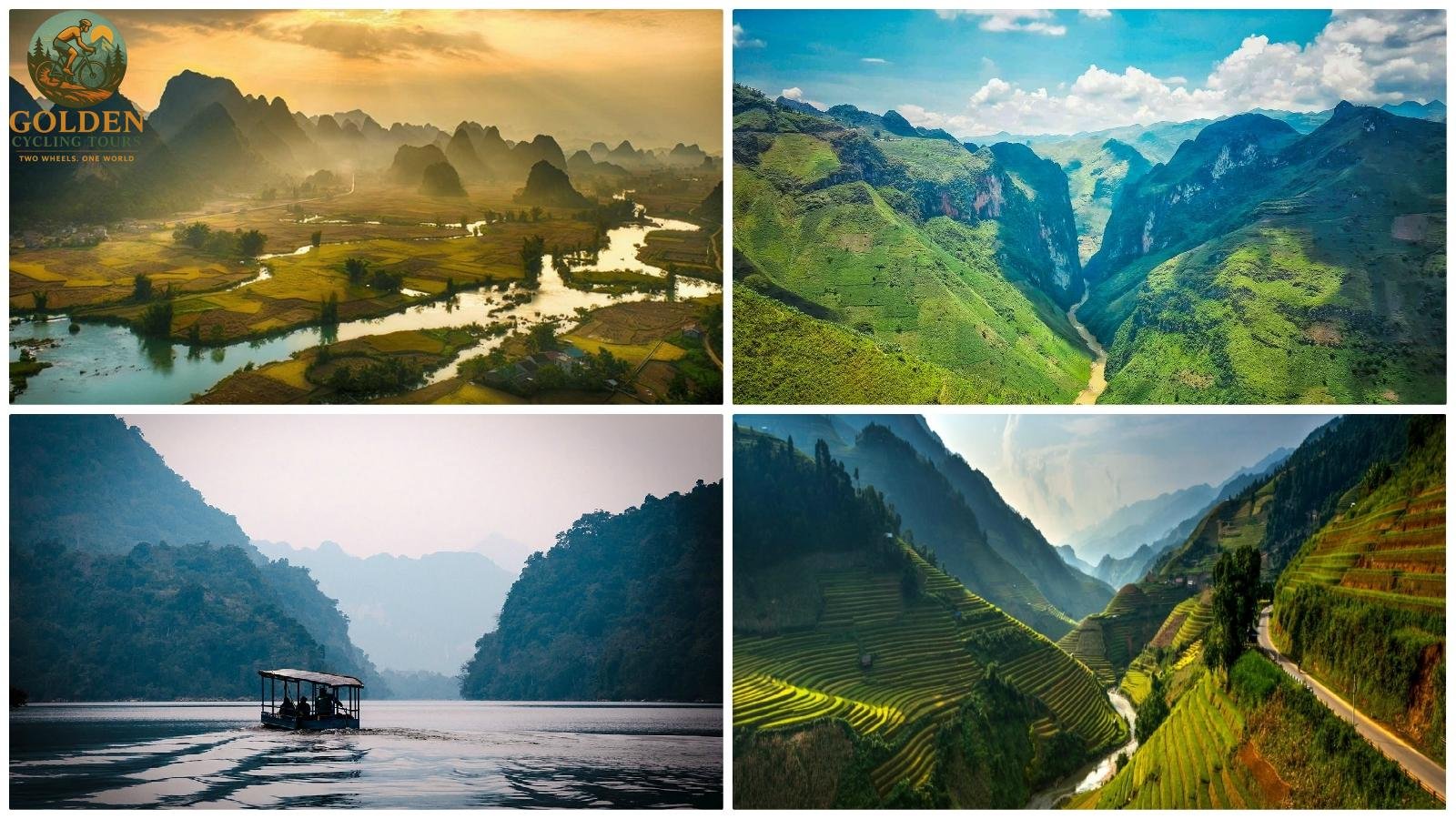
Executing Conquering Ma Pi Leng Pass by Bike: Epic Ha Giang Cycling Adventure is not merely a ride; it is an unforgettable pilgrimage for endurance cyclists and adventurous explorers alike. Clinging to the sheer walls of Southeast Asia’s deepest canyon, this legendary stretch of mountain road tests your legs, ignites your senses, and delivers sweeping vistas that defy description.
By partnering with top-tier mountain outfitter Golden Cycling Tours, you turn an intimidating wilderness expedition into a perfectly executed, thrilling cycling journey. Here is your definitive guide to tackling the undisputed king of Vietnamese mountain passes.
Carved out of raw granite during the 1960s by tens of thousands of local ethnic youth volunteers clinging to ropes on cliff faces, the 20-kilometer stretch between Dong Van Ancient Town and Meo Vac is widely recognized as one of the most spectacular engineering feats and natural wonders in Asia.
The pass rises dramatically across the heart of the UNESCO-protected Dong Van Karst Plateau UNESCO Global Geopark. Continuous gradients between 8% and 14% demand steady climbing cadences, focused breathing, and well-managed muscular energy. As your quads burn with a satisfying ache, every hard pedal stroke rewards you with ever-expanding views over razor-sharp limestone pinnacles dating back over 400 million years.
At the apex of the climb, the earth seems to fall away completely. Standing at the high-altitude lookout, you gaze downward into the vertical walls of Tu San Canyon, dropping over 800 meters into the abyss. Far below, the turquoise ribbon of the Nho Que River slithers through giant black cliffs like a fallen strip of silk. The updrafts of mountain wind press against your face while eagles circle on thermal currents far below your front wheel.
To fully appreciate Conquering Ma Pi Leng Pass by Bike: Epic Ha Giang Cycling Adventure, understanding the surrounding terrain ensures proper pacing and maximum enjoyment.
Leaving the historic brick lanes of Dong Van Ancient Town, the road gently climbs past traditional rammed-earth H'Mong houses and fields of pink buckwheat blossoms in Sung La Valley. The gradient quickly steepens as you pass small alpine hamlets where children dressed in vibrant embroidered skirts wave from stone-walled doorways.
The road hooks sharply around high cliffs, revealing dramatic switchbacks below. Your heart beats in a steady rhythm, your breath comes in disciplined gasps, and the cool alpine breeze cools your sweat as you climb past high cliff walls toward the pass summit monument.
The central section of the pass is a narrow ledge suspended between sky and abyss. The feeling of open space is intoxicating. To your left, vertical granite walls reach toward the sky; to your right, sheer drops fall straight into Tu San Canyon. The smooth asphalt allows you to roll with fluid grace, taking in sweeping 360-degree views that stretch across the international border into China.
Cresting the high point, you tuck into an aerodynamic posture for a breathtaking technical descent. Your hydraulic disc brakes hum softly as you feather the levers into tight hairpins and flowing curves. The air grows warmer as you drop down into the bustling trading valley of Meo Vac, leaving your quads humming with pure accomplishment.
Riders seeking extended regional routes across Northern Vietnam can combine this epic pass climb with broader itineraries like Cycling Northern Vietnam or explore surrounding mountain sectors through Ha Giang bike tours, Sapa bike tours, and Bac Ha bike tours.
Weather conditions on high mountain ledges can change rapidly. Selecting the ideal travel window ensures clear visibility, dry road surfaces, and comfortable riding temperatures.
Autumn is universally celebrated as the prime window for high-altitude pass riding. Monsoon rains subside, leaving behind crystal-clear blue skies and daytime temperatures between 15°C and 22°C. In September, the steep terraced slopes of Hoang Su Phi turn golden yellow during the rice harvest. By October and November, pink and purple buckwheat blossoms blanket the karst valleys surrounding Pao's House & Sung La Valley, while dry road surfaces provide optimal tire traction on technical descents.
Spring brings mild temperatures ranging between 18°C and 25°C, making it an ideal window for long climbing miles. Hillsides surrounding Quan Ba Heaven's Gate and Tham Ma Pass erupt in delicate white plum blossoms and soft pink peach flowers. Minimal rainfall during early spring ensures dry, grippy roads before summer heat arrives.
Winter brings raw, atmospheric cold to high mountain passes, with temperatures near Lung Cu Flag Tower sometimes dipping below 5°C. Thick layers of sea-of-cloud mist drift through the peaks, creating an ethereal environment. Thermal base layers, windproof jackets, and winter cycling gloves are mandatory, but winter rewards riders with quiet roads and warm fires in tribal homestays.
Summer features high humidity, warm temperatures, and tropical downpours. While wet descents require cautious speed management, summer fills the rivers and transforms Du Gia Waterfall in nearby Du Gia Valley into a roaring cascade set against emerald mountain peaks.
Reaching the far northern mountains from Vietnam's capital is straightforward and seamless.
VIP limousine vans and overnight express sleeper buses operate daily between Hanoi and Ha Giang City, completing the trip in approximately 5 to 6 hours via modern expressways. These vehicles feature large, carpeted luggage holds capable of transporting bicycle boxes, gear duffels, and hard travel cases safely.
For cyclists crafting broader nationwide itineraries, link your pass climb with cultural rides through Hanoi bike tours, explore ancient limestone karst waterways via Ninh Binh bike tours, or traverse tranquil green valleys through Mai Chau bike tours and Pu Luong bike tours.
For grand regional cross-country explorations, connect your route with Cao Bang bike tours, Vietnam Northwest bike tours, Vietnam Northeast bike tours, trans-national routes like Cycling North to South Vietnam, or historic rides along Ho Chi Minh Trail cycling tours.
Conquering big mountain elevation gains requires modern, well-maintained machinery.
Hardtail Mountain Bikes: Equipped with front suspension forks, hydraulic disc brakes, and wide knobby tires. They deliver maximum stability, grip, and comfort when navigating asphalt switchbacks, potholes, or unpaved village detours.
Gravel Bikes: Ideal for fit, road-focused cyclists who prefer drop handlebars and fast rolling speed on smooth pavement. Outfitted with wide 1:1 gear ratios, gravel bikes turn steep gradients into smooth climbing rhythms.
E-Bikes (Pedal-Assist Electric Mountain Bikes): Modern e-bikes have transformed high-altitude cycling in Northern Vietnam. High-torque mid-drive motors allow riders of all fitness levels to climb Ma Pi Leng Pass with ease, enabling partners with different fitness levels to share the experience together. Discover premium electric rental packages through Vietnam e-bikes tours.
Conquering alpine passes burns thousands of calories. Local mountain cuisine provides rich, satisfying fuel packed with organic mountain produce and wild forest spices.
Thang Co: A traditional H'Mong delicacy slow-simmered in large iron cauldrons over open wood fires. Made with horse meat and seasoned with twelve forest spices—including cardamom, star anise, lemongrass, and roasted cinnamon—this rich stew delivers deep warmth and energy.
Au Tau Porridge: Sourced from wild mountain aconite roots, this savory rice porridge is simmered overnight with tender pork trotter and herbs. Valued in local traditional medicine, it relaxes fatigued muscles and promotes restful sleep.
Men Men: Steamed sweet cornmeal crushed by hand using stone mills. This dense, carbohydrate-rich staple provides sustained energy for long mountain climbs.
Smoked Mountain Pork & Black Chicken: Free-range pork and native black chicken cured over hardwood charcoal fires with wild forest mac khen peppers, served alongside fragrant mountain rice.
Com Lam (Grilled Sticky Rice in Bamboo): Sweet glutinous rice packed inside green bamboo stalks and roasted over glowing coals—nature's ultimate, portable energy snack for jersey pockets on long climbs.
Ruou Ngo (Corn Wine): Fermented using wild forest yeast and distilled over wood fires. Sharing a small glass with homestay elders is a universal sign of friendship.
Restful recovery is essential before and after tackling heavy elevation gains.
Staying in local homestays offers unforgettable cultural immersion. In Thon Tha Village and Du Gia Valley, sleep in wooden stilt houses built by Tay families beside freshwater streams. In Dong Van Ancient Town and Meo Vac, H'Mong homestays constructed with thick rammed-earth walls keep rooms warm during cool nights. Communal family dinners served around open hearths are a highlight of every evening.
For riders seeking private rooms, plush mattresses, hot rain showers, and spa treatments to repair tired muscles, boutique eco-lodges are situated in key hubs like Dong Van, Meo Vac, and Pan Hou. High-end accommodations can easily be integrated into your itinerary through Vietnam luxury bike tours.
Riding through remote mountain frontier districts requires cultural respect and mindfulness.
This region is home to over 17 distinct ethnic minority groups, including the H'Mong, Tay, Red Dao, and Lolo. Plan your ride to visit Sunday morning trading hubs like Dong Van Market or Meo Vac Market, where local villagers in colorful hand-woven attire trade textiles, livestock, and mountain honey. Always ask permission before photographing local children or elders, remove your shoes when entering private homes, and accept offered tea with both hands as a token of mutual respect.
Every kilometer of this high-altitude circuit offers spectacular natural sights:
Quan Ba Heaven's Gate: The high mountain portal revealing sweeping panoramic views of the famous Quan Ba Twin Mountains resting on the valley floor.
Tham Ma Pass: An iconic serpentine pass with tight S-curves carved into vertical limestone walls, testing your climbing rhythm.
Dong Van Karst Plateau UNESCO Global Geopark: Hundreds of square kilometers of carbonaceous black limestone pinnacles dating back over 400 million years.
Lung Cu Flag Tower: Perched atop Dragon Mountain, this national monument marks the northernmost border post of Vietnam along the border with China.
Ma Pi Leng Pass & Tu San Canyon: The crown jewel of Vietnamese mountain passes, offering jaw-dropping views down into Southeast Asia's deepest canyon gorge and the turquoise Nho Que River.
Du Gia Valley & Du Gia Waterfall: A serene, lush paradise where wooden Tay stilt villages rest beside crystal-clear river pools and cascading waterfalls.
"Completing Conquering Ma Pi Leng Pass by Bike: Epic Ha Giang Cycling Adventure with Golden Cycling Tours was the absolute peak of my 15 years in cycling. Standing on the cliffside ledge looking down into Tu San Canyon after climbing thousands of meters under my own power was a moment I will never forget. Top-notch bikes, brilliant guides, and unbelievable support!" — Marcus & Julia Vance, Vancouver, Canada
"Riding over Ma Pi Leng Pass on high-end pedal-assist e-bikes allowed my wife and me to conquer legendary climbs together without stress. The views over the Nho Que River were mind-blowing, and the homestay hospitality in Du Gia Valley was heart-warming. A 10 out of 10 experience!" — David & Karen Miller, London, United Kingdom
How hard is it to cycle over Ma Pi Leng Pass? The climb features continuous gradients between 8% and 14% over roughly 20 kilometers. Good cardiovascular fitness is recommended for standard road or mountain bikes. However, renting pedal-assist e-bikes through Vietnam e-bikes tours makes the climb accessible to casual riders.
Are foreign travel permits required for Ma Pi Leng Pass? Yes. Because the pass is located in a frontier border region, foreign visitors require a travel permit issued by local immigration authorities. When booking a guided or self-guided package with Golden Cycling Tours, all border permits are handled for you.
Is cycling along the cliff ledge safe? Yes, provided you maintain controlled speed and pay attention to oncoming traffic. The road is paved, wide enough for two vehicles to pass, and lined with guardrails along steep drop-offs.
Can I take a boat ride on the Nho Que River during the cycling tour? Absolutely! A scenic detour leads down to the riverbank, where wooden motorboats carry you right through the narrow jaw of Tu San Canyon for incredible low-angle photography.
What gear should I bring for mountain pass riding? Pack high-visibility cycling jerseys, padded bib shorts, breathable arm/leg sun sleeves, a lightweight windproof rain jacket for descents, thermal base layers for cold pass summits, and full-finger gloves.

.jpg "Thai Binh Vietnam Bicycle")
.jpg "Phu Tho Vietnam Cycling")
.jpg "Thai Nguyen Cycling Vietnam")
.jpg "Tuyen Quang Cycling Vietnam")
.jpg "Vinh Phuc Cycling Vietnam")
Leave a Reply
Your email address will not be published. Required fields are marked *