- Call us Via Whatsapp: +84 (0) 832 126 699
4.9 stars on our site
(15,000 reviews)
- Monday - Sunday : 08:00 - 17:00
(15,000 reviews)

As dawn breaks over the northern highlands, cold morning mist clings to your jersey while the sharp, rustic scent of woodsmoke and damp pine fills your lungs. Below your frame, the rhythmic whir-click of your rear hub echoing off massive stone walls is matched only by the gravel crunching under rubber. Every pedal stroke is an intense physical dialogue with the land: the burn of your quadriceps on a 15% gradient, the crisp mountain air expanding your chest, and the tactile thrill of feeling your tires bite into unpredictable terrain. Choosing the Best Tire Choice for Vietnam Gravel Bike Tours is not merely a technical decision—it is the fundamental link between you, your bicycle, and the untamed trails of Southeast Asia.
Whether you are navigating razor-sharp limestone flint along high mountain cliffs or descending through slick red clay in hidden jungle valleys, your tire setup determines whether your journey becomes an exhilarating triumph or a frustrating series of flat tires. In this comprehensive guide, we unpack the tire science, tread patterns, casing tech, and regional terrain nuances so you can select the Best Tire Choice for Vietnam Gravel Bike Tours and ride with absolute confidence across this extraordinary country.
Vietnam’s off-pavement topography is as diverse as it is unforgiving. A single morning ride can transition from silken asphalt to wet granite cobblestones, loose river bed gravel, deep mud patches, and razor-edged limestone doubletrack.
Without the proper rubber beneath you, unpredictable surfaces can compromise traction during critical mountain descents, waste precious energy on steep ascents, or cause sudden sidewall slashes miles away from the nearest bicycle shop.
Selecting the right tire balance allows you to lean harder into technical hairpin turns, float over unexpected gravel washing, and absorb harsh high-frequency trail vibrations before they fatigue your hands, shoulders, and core.
To choose your rubber wisely, you must first understand the ground beneath your wheels. Vietnam's premier cycling regions present distinct geological personalities.
In the extreme northeast, the landscape is defined by vertical geology. Traversing Cycling Northern Vietnam takes you through dramatic mountain passes and ancient limestone plateaus.
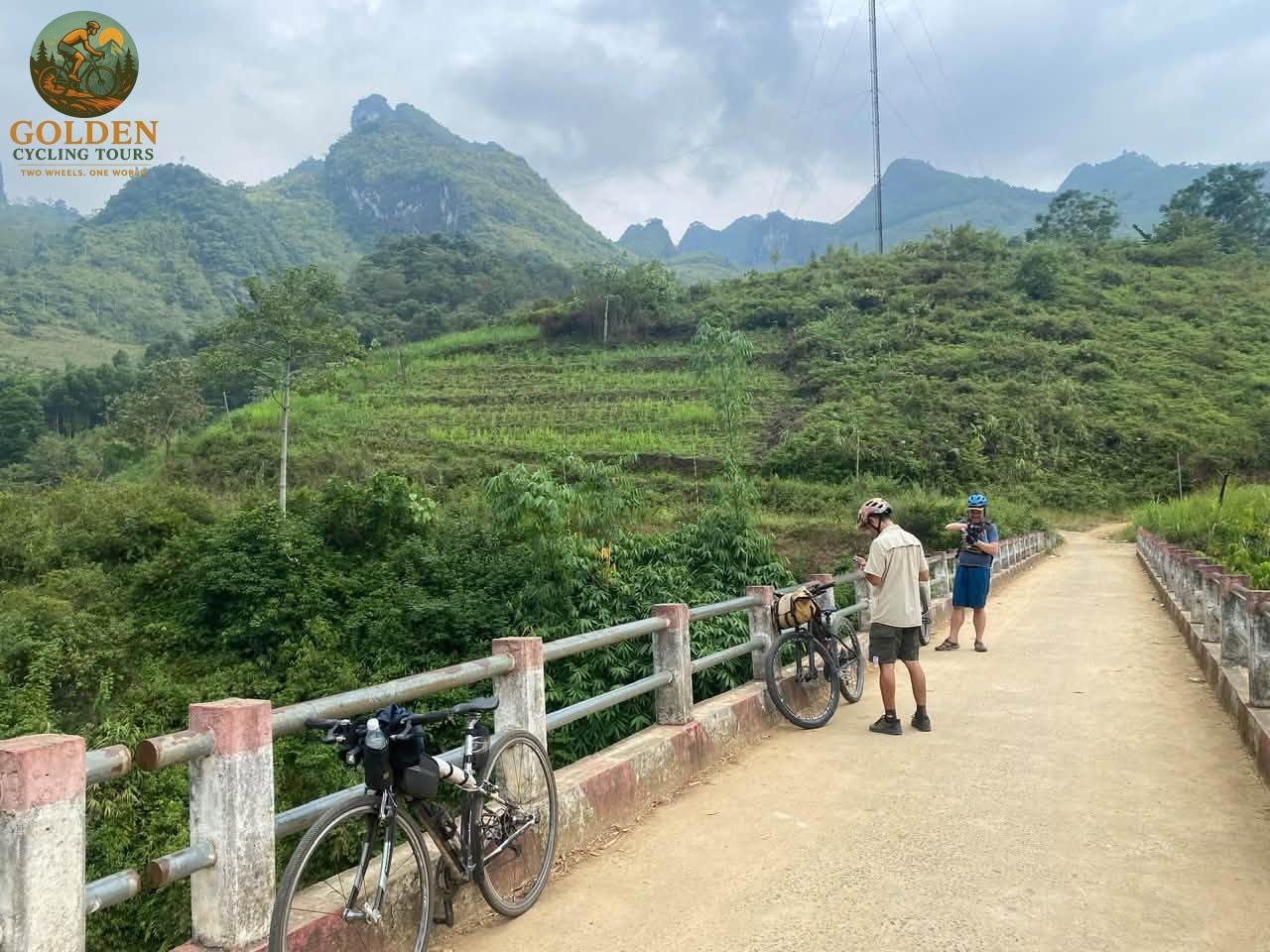
Riding through Ha Giang, your tires encounter sharp crushed limestone along narrow ledge roads like Tham Ma Pass. Pushing higher toward the jaw-dropping abyss of Ma Pi Leng Pass, the surface shifts between raw stone doubletrack and loose flint, far above the jade waters of the Nho Que River. Explore these legendary tracks with our dedicated Ha Giang Bike Tours or embark on the 10-Day Ha Giang Loop & Hoang Su Phi Cycling Adventure.
Further east through Hoang Su Phi, mountain paths cut across steep terraced slopes where loose granite grit tests your rear-wheel traction. Heading toward the thunderous cascades of Ban Gioc Waterfall via Cao Bang Bike Tours and the serene shores of Ba Be Lake Bike Tours, you will experience a mix of broken pavement and singletrack featured in our complete Vietnam Northeast Bike Tours.
Recommended Tire Profile for the Northeast: 40mm to 45mm width with reinforced sidewall protection (such as Exo, SG2, or ProWall), a dense center tread pattern for low rolling resistance, and prominent shoulder knobs for cornering grip on loose stone.
The Northwest offers massive vertical elevation gain enveloped in high mountain fog, lush jungle foliage, and rich tribal heritage.
Ascending into Vietnam Northwest Bike Tours, riders face demanding mountain passes under the shadow of Fansipan Peak. Descending O Quy Ho Pass into Sapa, dirt tracks cut into steep valley walls can quickly turn into slick clay after a flash rainstorm. Exploring remote villages via Sapa Bike Tours and Bac Ha Bike Tours demands tires that clear mud rapidly without loading up.
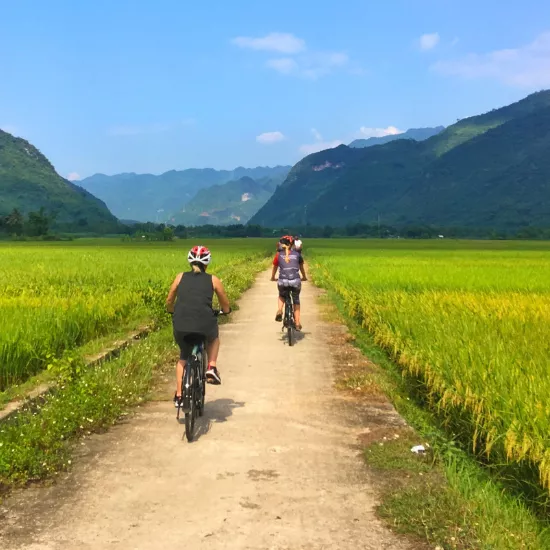
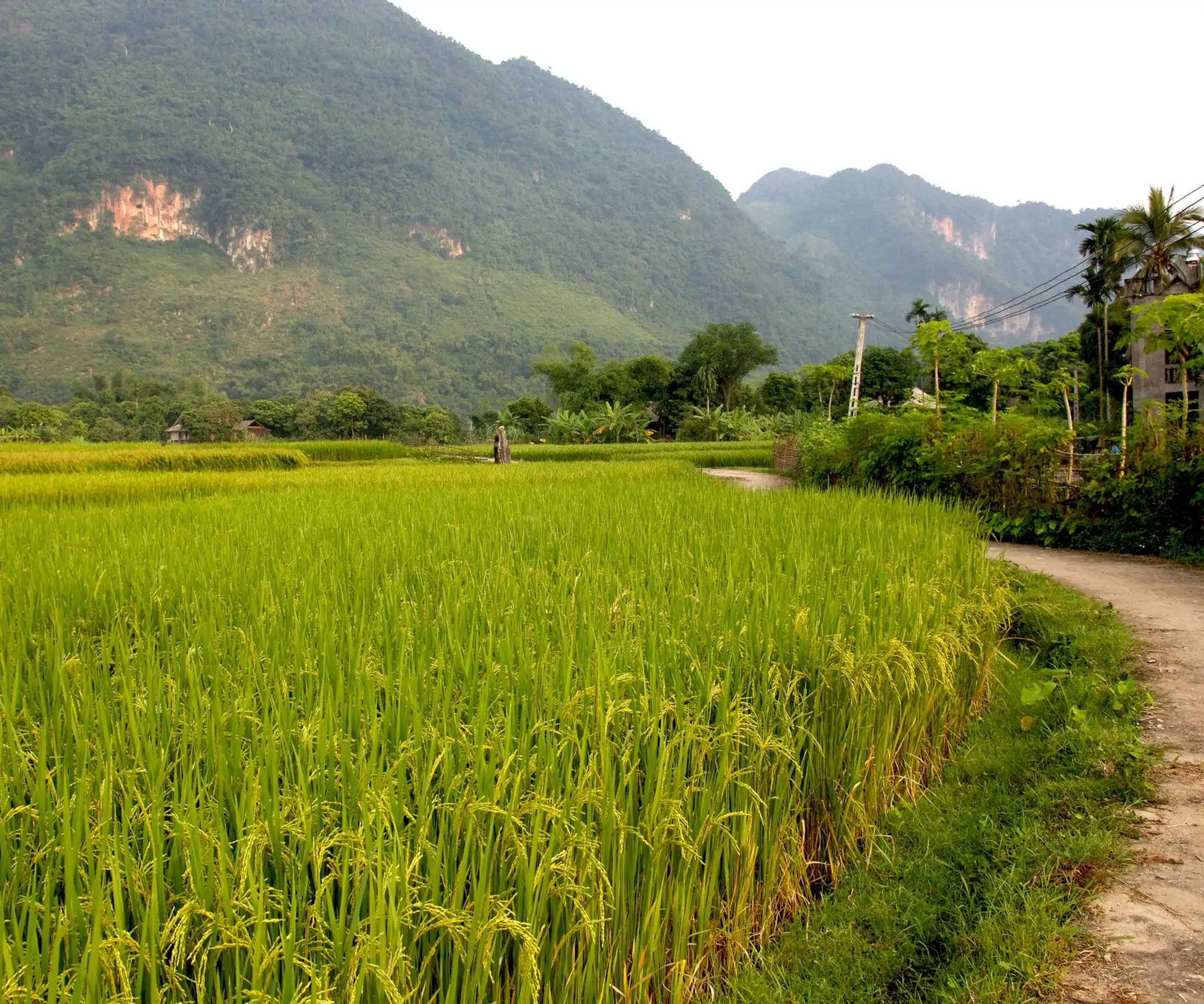
Further south, the emerald bowl of Mai Chau Valley offers fast, flowing dirt singletrack lined with bamboo groves. Climbing into the cloud-draped rainforests of Pu Luong Nature Reserve, technical singletrack presents slick mossy rocks and clay ruts. Tackle these routes with Mai Chau Bike Tours and Pu Luong Bike Tours.
Recommended Tire Profile for the Northwest: 42mm to 50mm (or 650b x 47c/2.1") with spaced, directional knobs to shed sticky clay, open tread shoulder channels, and supple casings for maximum contact patch over slick roots and wet river stone.
Heading toward Central Vietnam, the landscape opens into historic corridors and breathtaking lowlands.
In Ninh Binh, cycling around the towering monoliths of Tam Coc and through the jungle trails of Cuc Phuong National Park offers smooth dirt roads, fine river gravel, and packed forest soil. Discover these paths on Ninh Binh Bike Tours.
For those tackling trans-continental epics along the feeder roads of the historic Ho Chi Minh Trail and climbing coastal landmarks like Hai Van Pass, the terrain varies from coarse chip-seal asphalt to remote doubletrack. Connect the entire country using Cycling North to South Vietnam.
Recommended Tire Profile for Central & Trans-Vietnam: 38mm to 42mm semi-slick tire with a fast-rolling slick or file-tread center strip and subtle side lugs, optimizing speed on smooth sections while retaining grip on unexpected gravel bypasses.
Tire width dictates your comfort, traction, and rolling efficiency over long mountain days.
700x38c to 700x40c: Ideal for light bikepacking on fast dirt roads, mixed asphalt, and packed doubletrack. Excellent for high-speed endurance, though requires precise line selection on technical limestone downhills.
700x42c to 700x45c (The Sweet Spot): The absolute optimum for mixed Vietnamese gravel. Provides ample air volume to absorb harsh trail chatter while offering broad surface area for steep climbing traction on loose switchbacks.
650b x 47c to 2.1 Inch (High Volume): Best for riders carrying full self-supported loads or exploring deep backcountry tracks in Ha Giang and Sapa. High air volume lets you run lower pressures, smoothing out rough terrain and preventing rim strikes on sharp rocks.
Running a tubeless setup is imperative for gravel bikepacking in Vietnam. Sharp limestone fragments, acacia thorns, and pinching rocks will repeatedly puncture standard inner tubes.
Tubeless benefits in Vietnam: Eliminates pinch flats when hitting unexpected ledge rocks at speed. Self-seals small thorn and wire punctures using liquid sealant. Allows lower tire pressures (22–32 PSI) for superior cornering grip on wet, slippery surfaces.
Always carry a dynamic tubeless plug tool, spare sealant, dynamic tire boots, and at least two lightweight emergency TPU tubes in case of major sidewall cuts.
Never compromise on casing strength when riding remote mountain passes. Standard ultra-light race tires with paper-thin sidewalls will quickly succumb to sharp karst stones along mountain cliff trails.
Look for tires with woven bead-to-bead puncture barrier layers (e.g., Maxxis EXO, WTB SG2, Panaracer Protite, Pirelli TechWALL). The minor weight penalty is well worth the peace of mind when coasting down remote mountain passes far from medical or mechanical assistance.
Fine-tuning your tire pressure makes a dramatic difference in ride performance: Dry, Packed Dirt & Asphalt: Run 30–35 PSI (for 40mm) for smooth rolling speed. Wet Clay & Technical Karst Gravel: Drop pressure to 22–26 PSI to allow the tread to deform around sharp stones and bite deep into muddy surfaces.
A successful gravel cycling journey relies on seamless logistics, from transportation to authentic cultural immersion.
Transporting your bike across Vietnam is surprisingly manageable with proper planning.
Overnight Sleeper Buses: Buses regularly connect Hanoi with northern adventure gateways like Ha Giang, Lao Cai, and Cao Bang. Store your bike in the lower luggage hold; remove the front wheel, turn the handlebars, and wrap frame tubes with protective foam.
Express Trains: The overnight sleeper train from Hanoi to Lao Cai (accessing Sapa and Bac Ha) features dedicated cargo cars, providing a comfortable, romantic journey to the base of the Northwest mountains.
Private Support Vehicles: When you join a ride with Golden Cycling Tours, spacious air-conditioned support vans handle all bike transfers, luggage transport, and trailside mechanical assistance, allowing you to focus entirely on the open road.
Ethnic Homestays: Nestled in stilted wooden homes built by Tay, White Thai, or Hmong families, homestays offer unforgettable warmth. Rest on comfortable mattresses under protective mosquito netting, falling asleep to the peaceful sounds of rustling forest leaves and distant mountain streams.
Eco-Lodges & Mountain Resorts: In destinations like Mai Chau Valley, Pu Luong Nature Reserve, Sapa, and Ninh Binh, eco-lodges offer hot showers, infinity pools framed by rice terraces, and cozy bedding to refresh your body after long mountain climbs.
Vietnamese cuisine provides the ultimate fresh, nutrient-dense fuel for endurance athletes.
Breakfasting on the Trail: Start early mornings with a steaming bowl of Phở or Bún Chả. Star-anise bone broth restores body fluids and salts, while rice noodles offer clean carbohydrate energy for morning climbs.
Family-Style Dinners: Enjoy communal feasts featuring mountain pork charcoal-grilled with lemongrass, wild stream fish baked in banana leaves, stir-fried jungle greens with garlic, and endless bowls of steamed jasmine rice.
Hydration & Energizing Drinks: Recharge at rustic roadside stands with freshly pressed sugarcane juice (Nước Mía), fresh coconut water, or legendary Vietnamese drip coffee (Cà Phê Sữa Đá) sweetened with condensed milk. In the evenings, toast your day's journey with hosts over a small cup of traditional rice wine (Rượu cần).
Riding through remote villages brings you close to Vietnam's hill-tribe cultures.
Respectful Interactions: Dress modestly when walking through ancient villages or spiritual temples by covering shoulders and knees. Always ask permission before photographing local elders or children.
Warm Connections: Learn basic Vietnamese phrases like "Xin chào" (Hello) and "Cảm ơn" (Thank you). A simple smile, polite nod, or sharing fruit instantly bridges language barriers along remote mountain paths.
Planning your ride during optimal weather windows ensures safer trails and spectacular scenery.
Autumn (September to November) – The Golden Window: Considered the prime season for gravel cycling in Northern Vietnam. Cool temperatures (18°C–25°C), low rainfall, and clear blue skies accompany golden rice terraces ready for harvest across Hoang Su Phi, Sapa, and Mu Cang Chai.
Spring (March to May) – Blooming Flowers & Pleasant Warmth: Spring brings mild weather, comfortable riding temperatures, and vibrant flora. Mountain passes burst with peach blossoms and wild orchids, creating stunning backdrops for long saddle days.
Winter (December to February) – Crisp Air & Atmospheric Fog: High-altitude locations like Dong Van Karst Plateau bring cold temperatures dropping below 10°C (50°F), with thick mountain mists wrapping around stone peaks. High-quality thermal layering is essential.
Summer (June to August) – Tropical Monsoons & Vibrant Greenery: Summer features high humidity, warm temperatures, and afternoon monsoon downpours. While landscapes are incredibly lush, clay singletrack can turn slick, requiring aggressive mud tires and cautious riding on remote passes.
At Golden Cycling Tours, we craft unforgettable gravel itineraries paired with expert local guides, full vehicle support, and top-tier bike setups.
Explore our curated itineraries:
Embark on our grand multi-region journey with the Best Vietnam Cycling Northeast Tour 15 Days.
Challenge your legs on rugged mountain passes with the Northern Vietnam Cycling Tour 8-Day Epic Ha Giang Loop Adventure.
Experience high mountain passes and rice terraces on our 10-Day Ha Giang Loop & Hoang Su Phi Cycling Adventure.
Escape on a shorter highland retreat with the 4-Day Northern Vietnam Cycling Mai Chau to Pu Luong Adventure.
Discover off-the-beaten-path trails with our 12-Day North Vietnam Cycling Adventure.
Prefer electric assistance on steep climbs? Try our 6-Day Mai Chau, Pu Luong & Ninh Binh E-Bike Tour or explore broad options at Vietnam E-Bike Tours.
For premium customized luxury arrangements, explore Vietnam Luxury Bike Tours or browse our entire collection at Golden Cycling Tours Collection.
A width of 700x42c to 700x45c is ideal for most Vietnamese gravel routes. It provides the perfect balance of rolling efficiency on asphalt sections while offering ample traction and impact protection on sharp limestone doubletrack and loose mountain gravel.
Tubeless is strongly recommended. Sharp crushed limestone along mountain passes like Ma Pi Leng Pass and thorn bushes can cause frequent pinch flats and punctures on standard inner tubes. Tubeless liquid sealant seals small punctures instantly on the go.
For a 42mm tire, drop your pressure to 22–26 PSI in wet conditions to maximize tire contact patch and traction over slick clay or slippery cobblestones. In dry conditions, 30–35 PSI delivers optimal rolling speed.
Yes! Golden Cycling Tours offers meticulously maintained gravel bikes, hardtail mountain bikes, and e-bikes fitted with wide tubeless gravel tires, hydraulic disc brakes, and wide-range climbing gear ratios tailored specifically to Vietnam’s topography.

Leave a Reply
Your email address will not be published. Required fields are marked *