- Call us Via Whatsapp: +84 (0) 832 126 699
4.9 stars on our site
(15,000 reviews)
- Monday - Sunday : 08:00 - 17:00
(15,000 reviews)

The first thing you notice is the sound.
Bicycle tires whisper across a quiet country road. A rooster calls from a village courtyard. Somewhere ahead, a motorbike climbs a distant hill while the morning breeze carries the scent of damp earth, wood smoke, and freshly cooked rice.
Then the landscape opens.
Green hills roll toward the horizon, small farms follow the contours of the land, and traditional houses appear between fruit trees and cultivated fields. Farther along the road, the rhythm of rural life grows louder as villagers prepare for market day. Colorful fabrics catch the light, baskets of fresh produce change hands, and conversations fill the air with the energy of a community gathering.
This is the experience that makes the Bac Ha Market & Countryside Cycling Tour so compelling. It combines the freedom of cycling through northern Vietnam’s countryside with the opportunity to discover one of the region’s most distinctive traditional market cultures.
Located in Lao Cai Province in Vietnam’s northern highlands, Bac Ha is known for its mountain scenery, agricultural landscapes, colorful ethnic traditions, and lively market atmosphere. Here, cycling becomes more than a physical activity. It is a way to slow down, notice the details, and experience the connection between landscape, culture, food, and everyday life.
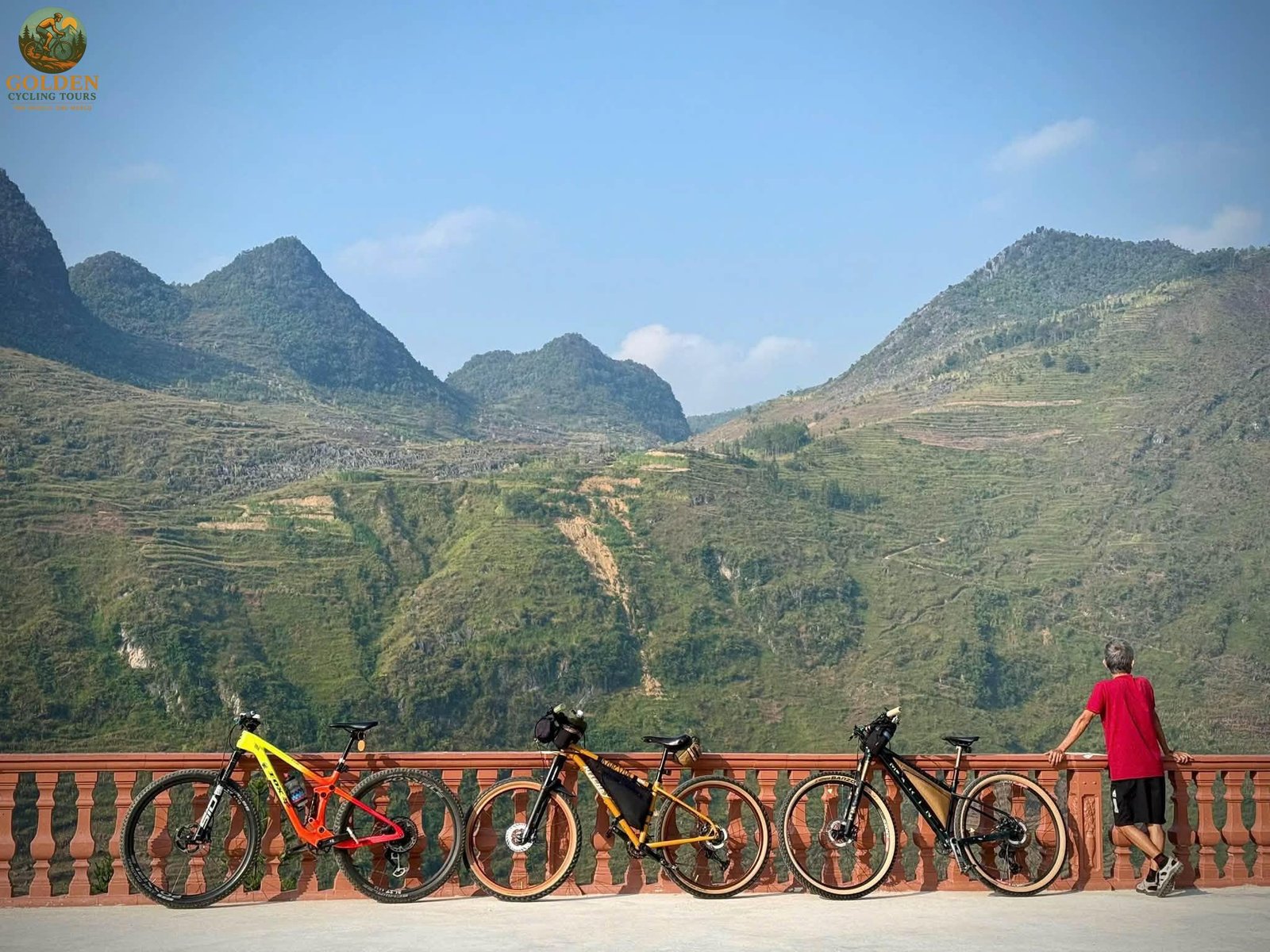
With Golden Cycling Tours, travelers can explore cycling possibilities across northern Vietnam and discuss an itinerary that suits their interests, fitness level, travel dates, and preferred style of adventure.
Whether you are a passionate cyclist, a cultural traveler, a landscape photographer, or a couple looking for a distinctive way to explore Vietnam, the Bac Ha Market & Countryside Cycling Tour offers an inspiring starting point for discovering the country beyond its busiest tourist routes.
The highlight of the Bac Ha Market & Countryside Cycling Tour is the opportunity to explore Bac Ha Market, a well-known gathering place for communities from the surrounding highlands.
On market day, the atmosphere can be wonderfully vibrant. Vendors display vegetables, herbs, fruit, household goods, clothing, and other products. Traditional garments add bright colors to the crowd, while the aromas of cooked food mingle with the smell of fresh produce and the earthy scent of the surrounding mountains.
The market is not simply a tourist attraction. It is also a place where people shop, trade, meet friends, exchange news, and maintain connections between communities spread across the hills.
Walking through the market after a morning ride allows you to appreciate details that might otherwise pass unnoticed: the texture of handwoven fabric, the careful arrangement of produce, the clatter of bowls in food stalls, and the conversations that rise and fall around you.
Market schedules can vary by location and occasion. Bac Ha Market is traditionally associated with Sundays, but travelers should confirm the current schedule and any local changes before finalizing their itinerary.
Away from the market, the roads around Bac Ha offer a different kind of pleasure.
The bicycle carries you through a patchwork of cultivated land, small settlements, hillsides, and rural roads where the pace of life often feels slower than in Vietnam’s major cities.
You may pass farmers tending their fields, children walking along village lanes, or homes framed by fruit trees and vegetable gardens. In the cooler morning air, the scent of grass and damp soil becomes more noticeable. Sunlight falls across the road in shifting patterns as clouds move over the hills.
The riding experience changes with every bend. One stretch may follow a gentle valley; another may climb toward a viewpoint where the surrounding hills unfold in layers. The sound of your gears clicking into a lower ratio becomes part of the journey as you find a comfortable rhythm on an uphill section.
Cycling makes these transitions feel immediate. You experience the landscape through movement, weather, sound, and effort rather than watching it pass behind a vehicle window.
The wider Bac Ha region is home to diverse ethnic communities, including Flower Hmong communities known for distinctive traditional clothing and rich textile traditions.
Depending on the village, season, and market day, visitors may encounter colorful embroidered garments, agricultural products, local crafts, and traditional foods. These details reveal a region where cultural identity remains closely connected to family, farming, trade, and community life.
A guided visit can help explain the context behind what you see. Rather than treating local traditions as a performance, approach the experience with curiosity and respect.
Ask before photographing people, avoid entering private property without permission, and consider purchasing locally made products when appropriate. The most meaningful encounters often begin with a smile, a polite greeting, and the willingness to listen.
A cycling holiday offers a sense of independence that can be difficult to replicate by car.
You can stop at a viewpoint, take photographs, enjoy a drink at a local café, or pause to observe the countryside when the route and schedule allow. The journey becomes a collection of small discoveries rather than a checklist of attractions.
For travelers who enjoy active exploration but also want time for cultural experiences, the Bac Ha Market & Countryside Cycling Tour can provide a rewarding balance between physical activity and immersion in local life.
Bac Ha Market is among the best-known traditional markets in Vietnam’s northern highlands. It attracts local residents from nearby villages and is particularly associated with the region’s Flower Hmong culture.
On a busy market morning, the scene can feel almost cinematic. Brightly colored clothing stands out against the muted tones of mountain roads and wooden stalls. Fresh produce is arranged in baskets, vendors call to customers, and the sounds of conversation mingle with the clink of cooking utensils.
The market provides a window into local commerce and social life. Some visitors come to purchase food and household goods; others meet friends, trade agricultural products, or spend time with family.
For travelers, the best approach is to explore slowly. Look beyond the most colorful photographs and notice how the market functions as part of everyday life.
Depending on the season and the stalls operating that day, you may find:
Fresh vegetables, herbs, fruit, and other agricultural products.
Traditional clothing, embroidered textiles, and accessories.
Household goods and practical tools.
Local snacks and cooked dishes.
Livestock or agricultural trading areas, where present and operating.
Everyday interactions among people from surrounding villages.
Not every product or activity appears at every visit. Market conditions change with the season, demand, and local circumstances.
A successful market visit requires more than a camera and a few spare minutes.
Arrive with enough time to walk around without rushing. Keep valuables secure in crowded areas, follow any restrictions around trading spaces, and ask permission before taking close-up photographs.
If you want to photograph a vendor or shopper, a friendly gesture and a clear request are better than taking a picture without warning. Be especially careful when photographing children.
Avoid blocking narrow walkways or interrupting transactions. Remember that the market is a working environment for local people, not only a sightseeing stop.
The exact route for a Bac Ha Market & Countryside Cycling Tour depends on the chosen itinerary, the group’s cycling ability, and current road conditions. The following places and landscapes are useful ideas for planning a countryside-focused journey, rather than a claim that every tour visits every location.
Bac Ha Town is a practical starting point for exploring nearby villages, agricultural land, and the wider highland landscape.
The surrounding roads can offer a mixture of gentle sections and more demanding climbs. Depending on the chosen route, cyclists may pass through small settlements, cultivated hillsides, and viewpoints overlooking the countryside.
The changing terrain creates a satisfying riding rhythm. A quiet road may begin with a gentle descent before turning uphill, where you shift gears and settle into a steady cadence. At the crest, a cool breeze crosses your face and the view opens across the surrounding hills.
Take care on narrow roads, especially near villages where pedestrians, motorbikes, animals, and agricultural vehicles may share the route.
Ban Pho Village, in the Bac Ha area, is associated with local communities and traditional rural life. Depending on the route and local access conditions, a visit can offer a closer look at village surroundings and agricultural landscapes.
The most rewarding moments may be simple ones: watching daily activities from a respectful distance, observing how houses sit within the landscape, or learning from a guide about local traditions.
Do not assume every home or workshop is open to visitors. If you would like to enter a property, buy a local product, or photograph someone at work, ask first.
Hoang A Tuong Palace is one of Bac Ha’s notable architectural landmarks. The historic building offers a contrast to the region’s rural landscapes and traditional village settings.
Its architecture and history make it a worthwhile stop for travelers interested in understanding more about the area’s past. A visit can also provide a useful break between cycling sections.
Confirm opening arrangements and current visitor information before departure. If the palace is included in a cycling itinerary, ask whether entrance fees and guided explanations are covered.
The wider Bac Ha area includes rural settlements and highland roads that may be incorporated into a longer cycling route, depending on the operator’s plan.
Lung Phinh and nearby countryside can be considered when designing an itinerary around village life, agricultural scenery, and local market culture. Access, route conditions, and the most appropriate stops should be checked with a local guide.
A flexible itinerary allows cyclists to enjoy the scenery without rushing through the day simply to reach a predetermined distance.
Si Ma Cai, in the wider highland region, may appeal to travelers interested in a longer journey through remote mountain scenery and culturally diverse communities.
It should be treated as an extension rather than an automatic part of a standard Bac Ha cycling day. The distance, elevation gain, road surface, transport requirements, and accommodation arrangements need to be evaluated before including it.
For experienced riders who have additional time, a carefully planned extension can create a broader view of northern Vietnam’s highland landscapes.
The morning begins with a quiet roll out of town. The road surface hums beneath your tires, and the air feels cool enough to make the first few pedal strokes refreshing.
As the road climbs, the rhythm becomes more deliberate. Your legs push through each rotation while your breathing deepens. You shift into a lower gear, relax your shoulders, and concentrate on maintaining an even effort.
A bend reveals a hillside scattered with houses. Another brings a view across fields and distant ridges. In the shade, the air smells of damp vegetation; where the road passes a village, the scent of cooking fires or a nearby food stall may drift into the breeze.
When the road rises more steeply, the muscles in your thighs begin to burn. The effort demands patience rather than speed. You focus on the next curve, then the next stretch of road, until the gradient eases and the landscape opens.
On the descent, the sensation changes. The wind moves across your face, the bicycle rolls more freely, and the tires follow the road through each bend. You remain alert for gravel, potholes, pedestrians, and unexpected traffic. The goal is not to descend as quickly as possible, but to enjoy the movement while staying in control.
This is the beauty of a countryside cycling holiday: the physical effort gives the scenery a deeper meaning.
Difficulty depends on the exact itinerary. A short ride around town and nearby villages may be suitable for many recreational cyclists, while a longer route with sustained climbs can be demanding.
Before booking, ask for the daily distance, total elevation gain, expected road surface, and support arrangements.
Consider the following questions:
Can you comfortably ride for several hours?
Are you accustomed to climbing hills?
Are you confident sharing roads with local traffic?
Can you manage your bicycle on descents?
Would an e-bike or support vehicle make the trip more enjoyable?
You do not need to be a competitive athlete to enjoy cycling in Bac Ha, but you should choose a route that matches your ability.
Beginners may be able to participate if the itinerary offers manageable distances, suitable terrain, and sufficient flexibility. The best option is to be transparent about your experience when contacting the operator.
If you rarely cycle, begin training with shorter rides and gradually increase your distance. Practice using gears, braking smoothly, and maintaining a comfortable cadence.
Ask whether the guide can adapt the pace, whether a support vehicle is available, and whether difficult sections can be shortened. A well-matched route is far more enjoyable than attempting a ride that is beyond your current fitness level.
Spring can be a pleasant period for exploring the countryside around Bac Ha. Temperatures may be more comfortable for cycling than during the hottest months, while the hills and cultivated land can appear fresh and green.
The region’s weather remains variable, however. Mist, rain, and cooler mornings are possible, so pack layers and a waterproof jacket.
Spring is a good choice for travelers who want to combine outdoor activity with cultural exploration without relying on a particular rice harvest stage.
Summer brings lush vegetation and an active agricultural landscape. For photographers, the greenery can create beautiful contrasts with traditional homes and the rolling hills.
The disadvantages are heat, humidity, and the possibility of heavy rain. Wet roads can become slippery, while storms may disrupt transport or make some routes unsuitable for cycling.
If you travel during summer, start early where practical, drink regularly, and allow the operator to adjust the itinerary to the weather.
Autumn, particularly September and October, can be an appealing time to visit northern Vietnam’s highlands. Depending on the local agricultural calendar, the countryside may display rich shades of green or golden fields approaching harvest.
Cooler conditions can also make longer rides more comfortable. However, harvest timing varies, and the appearance of the landscape depends on local farming schedules and weather.
Autumn can be especially attractive for travelers who want to combine cycling with market visits and landscape photography.
Winter can bring a quieter atmosphere and crisp mornings to the Bac Ha region. On clear days, the countryside may look beautifully defined, while mist can create a more atmospheric mood.
Temperatures can drop, especially early in the morning and after sunset. Pack thermal layers, gloves, and windproof clothing, and take extra care on damp or foggy roads.
Bac Ha Market is traditionally held on Sundays, making Sunday an important consideration when planning a market-focused trip.
Because schedules and local arrangements can change, confirm the current market day before booking transport or accommodation. If the market is a major reason for your visit, plan the itinerary around the confirmed schedule rather than trying to fit it into an inflexible cycling route.
For many travelers, the best plan is to arrive in the Bac Ha area the day before, enjoy a relaxed evening, and visit the market in the morning. A countryside ride can then be scheduled before or after the market visit according to crowd levels, weather, and the operator’s recommendations.
The Bac Ha region is widely associated with Flower Hmong communities, whose traditional clothing is known for its vivid colors and intricate decorative details.
Textile traditions, embroidery, farming, trade, and family life all contribute to the cultural identity of the region. At market time, clothing and accessories can create a striking visual contrast with the greens and browns of the surrounding countryside.
The appearance of traditional clothing varies by person, occasion, and community. Avoid assuming that every resident dresses in the same way or wishes to be photographed.
A traditional market is more than a collection of stalls. It is a place for buying and selling, meeting acquaintances, exchanging news, and maintaining relationships between communities.
Visitors who take time to observe can gain a better understanding of how the market connects villages across the surrounding hills.
The most respectful way to explore is to remain curious without being intrusive. Buy refreshments when appropriate, follow local guidance, and avoid interrupting transactions for photographs.
The countryside around Bac Ha reflects a close relationship between people and the land. Farming, livestock, local trade, and household activities shape the daily rhythm of many communities.
Cycling offers a gentle way to notice these details. You may pass vegetable plots, fruit trees, cultivated slopes, and small homes along the road. In quieter areas, the sounds of birds, farm animals, and village activity can be more prominent than engine noise.
A knowledgeable guide can help explain what you are seeing without reducing local life to a series of tourist attractions.
Ask permission before photographing individuals or private homes.
Respect religious, cultural, and community spaces.
Dress appropriately when visiting local settings.
Support local vendors and businesses when practical.
Avoid littering and carry reusable water bottles.
Follow your guide’s advice about access, etiquette, and local customs.
A successful cultural visit is based on mutual respect. Leave room for genuine interaction and accept that not every person or place is available for visitors.
Food is an important part of the journey. After a morning on the bicycle, the aroma of a hot meal can be almost irresistible: steam rises from a bowl, herbs release their fragrance, and the first mouthful provides welcome warmth after a cool ride.
Food options vary by season, market activity, and the establishment you visit. Your guide or accommodation host can help identify suitable local dishes and explain their ingredients.
Thang co is a traditional dish associated with some northern highland communities. Recipes and preparation methods vary, and it may contain ingredients that are unfamiliar to some visitors.
If you are curious, ask a local guide about the dish and where it is available. Travelers with dietary restrictions or strong food preferences should feel comfortable choosing other options.
Other meals in the region may include rice, noodles, vegetables, soups, grilled foods, and locally available produce. The exact menu depends on the restaurant and the day.
Depending on the stalls operating during your visit, you may find cooked dishes, snacks, drinks, and simple meals popular with local shoppers.
A market breakfast can be a memorable experience. You hear bowls and spoons clinking, smell hot broth and freshly prepared food, and watch vendors serve customers at a lively pace.
Choose food from vendors who appear to handle and prepare it carefully. If you have a sensitive stomach, choose freshly cooked dishes, drink safe water, and avoid food that has been left exposed for long periods.
Travelers generally have several practical options, although opening hours and availability vary.
At Bac Ha Market: Market stalls can be convenient for breakfast or a simple local meal on market day.
In Bac Ha Town: Local restaurants and small eateries may provide rice dishes, noodles, vegetables, soups, and other regional food.
At your homestay or guesthouse: Some properties offer meals by arrangement. This can be especially useful if you return from a ride after nearby restaurants have closed.
Along the cycling route: Food stops may be limited outside town, so a packed lunch and cycling snacks are useful for longer rides.
Tell the operator in advance if you are vegetarian, vegan, halal, gluten-free, or allergic to particular ingredients. Do not assume every remote restaurant can accommodate every dietary requirement.
Before a ride, choose a familiar breakfast with carbohydrates and some protein. Rice, bread, eggs, fruit, or oatmeal are practical choices where available.
During longer rides, small snacks can help maintain energy. Carry food that is easy to eat while stopped safely, such as bananas, energy bars, or nuts.
After cycling, a balanced meal containing carbohydrates, protein, vegetables, and fluids supports recovery. A simple bowl of rice with vegetables and a protein source can be a satisfying option.
A homestay can provide a closer connection to local hospitality and rural surroundings. Depending on the property, guests may have private rooms, shared facilities, family-style meals, or opportunities to learn about local food and daily routines.
Facilities vary considerably, so confirm the details before booking. Ask about hot water, room heating, bathroom arrangements, meals, and secure bicycle storage.
A homestay is especially convenient if you want to arrive before market day and begin exploring early the next morning.
Bac Ha Town offers practical accommodation options for travelers who prefer a private room and convenient access to the market and nearby roads.
Availability and comfort levels vary. Some properties are simple and functional, while others may provide more amenities. Review the location and facilities carefully, especially if you need secure bicycle storage or an early breakfast.
If visiting the market is a priority, ask how long it takes to reach the market area on foot and whether your accommodation can help arrange an early start.
Lao Cai City and Sapa may be useful places to stay before or after a Bac Ha trip, depending on your broader itinerary and transport arrangements.
Sapa has a wider tourism infrastructure and can suit travelers who want to combine cycling with mountain scenery and other highland experiences. However, it is not a substitute for staying in Bac Ha if you want to be close to the market early in the morning.
Confirm transfer times and road conditions before choosing where to spend the night.
If your main goal is to experience Bac Ha Market, consider arriving the previous day. This reduces the risk of a rushed early transfer and gives you time to prepare your bicycle and equipment.
Book ahead during busy periods, and confirm check-in arrangements if you expect to arrive late. Ask whether breakfast is available early enough for your plans.
Many international travelers begin in Hanoi and travel toward the Lao Cai region by road or rail, depending on their preferred schedule.
The journey takes several hours and may require a transfer before reaching Bac Ha. Actual travel times vary with traffic, service schedules, and road conditions.
If you are traveling with your own bicycle, confirm whether the transport provider accepts it and whether packing or advance arrangements are required.
Lao Cai City is a practical gateway for onward travel toward Bac Ha. The final section is usually completed by road, with the exact duration depending on the route, traffic, and weather.
An arranged private transfer can be convenient for groups, travelers carrying bicycles, or visitors who want to coordinate arrival with a cycling itinerary.
If your tour includes transport, confirm the pickup point, departure time, luggage arrangements, and whether the bicycle travels in the same vehicle.
Some travelers combine Sapa and Bac Ha in one northern Vietnam itinerary. The most suitable transfer plan depends on the number of days available and the order of the destinations.
Do not assume that the two destinations are next door to each other or that a particular cycling package includes both. Ask your operator to confirm the actual transfer arrangement and expected travel time.
Bringing your own bicycle can provide a familiar fit and setup, particularly if you are accustomed to a specific saddle, gearing system, and riding position.
A rental bicycle may be more convenient if you want to avoid transport and assembly logistics. The most important factors are appropriate sizing, reliable brakes, suitable tires, and gearing that can handle the chosen route.
Before booking, confirm:
Whether bicycle rental is included.
The bicycle type and available sizes.
Whether a helmet and repair kit are supplied.
How luggage is transported.
Whether a support vehicle is available.
How mechanical problems are handled during the ride.
The best preparation depends on your selected route. For a gentle countryside ride, regular recreational cycling may be enough. For a route with long climbs, build endurance gradually and include some hill training.
Practice maintaining a comfortable cadence instead of pushing a heavy gear on every ascent. Learn to brake smoothly and keep your attention on the road, especially on descents.
If you have not cycled for some time, start with shorter rides and increase the distance over several weeks.
Northern Vietnam’s highlands can experience changing temperatures and sudden rain. Bring clothing that can be layered and adjusted as the day warms up.
Useful items include:
Comfortable cycling shorts and moisture-wicking clothing.
A lightweight waterproof and windproof jacket.
Full-finger gloves for cool mornings and descents.
Sunglasses and sunscreen.
Comfortable cycling shoes.
A refillable water bottle or hydration system.
Snacks for longer rides.
A small personal first-aid kit and any required medication.
A phone, power bank, and offline navigation backup.
A change of dry clothing if rain is likely.
A compact day bag can be useful if you need to carry personal items, but avoid unnecessary weight on the bicycle.
Country roads may include narrow bends, potholes, loose gravel, livestock, pedestrians, and motorbikes. Conditions can change between sections of the same route.
Ride predictably, leave enough distance from other cyclists, and avoid crossing the center of the road on blind corners. Descend at a speed that allows you to stop within the visible distance ahead.
If the road is wet or visibility is poor, reduce speed and follow your guide’s advice. A flexible itinerary is safer and more enjoyable than trying to finish every planned kilometer regardless of conditions.
The following is an illustrative itinerary framework, not a confirmed published Golden Cycling Tours package. The actual duration, daily distance, market timing, accommodation, and inclusions must be confirmed with the operator.
Travel toward Bac Ha from the Lao Cai region according to your chosen transport plan.
After arrival, check into your accommodation, inspect your bicycle, and discuss the next day’s route with your guide. If time allows, take a short walk around town to become familiar with the local atmosphere.
Enjoy an early dinner, prepare your cycling clothing, and rest before the next day’s activities.
If your visit coincides with the confirmed market schedule, begin the morning at Bac Ha Market.
Explore the stalls, observe local trade, and enjoy a simple breakfast if appropriate. Take photographs respectfully and allow time to experience the market without rushing.
Depending on the selected itinerary, continue with a countryside ride after the market visit or schedule the cycling portion before market exploration. The best sequence depends on crowd levels, weather, distance, and the group’s riding ability.
The countryside section may include village roads, cultivated hillsides, and scenic stops. Pause for refreshments and photographs where safe, and keep the pace comfortable.
For travelers with additional time, a second cycling day can focus on rural landscapes and selected cultural or historical stops around Bac Ha.
Hoang A Tuong Palace may be an option for travelers interested in local history, while Ban Pho Village and other nearby settlements may provide opportunities to observe rural life, subject to route suitability and local access.
The itinerary should remain flexible enough to accommodate weather and road conditions. After the ride, return to your accommodation or transfer onward according to the confirmed plan.
Travelers with more time can explore other parts of the northern highlands. Sapa, Ha Giang, and Cao Bang offer distinct landscapes and cycling experiences, but combining them requires realistic transport and riding plans.
A longer trip should be designed around actual distances, road conditions, rest days, and the interests of the group rather than simply adding more destinations to the schedule.
A visit to Bac Ha can be the centerpiece of a short holiday or part of a longer journey through Vietnam’s northern mountains. Golden Cycling Tours offers a range of destination and tour pages that can help you compare different regions and cycling styles.
The links below are related options for planning. They should not be interpreted as confirmation that every listed itinerary includes Bac Ha or the Bac Ha Market & Countryside Cycling Tour.
Golden Cycling Tours – Official Website – Explore the company’s cycling experiences and contact the team about your travel plans.
All Available Tours – Compare trip lengths and itinerary styles.
Best Vietnam Cycling Northeast Tour – 15 Days – Consider a longer journey through northern Vietnam.
Northern Vietnam Cycling Tour – 8-Day Epic Ha Giang Loop Adventure – Explore the mountain scenery of the Ha Giang region.
10-Day Ha Giang Loop and Hoang Su Phi Cycling Adventure – Consider a longer highland cycling experience.
12-Day North Vietnam Cycling Adventure from Hanoi to Ninh Binh – Explore a broader journey through northern Vietnam.
Bac Ha Bike Tours – Start here to explore cycling possibilities in Bac Ha.
Vietnam Northwest Bike Tours – Discover more of the northwestern highlands.
Vietnam Northeast Bike Tours – Explore other mountain regions in the northeast.
Cycling Northern Vietnam – Browse cycling destinations across northern Vietnam.
Sapa Bike Tours – Consider cycling around Sapa and its surrounding highlands.
Ha Giang Bike Tours – Explore another famous mountain cycling region.
Cao Bang Bike Tours – Discover northeastern landscapes and rural roads.
Ba Be Lake Bike Tours – Explore cycling opportunities around a scenic lake region.
Mai Chau Bike Tours – Discover valley scenery and rural culture.
Pu Luong Bike Tours – Explore nature-focused cycling in northern Vietnam.
Ninh Binh Bike Tours – Discover limestone landscapes and countryside roads.
Vietnam E-Bike Tours – Compare electric-assist cycling options.
Vietnam Luxury Bike Tours – Explore comfort-oriented cycling holidays.
4-Day Mai Chau to Pu Luong Cycling Adventure – A shorter cycling option focused on rural landscapes.
6-Day Mai Chau, Pu Luong, and Ninh Binh E-Bike Tour – An electric-assist journey through several different landscapes.
To choose the right trip, compare the confirmed route, daily riding distance, accommodation, transfer arrangements, and included services. If Bac Ha Market is essential to your holiday, tell the team so that the confirmed itinerary can be planned around the market schedule.
A successful cycling holiday depends on more than beautiful scenery. Route planning, bicycle suitability, realistic distances, accommodation, food stops, transport, and contingency arrangements all contribute to the experience.
When contacting Golden Cycling Tours, explain what matters most to you. You may want a relaxed ride with plenty of photography stops, a more challenging route through the countryside, a market-focused cultural experience, or a longer trip combining several northern destinations.
Before confirming your booking, ask the team to clarify:
Whether a dedicated Bac Ha Market & Countryside Cycling Tour is available on your preferred dates.
Whether the itinerary includes Bac Ha Market and the confirmed market day.
The daily cycling distance, elevation gain, and road surface.
Which accommodation, meals, transfers, and bicycle services are included.
Whether a guide, support vehicle, and mechanical assistance are provided.
Whether the itinerary can be adapted to your fitness level.
What happens if severe weather or road conditions disrupt the plan.
The deposit, cancellation, and rescheduling policies.
Start planning through Golden Cycling Tours and ask the team to confirm the most suitable route for your dates and interests.
Customer feedback can help future travelers understand what a cycling holiday feels like in practice. Useful reviews describe the route, guide communication, safety, accommodation, food, and the balance between cycling and cultural exploration.
The examples below are review templates, not verified testimonials. Replace them with genuine customer feedback and obtain permission before publishing names, photographs, or identifying details.
“The visit to Bac Ha Market was one of the most memorable parts of our northern Vietnam trip. We enjoyed seeing the market at a relaxed pace and learning more about local life. Cycling through the countryside afterward gave us a completely different perspective on the region.”
— Replace with a real customer’s approved name and review.
“The ride took us along quiet rural roads with beautiful views of the surrounding hills. We appreciated the chance to stop for photographs and enjoy the countryside without feeling rushed.”
— Replace with a real customer’s approved name and review.
“The trip was a wonderful combination of outdoor activity and cultural discovery. Having local guidance helped us understand the places we visited and made the experience feel more personal.”
— Replace with a real customer’s approved name and review.
For credibility, publish actual customer comments accurately, with permission. Do not invent star ratings, claim reviews are verified when they are not, or present these templates as real experiences.
The Bac Ha Market & Countryside Cycling Tour combines cycling through the rural landscapes around Bac Ha with an opportunity to explore the area’s traditional market culture. The exact route, duration, and inclusions depend on the selected itinerary.
Bac Ha is in Lao Cai Province, in northern Vietnam’s highlands. It is known for its traditional market, surrounding countryside, and cultural diversity.
Bac Ha Market is traditionally held on Sundays. Confirm the current schedule before traveling, especially if the market is the main reason for your visit.
Spring and autumn are often attractive periods for outdoor exploration. March to May can offer fresh greenery, while September to November may bring comfortable temperatures and appealing countryside scenery. Summer can be rainy, and winter mornings can be cold.
Actual conditions vary, so check the forecast before departure.
It may be suitable for beginners if the route is relatively short and the pace is flexible. Longer routes with substantial climbing require more endurance.
Ask for the daily distance and elevation profile before booking.
A day trip may be possible depending on your starting point and transport arrangements, but an overnight stay makes it easier to visit the market without rushing. Two or three days can provide more flexibility for countryside cycling and nearby cultural or historical stops.
The ideal duration depends on your travel schedule and riding goals.
Depending on the day, visitors may see fresh produce, clothing, textiles, household goods, local food, and community trading activities. The range of stalls and products varies by season and market conditions.
Options may include local market dishes, rice, noodles, soups, vegetables, grilled foods, and regional specialties such as thang co where available. Ask about ingredients if you have dietary restrictions or allergies.
Travelers can investigate homestays, guesthouses, and hotels in or around Bac Ha Town. Confirm room facilities, meal availability, bicycle storage, and location before booking.
Arriving the day before market day can make the visit more relaxed.
Travel generally involves reaching the Lao Cai region by road or rail and continuing by road to Bac Ha. The most convenient option depends on your schedule, luggage, and bicycle transport needs.
Confirm the transfer plan and timing with your operator.
Not necessarily. Bicycle rental may be available depending on the tour. Ask about the bicycle type, sizing, helmet, repair kit, and support arrangements.
If bringing your own bike, confirm the transport provider’s bicycle policies in advance.
Potentially, yes. Sapa and Ha Giang are separate destinations with their own transport and cycling requirements. A combined trip should be planned around realistic travel times and confirmed accommodation.
Do not assume that a standard Bac Ha tour includes either destination.
Availability depends on the specific itinerary and bicycle supply. Ask Golden Cycling Tours whether an e-bike is suitable for the chosen road surfaces, gradients, and daily distance.
Bring comfortable cycling clothing, a waterproof jacket, layers for cool mornings, gloves, sunscreen, sunglasses, water, snacks, personal medication, and a phone or navigation backup.
Visit Golden Cycling Tours and ask about availability for your preferred dates. Confirm the market schedule, route, daily distance, accommodation, meals, transfers, bicycle arrangements, and cancellation policy before booking.
The Bac Ha Market & Countryside Cycling Tour is an invitation to experience northern Vietnam at a more personal pace.
It begins with quiet roads, cool air, and the steady rhythm of your bicycle. It leads into a market filled with color, conversation, and the aroma of freshly prepared food. Beyond the stalls, the countryside opens into hills, villages, and cultivated land where daily life continues according to the rhythms of the seasons.
You feel the road beneath your tires, hear the soft click of your gears as the gradient changes, and notice the scent of damp soil after a passing shower. A climb tests your legs; a downhill section rewards your patience. Later, a bowl of hot food and a welcoming place to rest provide a simple but satisfying end to the day.
For travelers who want to combine cycling, cultural discovery, local food, and rural landscapes, Bac Ha offers a memorable way to explore Vietnam beyond the familiar tourist trail.
Plan your journey with Golden Cycling Tours, confirm the current market schedule, and discuss an itinerary that matches your ability and interests. With thoughtful preparation and a respectful approach to local life, every kilometer can become part of a richer travel experience.

.jpg "My mountain bike tour to Bac Ha in northern Vietnam")
.jpg "Vietnam Biking Tours")
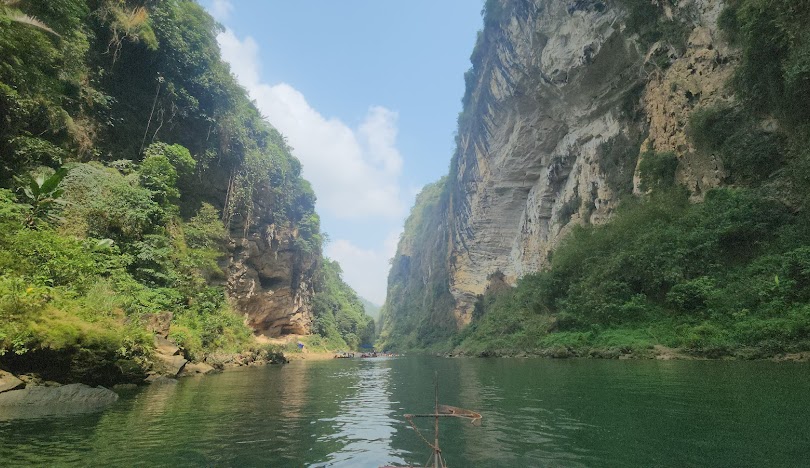
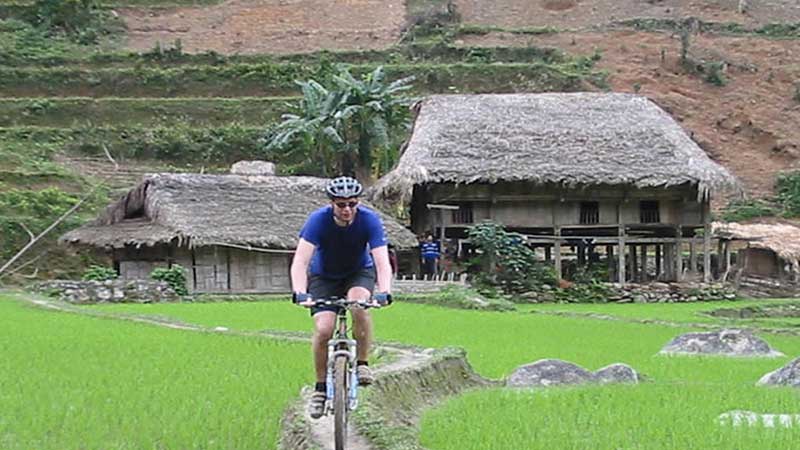
.jpg "12-Day Bac Ha – Hoang Su Phi Mountain Bike Tour: Explore Northern Vietnam's Hidden Gems")
Leave a Reply
Your email address will not be published. Required fields are marked *