- Call us Via Whatsapp: +84 (0) 832 126 699
4.9 stars on our site
(15,000 reviews)
- Monday - Sunday : 08:00 - 17:00
(15,000 reviews)

Ha Giang is one of Vietnam's most spectacular destinations for a cycling adventure. Towering limestone mountains rise above winding roads, deep valleys disappear beneath morning mist, and small villages cling to hillsides shaped by centuries of tradition. Around every bend, the scenery changes: a stone plateau gives way to a green valley, a mountain pass opens onto a breathtaking panorama, and a quiet village reveals a glimpse of life in Vietnam's northern highlands.
But there is one question many travelers ask before booking: Are Ha Giang cycling tours suitable for people with an average level of fitness?
The short answer is yes, in many cases. You do not need to be a professional cyclist or an endurance athlete to enjoy cycling in Ha Giang. However, the region's steep climbs, long descents, changing road conditions, and mountainous terrain mean that choosing the right itinerary is essential.
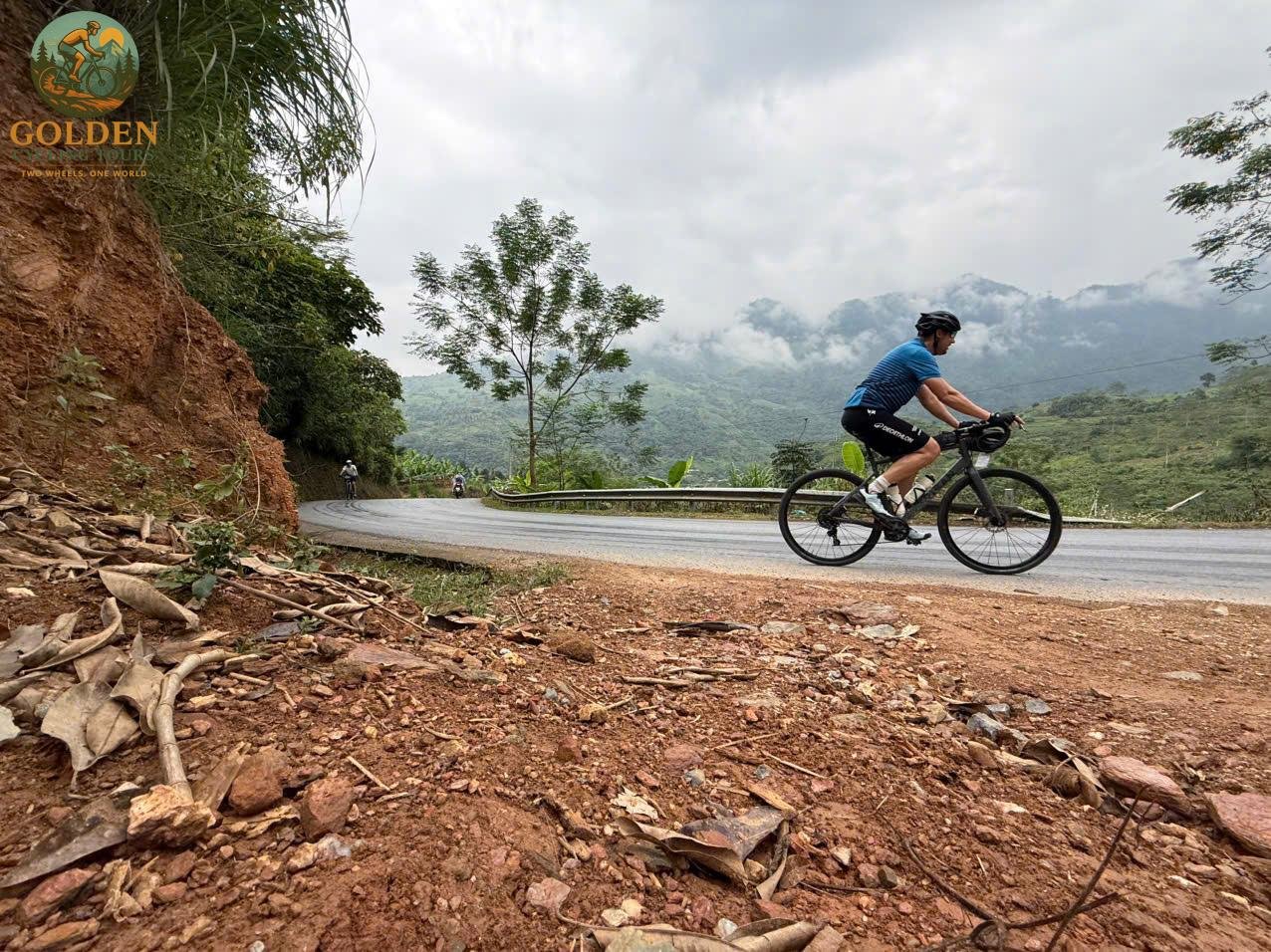
With sensible preparation, realistic daily distances, appropriate bicycle support, and a route suited to your ability, a cycling holiday in Ha Giang can be an achievable and deeply rewarding adventure.
For travelers planning their journey, Golden Cycling Tours offers a starting point for exploring cycling itineraries in Northern Vietnam. Visit the official Golden Cycling Tours website or explore Ha Giang Bike Tours to compare available experiences.
Yes, many travelers with an average level of fitness can enjoy Ha Giang cycling tours, provided they select an appropriate route and understand the physical demands before departure.
The important distinction is between being reasonably active and being prepared for several consecutive days of cycling in mountainous terrain.
If you regularly walk, hike, swim, cycle recreationally, or participate in other moderate physical activities, you may already have a useful foundation. You do not necessarily need to ride long distances every weekend, but you should be comfortable spending several hours being active and should prepare specifically for climbing and descending.
For this guide, an average fitness level generally means that you can:
Walk briskly for 45–60 minutes without needing frequent long breaks.
Participate in moderate physical activity several times a week.
Ride a bicycle on relatively flat roads for around 60–90 minutes, if you have cycling experience.
Recover reasonably well after a day of activity.
Manage moderate hills at a controlled pace.
These are general preparation guidelines, not medical clearance or formal fitness standards. Cycling ability, balance, confidence on descents, and experience with traffic also matter.
If you rarely exercise or have not ridden a bicycle for years, you may still be able to enjoy parts of Ha Giang, but a shorter itinerary, electric bicycle, or mixed cycling-and-transfer experience may be a better choice.
Unlike a flat cycling holiday, a ride in Ha Giang can involve sustained ascents, tight bends, exposed mountain roads, and significant changes in elevation.
You may start the morning feeling fresh, only to discover that a climb lasts longer than expected. Your breathing becomes deeper, your legs begin to feel heavy, and the clicking of the gears becomes a steady soundtrack as you search for a comfortable rhythm.
The challenge is not simply the total distance. A 30-kilometer mountain ride with substantial climbing can feel much harder than a longer ride on flat roads.
Weather also affects difficulty. Warm temperatures can increase fatigue, while fog or rain can make descents more demanding. For this reason, the best itinerary is not necessarily the one that covers the most kilometers. It is the one that balances riding, recovery, sightseeing, and safety.
The difficulty of a Ha Giang cycling tour depends on the route, daily distance, elevation gain, road conditions, weather, and the amount of support available.
The climbs are often the most demanding part of cycling in Ha Giang.
As the road rises into the limestone mountains, the gradient may become noticeably steeper. You shift into an easier gear, settle your hands on the handlebars, and focus on keeping your breathing steady.
The first few minutes can feel manageable. Then your thighs begin to warm, your heart rate rises, and the road continues upward around another bend.
The key is to avoid starting too fast. Use low gears, keep your effort sustainable, and take short breaks before exhaustion sets in.
You do not need to race other riders. On a well-planned tour, a slower pace can allow you to enjoy the views, conserve energy, and arrive at the next stop feeling capable of continuing.
Descending can be physically less demanding than climbing, but it requires concentration and confidence.
Mountain roads may feature sharp corners, uneven surfaces, loose gravel, wet patches, livestock, and other vehicles. Riders need to control their speed, brake smoothly, and look ahead rather than focusing immediately in front of the front wheel.
If you are not comfortable descending, tell your guide before the ride. Ask whether the itinerary includes technical sections and whether there are alternatives or opportunities to transfer between selected points.
A support vehicle, when included, can provide a useful option if fatigue or road conditions make continuing by bicycle inappropriate. Confirm the actual arrangements with your tour operator before booking.
There is no single distance that suits every rider. As a broad planning guide, the following categories can help you start a conversation with your tour operator.
Short, introductory rides: Approximately 15–30 kilometers per day may suit some recreational cyclists, depending on climbing and road conditions.
Moderate cycling days: Approximately 30–50 kilometers can be manageable for riders with reasonable preparation, but substantial elevation gain may make these days demanding.
Long mountain stages: Distances beyond 50 kilometers, especially with repeated climbs, can be challenging for people who have limited cycling experience.
These are illustrative ranges, not guaranteed difficulty ratings. Even a short route can be strenuous if it includes steep ascents. Always ask for daily elevation gain, expected riding time, road surfaces, and the availability of shorter alternatives.
The most suitable itinerary depends on your confidence, riding experience, and willingness to climb.
Ha Giang City can be a practical starting point for an introductory ride or a warm-up before entering more mountainous terrain.
Depending on the selected route, you may encounter quieter rural roads, cultivated fields, local markets, and settlements on the outskirts of the city.
This is a useful opportunity to test your bicycle fit, become comfortable with the gears, and establish a pace before tackling more demanding roads.
However, not every road near the city is flat or traffic-free. Ask your guide to choose a suitable route for your ability.
The area around Quan Ba Heaven Gate and the Quan Ba Twin Mountains offers spectacular scenery and can be incorporated into different itineraries.
From elevated viewpoints, the mountains rise above a patchwork of valleys and cultivated land. On clear mornings, sunlight spills over the ridges, while mist may linger in the lower valleys.
The road network in this region includes climbs and descents, so the difficulty depends on the exact approach and departure points. An average-fit cyclist may enjoy selected sections, but should not assume that every route through Quan Ba is easy.
If you want to experience the scenery without a demanding full-day ride, ask whether the tour can combine a shorter cycling section with vehicle transfers.
The Dong Van Karst Plateau Geopark is one of Ha Giang's most remarkable landscapes.
Jagged limestone formations rise from the earth, stone houses appear between rocky slopes, and mountain roads connect villages that have adapted to life in a rugged environment.
Cycling here is visually extraordinary, but the terrain can be demanding. Roads rise and fall through the plateau, and a series of climbs may accumulate into a tiring day even when individual sections appear manageable.
Average-fit cyclists can consider this region if they are prepared for mountain riding, have enough time for breaks, and choose a route that matches their ability.
Ma Pi Leng Pass is one of the legendary highlights of the Ha Giang region. The road runs along dramatic mountain slopes above the turquoise waters of the Nho Que River, with enormous limestone cliffs rising around Tu San Canyon.
The experience can be cinematic: the wind moves across the exposed viewpoint, the mountains stretch into the distance, and the river appears as a narrow ribbon far below.
But the pass is not simply a sightseeing road. The terrain can involve steep gradients, sharp bends, and exposed sections. The demands of climbing and descending make route selection particularly important.
If you have average fitness but limited mountain-cycling experience, ask whether your tour can include a shorter cycling section around the pass, with a transfer for the most demanding portions. Whether this is possible depends on the operator's itinerary and road conditions.
Du Gia is known for its rural atmosphere, mountain scenery, and traditional village life. It can be a rewarding destination for travelers who want to experience a quieter side of Ha Giang.
Depending on the itinerary, the journey may include steep roads and remote sections, so it should not automatically be classified as an easy option.
The appeal lies in the slower moments: green valleys, village houses, the sound of water, and the opportunity to pause between rides. A carefully paced itinerary can leave time for cultural encounters without requiring every day to be a physical test.
You do not need to train like a professional athlete. The goal is to improve basic endurance, become comfortable on a bicycle, and build enough confidence to handle several days of activity.
This example is intended for generally healthy adults who can already undertake moderate activity. Adjust it to your current fitness and avoid increasing training volume too quickly.
Start with two or three easy cycling sessions of 30–45 minutes on relatively flat roads.
Focus on comfortable posture, smooth pedaling, gear changes, and basic braking. Add a couple of brisk walks during the week.
The objective is consistency rather than speed.
Increase one ride to approximately 60 minutes if the previous week felt comfortable.
Include gentle hills if available, and practice maintaining an even effort rather than accelerating at the start of every climb.
After riding, notice how your body feels the next day. Persistent exhaustion is a sign that you may need more recovery.
Try one longer ride of around 75–90 minutes, depending on your experience, and include manageable hills.
Practice using easier gears before the gradient becomes steep. If you have access to a safe cycling route, work on controlled descending and cornering.
You can also practice riding on consecutive days to understand how your legs recover.
Complete a comfortable ride, review your equipment, and avoid intense training immediately before departure.
Use this week to check your saddle position, helmet fit, clothing, hydration strategy, and basic repair knowledge.
If you have significant health concerns, are returning to exercise after a long break, or are uncertain about your readiness, consult a qualified healthcare professional before undertaking strenuous cycling.
Fitness is only one part of readiness. Before departure, practice:
Shifting into easier gears before steep climbs.
Braking smoothly and controlling speed on descents.
Riding in a straight line while checking the road ahead.
Drinking water regularly without waiting until you feel very thirsty.
Communicating clearly with your guide about fatigue or discomfort.
Stopping safely when you need a rest.
These skills can make the trip more enjoyable and reduce avoidable risks.
For travelers with average fitness, the choice between a conventional bicycle and an e-bike can make a substantial difference.
A regular bicycle offers a traditional cycling experience and can be rewarding if you enjoy physical effort.
You will need to manage your own climbing pace, select suitable gears, and conserve energy over successive days. This can be satisfying for riders who want to develop endurance and experience the mountains under their own power.
Choose this option if you are comfortable cycling for extended periods and are prepared for the terrain described in the itinerary.
An electric-assist bicycle can reduce the effort required to climb hills, making some routes more accessible to travelers who have average fitness.
You still need to pedal, steer, balance, and brake safely. On steep or rough roads, an e-bike is not a substitute for riding skills.
Before booking, ask about battery capacity, charging opportunities, spare-battery arrangements, bicycle weight, and whether the e-bike is suitable for the actual gradients.
Explore Vietnam E-Bike Tours by Golden Cycling Tours to investigate available options.
If you are comfortable with regular cycling and want a more physical challenge, a conventional bike may be suitable.
If you can ride a bicycle but struggle with hills, prefer a more relaxed pace, or want to preserve energy for sightseeing, consider an e-bike itinerary.
If you are inexperienced, nervous about traffic, or unsure about your fitness, discuss the complete route with the operator before making a decision. E-bike assistance does not eliminate the risks of steep descents or challenging road surfaces.
Weather affects comfort, visibility, road conditions, and the difficulty of mountain cycling. The best travel period depends on what you want to see and how comfortable you are riding in changing conditions.
Autumn is often a popular period for exploring Ha Giang. Conditions can be comfortable for riding, although weather varies from day to day and between elevations.
In some areas, seasonal crops and flowering plants add color to the mountains. The landscapes around the Dong Van Karst Plateau Geopark can be especially striking when the skies are clear.
This season is a strong option for travelers who want dramatic mountain views and opportunities for photography.
Spring often brings greener hillsides and pleasant opportunities to explore rural areas.
Mornings may be cool, while temperatures can rise later in the day. Pack layers and prepare for occasional rain or mist.
For average-fit cyclists, spring can be an appealing time to combine moderate riding with cultural stops and sightseeing, provided the selected route is not too demanding.
Summer can bring high humidity, heat, and heavy rainfall. Wet roads can make mountain descents more difficult, while storms may affect visibility and travel plans.
If you travel during this period, choose an operator with flexible scheduling and clear procedures for changing routes or delaying rides when conditions become unsafe.
Winter can create atmospheric mountain scenery, but high-altitude areas may be cold, particularly in the early morning and evening.
Fog can reduce visibility, and wet surfaces can increase the difficulty of descents. Warm layers, gloves, and weather-appropriate clothing are important.
Best overall advice: March to May and September to November are often good periods to consider, but check the forecast and ask your operator about local conditions before departure.
After a long climb, a warm local meal can be one of the most satisfying parts of the day.
The food of Ha Giang reflects the agricultural traditions and cultural diversity of Vietnam's northern mountains. Meals vary by village, season, and household, but often feature rice, vegetables, soups, local herbs, and regional specialties.
Thang co is associated with Hmong culinary traditions in the northern highlands. Recipes vary, and some versions contain ingredients that may be unfamiliar to international visitors.
If you want to try it, ask your guide about its ingredients and where it is prepared. Travelers with dietary restrictions should confirm the recipe before ordering.
Au tau porridge is a well-known regional specialty associated with Ha Giang.
It is traditionally prepared using a local tuber that requires careful processing. For this reason, order it from an established local cook rather than attempting to prepare it independently.
Its warm, hearty character can be particularly appealing after a chilly morning in the mountains.
Local meals may include sticky rice, vegetable dishes, soups, tofu, grilled meat, and regional herbs.
The simplicity of a freshly prepared meal can be part of the pleasure: steam rising from a bowl, the fragrance of herbs, and the satisfying taste of warm rice after hours in the saddle.
Local restaurants, family-run eateries, and village homestays are often good places to discover regional cooking.
Your guide can help identify suitable stops along the route and explain which dishes are available that day. In remote areas, menus may be limited, so tell the tour operator about allergies, vegetarian preferences, or other dietary needs in advance.
For cycling days, aim for a substantial breakfast, regular hydration, and food breaks that match your effort. Avoid experimenting with unfamiliar foods immediately before a demanding ride if you know you have a sensitive stomach.
Accommodation can influence how well you recover between cycling days. A good night's sleep matters, especially when your itinerary includes repeated climbs.
Homestays in and around Ha Giang can offer opportunities to experience local hospitality, regional meals, and village life.
Some properties feature traditional architecture and shared dining spaces, while facilities vary from simple arrangements to more comfortable private rooms.
Before booking, ask about bathroom facilities, room privacy, hot water, heating, mosquito protection, and bicycle storage.
Hotels and guesthouses can be practical for overnight stops in towns or at the beginning and end of a trip.
They may offer more predictable amenities, but standards vary by location. If recovery and sleep quality are priorities, confirm the accommodation category rather than relying on general descriptions.
Some travelers prefer a quieter property with private rooms, mountain views, and space to relax after the ride.
If comfort is important, check whether the itinerary includes suitable accommodation at each overnight stop and whether upgrades are available.
Explore Vietnam Luxury Bike Tours for information about luxury-oriented cycling experiences, and confirm the actual properties and inclusions with the operator.
Ha Giang is commonly reached by road from Hanoi. The journey can take several hours, depending on traffic, departure point, and transport arrangements.
A private transfer can be a convenient option for travelers who want to travel directly to the starting point.
It may also help with luggage and bicycle logistics. Confirm whether the transfer is included in your tour price and whether the vehicle can accommodate your equipment.
Sleeper buses and other shared services connect Hanoi with the Ha Giang area. Schedules, comfort, bicycle policies, and luggage allowances vary by operator.
If you plan to bring your own bicycle, confirm the transport company's policy in advance.
A support vehicle can be useful on demanding mountain routes, but its role differs between tours.
It may transport luggage, carry spare equipment, meet cyclists at planned stops, or assist riders who cannot continue. Do not assume that every tour includes a vehicle following the group throughout the day.
Ask Golden Cycling Tours to explain exactly what support is provided, including what happens if you become too tired to complete a stage.
The appeal of Ha Giang goes beyond its mountains. The region is home to diverse communities, including Hmong, Dao, Tay, Nung, and other ethnic groups, whose traditions, languages, clothing, and ways of life differ.
Cycling allows visitors to travel slowly enough to notice details that might otherwise pass by: stone houses, small gardens, traditional textiles, market activity, and families working in the fields.
Dress appropriately, follow your guide's advice, and ask permission before entering private property or photographing people.
A friendly greeting can create a pleasant interaction, but respect people's privacy and their right to decline photographs.
Markets can reveal a great deal about everyday life in the mountains. Vendors may sell produce, household goods, textiles, and prepared food, while residents meet to shop and socialize.
Visit with curiosity, but remember that these are working community spaces rather than staged performances for visitors.
Eating at local restaurants, purchasing crafts directly from artisans, and staying in community-based accommodation can help support the local economy.
When buying textiles or handicrafts, ask about their origins and production methods. Choose products responsibly and avoid treating cultural traditions as souvenirs without context.
Carry reusable water bottles where practical, take your rubbish with you, remain on permitted roads, and avoid disturbing wildlife.
Ride carefully around pedestrians, livestock, and children. A respectful pace is particularly important on narrow roads passing through villages.
For travelers with average fitness, the most important booking decision is finding an itinerary that matches their physical ability.
Golden Cycling Tours provides a starting point for comparing cycling experiences in Ha Giang and the wider Northern Vietnam region. Before confirming a tour, ask for specific details rather than relying only on the itinerary title.
1. What is the daily distance?
Ask for the planned distance for each day, not just the total trip length.
2. How much climbing is involved?
Elevation gain and steep gradients can make a short ride difficult.
3. Can the route be adjusted?
Find out whether shorter stages or transfers are possible if you struggle with a climb.
4. Is a support vehicle included?
Confirm when and where it is available, and whether it can carry tired riders.
5. Can I use an e-bike?
Check availability, extra charges, battery arrangements, and whether the bike is appropriate for the route.
6. What is included in the price?
Clarify accommodation, meals, transfers, bicycle rental, helmets, entrance fees, and guide services.
7. What happens in bad weather?
Ask about route changes, delays, cancellations, and safety decisions.
8. What level of cycling experience is recommended?
A clear answer helps you decide whether the trip is realistic for your fitness and confidence.
Start by browsing Ha Giang Bike Tours.
If you want a longer adventure through the mountains and surrounding landscapes, compare the 10-Day Ha Giang Loop and Hoang Su Phi Cycling Adventure and the 8-Day Epic Ha Giang Loop Cycling Tour.
For a broader regional journey, explore the 15-Day Best Vietnam Cycling Northeast Tour.
If you decide that gentler countryside cycling would better suit your current fitness, consider other destinations such as Mai Chau, Pu Luong, and Ninh Binh.
You can also compare the 4-Day Mai Chau to Pu Luong Cycling Adventure and the 6-Day Mai Chau, Pu Luong, and Ninh Binh E-Bike Tour.
Browse all Golden Cycling Tours itineraries to compare the options that best match your goals.
Reviews can help you understand whether a tour is suitable for someone who is not an experienced cyclist.
Look for feedback that specifically discusses:
Whether the guide adjusted the pace for different fitness levels.
Whether the climbs matched the published difficulty description.
Whether riders had enough time for water, snacks, and rest.
Whether bicycles and helmets were suitable and well maintained.
Whether the support vehicle arrangements were clear.
Whether the guide helped tired riders or adjusted the schedule safely.
Whether the accommodation and meals supported recovery between stages.
For publication, insert a real and authorized testimonial from a customer who has completed a relevant tour.
Customer review: “[Insert the customer's exact, approved review here.]”
Tour taken: [Insert the verified tour name.]
Source: [Link to the original review or authorized testimonial.]
Do not present this example as a genuine customer review until the details have been verified. If no suitable testimonial is available, link to an authentic review platform or invite prospective travelers to contact Golden Cycling Tours for further information.
Yes, many people with average fitness can enjoy a Ha Giang cycling tour if they choose an appropriate itinerary. The key factors are daily distance, elevation gain, road conditions, cycling experience, and available support. Some routes are significantly more demanding than others.
Not necessarily, but you should be comfortable riding a bicycle and controlling your speed. For inexperienced riders, a shorter itinerary, a less demanding route, or an e-bike option may be more appropriate than a full mountain loop.
There is no universal ideal distance. Some introductory rides may cover approximately 15–30 kilometers, while more demanding itineraries may involve 30–50 kilometers or more. Elevation gain matters as much as distance, so ask for the details of each day's route.
It can be, if the route is carefully selected. Beginners should discuss their riding experience honestly with the tour operator and avoid assuming that a scenic itinerary will be physically easy. Steep climbs and descents may require skills beyond basic fitness.
An e-bike can make many climbs more manageable, but it does not remove the need for safe riding skills. Battery range, charging access, bicycle weight, and road conditions should be considered before booking.
March to May and September to November are often attractive periods for cycling. Weather varies by elevation, however, and rain, fog, cold temperatures, or sudden changes can occur. Check the forecast and confirm local conditions before departure.
Begin several weeks in advance if possible. Build a consistent routine with easy rides, longer sessions, and manageable hills. Practice gear changes and controlled braking, and include recovery days. Adjust the plan to your current ability rather than attempting to increase training too quickly.
Wear breathable cycling clothing, comfortable shorts, suitable shoes, and a properly fitted helmet. Bring a lightweight waterproof jacket and warm layers for cool mountain mornings. Gloves and sunglasses can also improve comfort.
A support vehicle can be very helpful on challenging mountain routes, particularly for riders with average fitness. However, its availability and role vary by tour. Confirm whether it follows the group, meets riders at selected stops, transports luggage, or provides assistance only in specific circumstances.
A well-planned tour should include appropriate opportunities to rest, hydrate, eat, and enjoy the scenery. Confirm the planned schedule and tell your guide when you need a break. Do not push through severe fatigue simply to keep pace with the group.
Start with Golden Cycling Tours' Ha Giang destination page and review the published itineraries. Ask the company to confirm route difficulty, daily distances, elevation gain, e-bike availability, and support arrangements before booking.
Are Ha Giang cycling tours suitable for people with an average level of fitness? For many travelers, the answer is yes, provided they choose the right route and prepare sensibly.
You do not need elite fitness to experience the beauty of Ha Giang. You do need realistic expectations, a willingness to ride at a controlled pace, and an itinerary that matches your experience.
Imagine reaching a mountain viewpoint after a steady climb. Your breathing gradually settles, the wind cools your face, and the road you have just ridden winds across the mountainside behind you. Below, the Nho Que River glows between the cliffs of Tu San Canyon, while the limestone peaks of the Dong Van Karst Plateau Geopark stretch toward the horizon.
That moment is not reserved for professional cyclists. With thoughtful preparation and the right support, it can be part of your own adventure.
Explore Ha Giang Bike Tours by Golden Cycling Tours, compare available itineraries, and ask the team which route best suits your current fitness. If a gentler introduction would make you more comfortable, consider cycling experiences in Mai Chau, Pu Luong, or Ninh Binh instead.
The best cycling holiday is not the one that pushes you beyond your limits. It is the one that challenges you just enough to make every climb meaningful and every view unforgettable.

.jpg "Cycling in Vietnam in March")
.jpg "Vietnam mountain bikes Trail")
.jpg "Vietnam Biking Trails")
.jpg "Ha Giang Cycling Tours")
Leave a Reply
Your email address will not be published. Required fields are marked *