- Call us Via Whatsapp: +84 (0) 832 126 699
4.9 stars on our site
(15,000 reviews)
- Monday - Sunday : 08:00 - 17:00
(15,000 reviews)

Sapa, the mist-shrouded frontier town of Northern Vietnam, has long been a magnet for adventurers seeking the raw beauty of the Hoang Lien Son mountain range. While trekking is the traditional way to see the terraces, a new breed of explorer is discovering the region’s soul on two wheels. A lao chai ta van bike tour represents the pinnacle of adventure in Southeast Asia—a visceral, high-definition journey through cascading rice paddies, ancient stone paths, and the vibrant living history of ethnic minority cultures.
At Golden Cycling Tours, we believe that the rhythm of a bicycle is the perfect tempo for discovery. It is fast enough to cover the vast mountain landscapes of the Muong Hoa Valley, yet slow enough to smell the woodsmoke from a Hmong kitchen or hear the rhythmic clicking of a village loom. In this definitive guide, we explore why this specific route is a cyclist’s paradise and how to plan the perfect expedition into the heart of the Northwest.
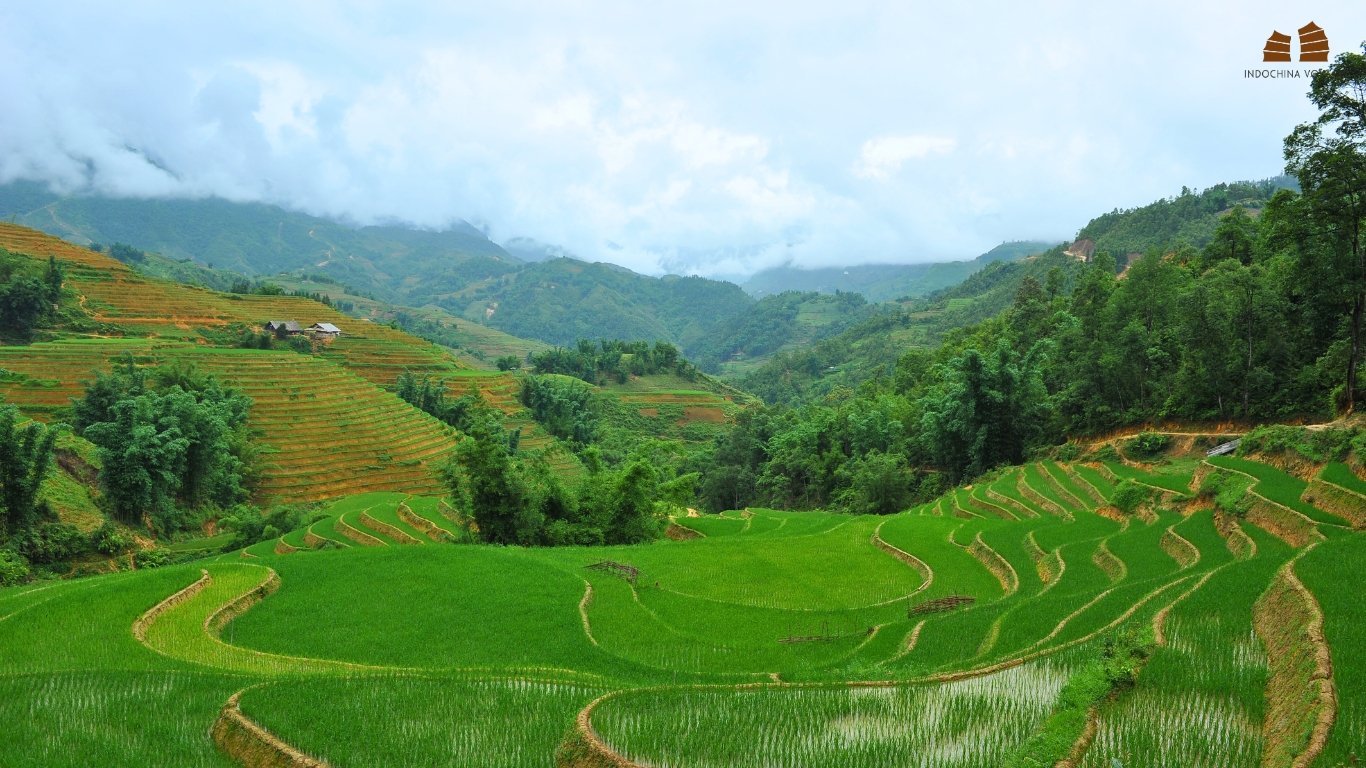
The Muong Hoa Valley is a tectonic masterpiece, a deep rift carved by the Muong Hoa River between the towering Fansipan massif and the Den Thang ridge. This geography creates a unique three-dimensional playground for cyclists.
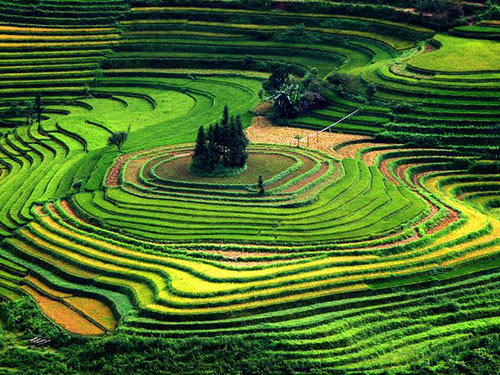
Lao Chai and Ta Van are world-renowned for their rice terraces, which act as giant staircases for the gods. For cyclists, these terraces offer more than just a view; they define the trail. Navigating the narrow dikes and buffalo paths requires balance and precision, while the main village roads provide exhilarating descents with 360-degree vistas of the "emerald sea." Engaging in a Sapa bike tour specifically through these villages allows you to see the most concentrated engineering marvels of the region.
Because of its high altitude and valley floor positioning, the Lao Chai and Ta Van area experiences rapidly shifting weather. You might start your ride in Sapa town in a thick alpine mist and descend into a sun-drenched tropical basin within an hour. This unpredictability is part of the allure, turning every lao chai ta van bike tour into a unique sensory experience.
A cycling expedition through these villages is as much a cultural deep-dive as it is a physical challenge. The valley is home to three main ethnic groups, each contributing to the region's rich heritage.
As you begin your descent from Sapa, the first major village you encounter is Lao Chai. The Black Hmong are famous for their indigo-dyed clothing and expertise in hemp weaving. Cycling through their hamlets allows you to see the traditional vats of dye and the intricate embroidery work being done on the doorsteps of stilt houses.
Further into the valley floor lies Ta Van, inhabited by the Giay minority. Unlike the Hmong who live high on the slopes, the Giay prefer the riverside. Their architecture is distinct—beautiful wooden houses built on the ground rather than on high stilts. Stopping here for a local lunch is a staple of our guaranteed tours.
Perched on the higher ridges overlooking the Muong Hoa River, the Red Dao are recognizable by their silver-studded traditional dress and red headscarves. While they are more concentrated in the southern valleys, many Dao families farm the upper reaches of Ta Van. They are the masters of herbal medicine; a soak in a traditional Red Dao herbal bath is the ultimate post-ride recovery.
To truly experience this adventure, you must venture beyond the main asphalt. Here are the core stages we explore at Golden Cycling Tours.
The journey usually begins with a 10km descent. This isn't just a road; it’s a portal. As you drop from 1,500 meters, the air warms, and the majestic Muong Hoa Valley unfolds beneath your wheels. The road is paved but winding, requiring confident cornering.
Once you reach the outskirts of Lao Chai, the real fun begins. We move off the main road and onto the "buffalo tracks." These are technical, narrow paths that weave directly between the rice paddies. It requires a high-end mountain bike with responsive hydraulic brakes to navigate the elevation changes and sharp turns.
Ta Van is famous for its bridges. Crossing the Muong Hoa River on a swaying suspension bridge is a rite of passage for every lao chai ta van bike tour. It’s a moment of pure adrenaline as you look down at the rushing water and boulders beneath you.
The final leg follows the river toward the village of Ban Ho. Here, the trail flattens slightly, allowing for a higher speed through the lush bamboo forests and corn fields. This is the perfect time to open up the gears and feel the wind as you head toward a well-deserved riverside lunch.
Cycling in Sapa is not like cycling on the flats of the Mekong Delta. The Hoang Lien Son mountains are unforgiving to those who are unprepared.
At Golden Cycling Tours, we maintain a fleet of premium mountain bikes (Giant, Trek, Cannondale).
Brakes: Hydraulic disc brakes are non-negotiable. The 1,000-meter descents can cause rim brakes to overheat and fail.
Gearing: You need a modern 1x12 or 2x11 drivetrain with a large climbing cog to handle the 15% gradients.
Tires: We use high-volume, knobby tires to provide grip on the "Sapa mud" during the rainy season.
While we offer E-bikes for those who want a "boost," a standard lao chai ta van bike tour requires a solid baseline of cardiovascular fitness.
Training Tip: Focus on hill repeats and core strength. Managing a bike on a narrow ridge requires excellent balance and upper-body control.
While Lao Chai and Ta Van are the heart, they are just one piece of the puzzle. To truly understand Northern Vietnam, one must look toward the horizons.
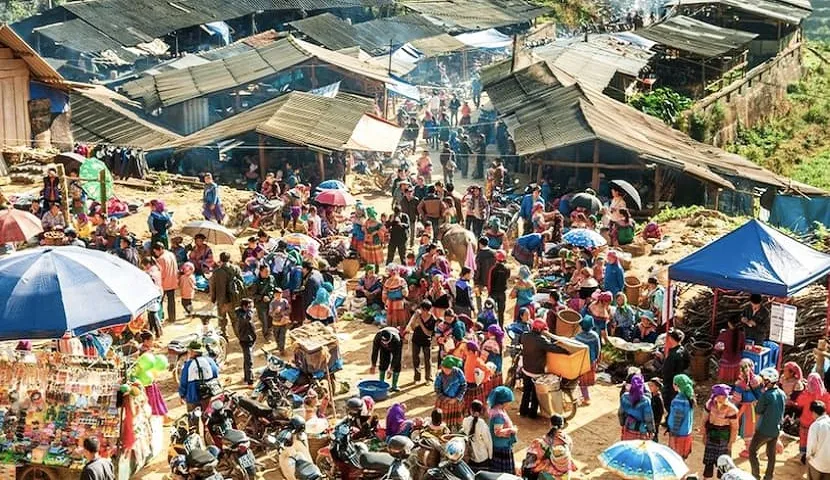
To the east of Sapa lies the Bac Ha plateau. A Bac Ha bike tour offers a fantastic contrast—drier hills, white plum forests, and the vibrant Sunday markets of the Flower Hmong. The riding here is rolling and "flowy," providing a nice break from Sapa's steep verticality.
Crossing the O Quy Ho pass—the highest in Vietnam—takes you into the wild wilderness of Lai Chau. Our Lai Chau bike tours are for the true explorers. This province features jagged peaks and deep river canyons where tourism is still in its infancy.
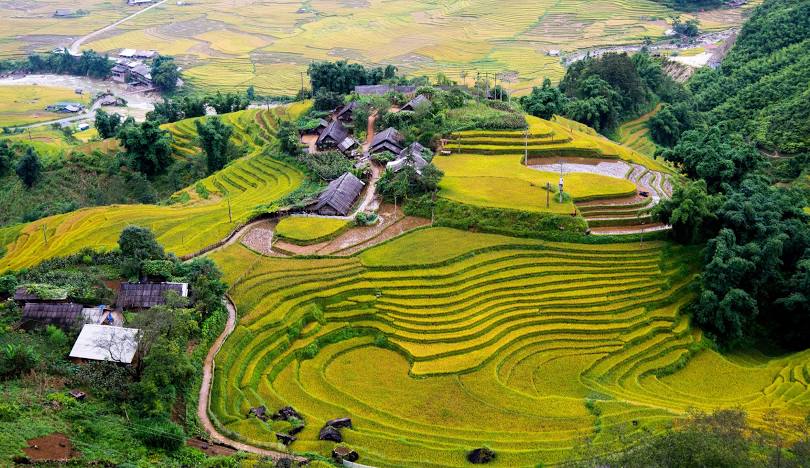
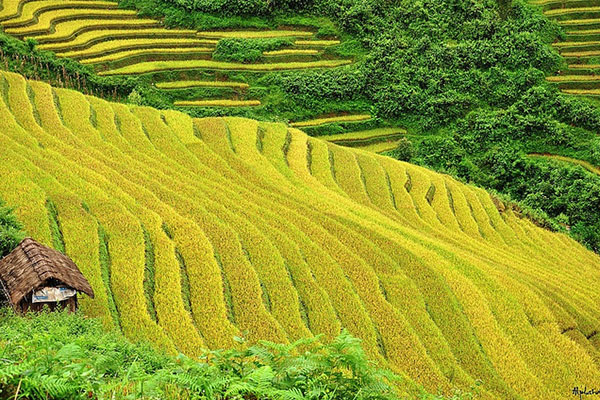
To the south of Sapa, the Mu Cang Chai district in Yen Bai province offers arguably the most spectacular rice terraces in all of Asia. Yen Bai Bike Tours are world-famous, especially during the harvest season when the mountainsides turn into stairs of gold.
For the ultimate enthusiast, our Vietnam Northwest Bike Tour connect Sapa, Bac Ha, Lai Chau, and Yen Bai into one seamless adventure. It is an odyssey that takes you across the highest passes and into the deepest valleys of the country.
The experience of a lao chai ta van bike tour changes dramatically with the calendar.
September to November (The Harvest): The "Golden Season." The rice is yellow, the weather is dry, and the visibility is at its peak. This is the busiest and arguably most beautiful time for any cycling holiday in the North.
March to May (Springtime): The "Blossom Season." Peach and plum trees are in bloom. The air is fresh, and the temperatures are perfect for long-distance riding.
June to August (The Monsoon): Expect rain and mud. The trails become technical and slippery. However, the waterfalls are at their most powerful, and the valley is a vibrant, neon green.
December to February (The Mist): It can be freezing. Visibility is low, creating a mystical atmosphere that is best enjoyed by those who enjoy a "moody" and quiet mountain experience.
Navigating the Sapa highlands requires more than just a bike; it requires professional logistics and local heart.
Every multi-day tour is accompanied by a support vehicle. Whether you are on a Bac Ha bike tour or deep in the canyons of Lai Chau bike tours, the "sag wagon" is there with spare parts, cold water, and a lift if your legs give out.
Our guides aren't just bikers; they are cultural ambassadors. Many grew up in the very villages you will be riding through. They speak the local dialects, know the hidden shortcuts, and have deep relationships with the village families. This expertise is why many travelers choose our guaranteed tours.
Whether you want a private, tailor-made Sapa bike tour or you want to join a group on our scheduled departures, we have the infrastructure to make it happen.
Mark Stephenson from the UK:
"The lao chai ta van bike tour with Golden Cycling Tours was the highlight of my trip to Vietnam. Seeing the terraces from a bike is so much more intimate than seeing them from a bus. The descent into Ta Van was exhilarating, and the team was incredibly professional. I felt safe and supported throughout the entire 40km ride."
Sarah & David from Australia:
"We opted for the E-bikes as we were worried about the hills. It was the best decision! We saw things we never would have seen on a trekking tour. The scenery is mind-blowing, and the organization was flawless. We'll be back for the Vietnam Northwest Bike Tour next year!"
Hans Weber from Germany:
"If you want real mountain biking, go with Golden Cycling. The technical trails through the rice paddies in Lao Chai are challenging and rewarding. The bikes are better than the one I have at home! Five stars."
Q: Is the lao chai ta van bike tour suitable for beginners? A: We have routes for all levels. While Sapa is mountainous, we can design "leisurely" itineraries that focus on valley roads or use E-bikes to make the climbs manageable.
Q: Do I need to bring my own bike or gear? A: We provide high-end mountain bikes, helmets, and water. We recommend bringing your own padded cycling shorts and a lightweight rain jacket for the best experience.
Q: What is the food like on tour? A: You’ll enjoy fresh, locally sourced Vietnamese food. Stir-fries, organic vegetables, and plenty of rice. We easily accommodate vegetarians and vegans.
Q: What happens if it rains? A: We provide high-quality rain ponchos. If the weather becomes dangerous (e.g., risk of landslides), we have the flexibility to adjust the route or use the support vehicle to move to a safer area.
Q: How do I book a tour? A: You can browse all our destinations on our website. To see a list of upcoming departures, check our guaranteed tours page.
A lao chai ta van bike tour is more than just a physical challenge; it is a sensory explosion. It challenges your body on the mountain passes and opens your heart in the village homes. By choosing the pace of a bicycle, you are choosing to see Vietnam not as a spectator, but as a participant in its mountain life.
From the vibrant markets of a Bac Ha bike tour to the remote wilderness of Lai Chau bike tours, the Northwest is a playground for the soul. Join Golden Cycling Tours and discover the rhythm of the mountains.
The trails are calling—will you answer?

.jpg "What to Do in Bac Ha Vietnam ?")
Leave a Reply
Your email address will not be published. Required fields are marked *