- Call us Via Whatsapp: +84 (0) 832 126 699
4.9 stars on our site
(15,000 reviews)
- Monday - Sunday : 08:00 - 17:00
(15,000 reviews)

Dawn unfolds over the serrated mountain ridges of Northern Laos in a breath-taking kaleidoscope of deep violet, warm amber, and golden mist. The crisp morning air carries the intoxicating aromas of pine needles, crushed lemongrass, woodsmoke from bamboo hearths, and dark roasted coffee. As you grip the handlebars of your premium electric mountain bike, the rhythmic, metallic click-click of your drivetrain shifting into gear echoes through the valley. You push down on the pedal, and instantly, a smooth wave of electric power surges forward, matching the rhythmic beat of your heart. On two wheels, steep mountain ascents dissolve into pure, unrestrained bliss, allowing you to conquer vast distances while immersing every sense in Southeast Asia's most captivating wild frontier.
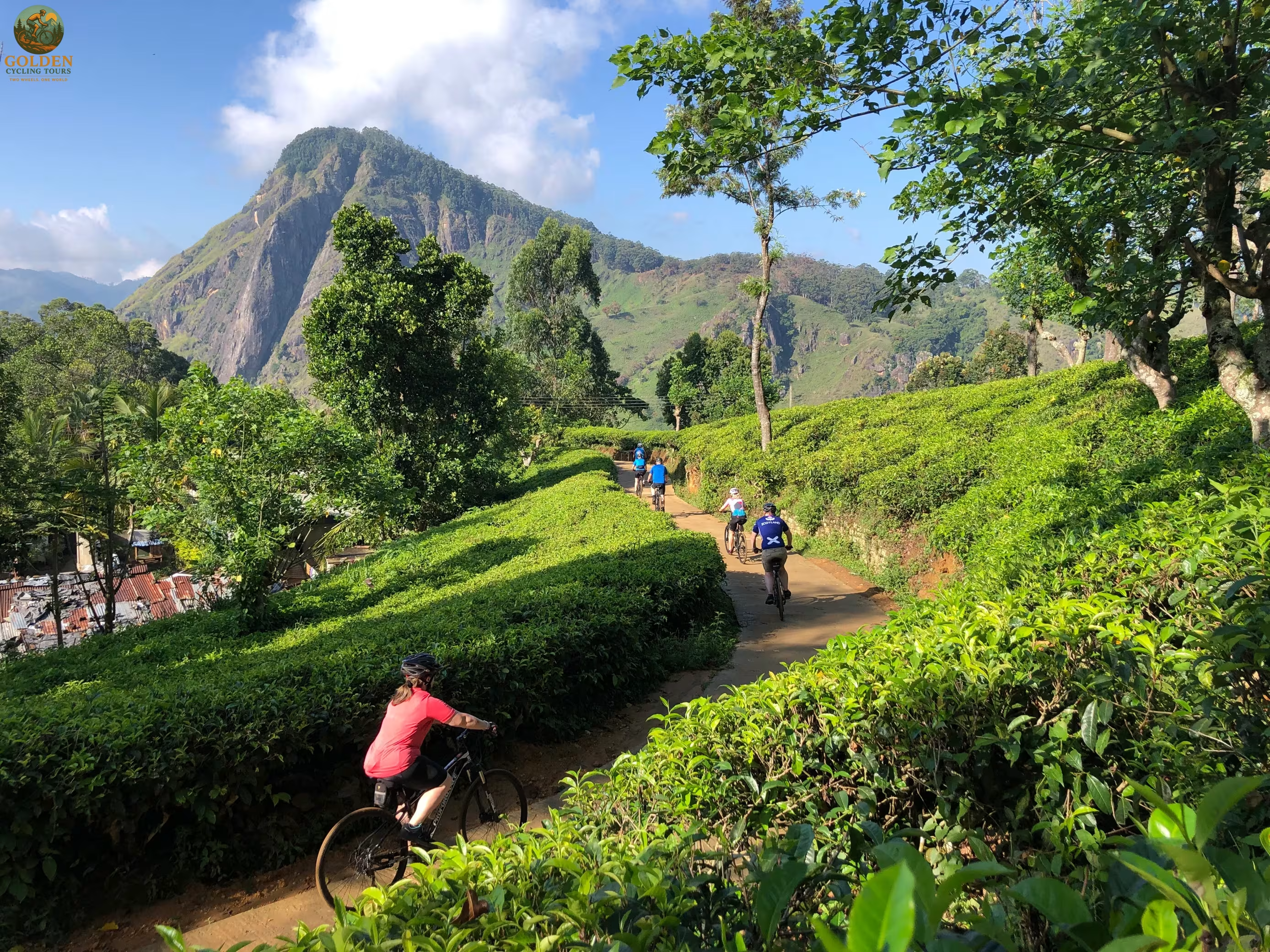
Mastering How to Use Electric Bikes on Long-Distance Laos E-Bike Cycling Tours transforms a demanding physical challenge into an unforgettable, multi-sensory adventure. Riding across hundreds of kilometers of undulating topography, remote rainforest single-track, and river valley trails requires an understanding of battery management, cadence modulation, gear synchronization, and terrain reading.
Whether you are embarking on a cross-country journey or booking a professionally supported expedition with Golden Cycling Tours, learning to ride efficiently ensures that your legs remain fresh, your battery stays charged, and your spirit stays completely captivated by the wild beauty of Laos.
To ride smoothly across long distances in mountain environments, you must treat your e-bike as a harmonious union of human energy and motor assistance. Managing electric power effectively expands your daily riding range while delivering maximum comfort.
The golden rule of long-distance e-bike efficiency is maintaining a high, steady cadence. Electric bicycle motors operate at their highest energy efficiency when you pedal between 70 and 90 revolutions per minute.
When approaching steep climbs like the legendary Phou Khoun Pass, resist the urge to rely solely on high motor assistance in a hard gear. Instead, shift down early to a lighter mechanical gear and maintain a swift, steady pedal cadence. This prevents the motor from straining, conserves valuable battery energy, and prevents early leg fatigue. Feel the satisfying, precise click of your gears engaging as you keep your cadence smooth and continuous up every gradient.
Modern high-performance electric bikes feature multiple pedal-assist modes, ranging from Eco and Tour to Sport and Turbo. Mastering when to switch between these modes is critical for long-distance riding:
Eco Mode: Ideal for flat asphalt riverways, rolling countryside paths, and steady tailwinds along the Mekong River. Eco mode provides a subtle boost that cancels out bike weight while preserving maximum battery life.
Tour/Sport Mode: Best utilized for moderate dirt ascents, loose gravel tracks, and rolling hills through dense forest corridors such as the Nam Ha National Biodiversity Conservation Area.
Turbo/Boost Mode: Reserve this maximum setting for ultra-steep mountain ramps, technical rocky climbs, and sudden elevation jumps. Once you clear the crest of the hill, drop back into Eco mode immediately to conserve range.
During multi-day cross-country journeys, managing your battery range ensures continuous adventure without anxiety. High-capacity lithium-ion batteries typically provide between 60 km and 120 km of pedal assistance on a single charge, depending on rider weight, elevation gain, and ambient temperature.
When embarking on extended stages with Laos Cycling Tours, take advantage of mid-day lunch stops in local villages. Plugs at countryside cafes allow you to top up your battery by 20 percent to 30 percent while enjoying a bowl of steaming noodle soup. Support vehicles carrying spare pre-charged batteries are always nearby on long transfers to guarantee uninterrupted riding.
E-bikes are heavier than traditional non-electric bicycles due to the integrated mid-drive motor and downtube battery. This additional mass provides exceptional stability on high-speed descents, but requires proper braking technique.
When descending winding mountain passes, brake early before entering sharp bends rather than braking while leaning into the turn. Use both front and rear hydraulic disc brakes evenly with a smooth, progressive lever squeeze. Keep your eyes focused far down the trail, absorb bumps with relaxed elbows and knees, and savor the exhilarating rushing breeze against your face as you glide effortlessly down alpine switchbacks.
Laos boasts diverse landscapes ranging from northern limestone karst peaks to southern volcanic plateaus and river island archipelagos. Below are four signature long-distance routes where mastering e-bike techniques reveals the true majesty of the countryside.
Distance: 180 km - 230 km (Multi-Day Stage Ride)
Terrain: Paved mountain switchbacks, rural dirt loops, dramatic karst valleys
Highlights: Luang Prabang, Phou Khoun Pass, Kuang Si Falls, Nam Song River, Vang Vieng, Nam Xay Viewpoint
Departing from the historic royal peninsula of Luang Prabang, your long-distance e-bike journey leads deep into the high mountain wilderness. Climbing toward the soaring heights of Phou Khoun Pass, the air grows crisp and pine-scented. Eco and Tour assist modes level out mountain gradients that would otherwise drain human stamina.
Descending into Vang Vieng, towering limestone monoliths rise abruptly above emerald rice fields and the turquoise waters of the Nam Song River.
Inhale the refreshing, mist-filled spray at Kuang Si Falls before conquering mountain ridges overlooking cloud-filled canyons. As evening falls, relax by the riverbank in Vang Vieng with a cold glass of fresh sugarcane juice, watching the setting sun paint jagged karst cliffs in shades of fiery crimson and violet.
Book your northern adventure with Luang Prabang Bike Tours and Vang Vieng Bike Tours.
Distance: 150 km - 210 km (Multi-Day Circuit)
Terrain: Volcanic soil single-track, remote mountain passes, dense forest canopy
Highlights: Luang Namtha, Nam Ha National Biodiversity Conservation Area, Ban Nalan, Nam Tha River
For intrepid cyclists seeking deep wilderness, northern Laos offers rich jungle trails adjacent to the vast Nam Ha National Biodiversity Conservation Area. Riding beneath soaring evergreen canopy trees, your e-bike’s whisper-quiet motor allows you to pedal silently past wild orchid bowers and bamboo thickets.
Navigating loose red dirt tracks and forest stream crossings, precise pedal assist helps maintain rear-wheel traction on steep off-road climbs.
Listen to the lively chorus of tropical songbirds, cicadas, and rushing river streams as you navigate remote single-track. In tribal hamlets like Ban Nalan, taste authentic home-cooked meals prepared by local hosts over glowing charcoal fires, served on fresh banana leaves.
Explore deep forest loops with Luang Namtha Bike Tours.
Distance: 100 km - 140 km (2 to 3 Day Scenic Explorer)
Terrain: Paved flat avenues, scenic riverfront dikes, countryside gravel tracks
Highlights: Vientiane, Pha That Luang, Patuxai Victory Monument, Wat Si Saket, Nam Ngum Lake
Starting in the laid-back capital city of Vientiane, ride along wide, tree-lined boulevards past historical monuments including the golden spires of Pha That Luang and the magnificent Patuxai Victory Monument. Continue out of the urban center onto peaceful dirt dikes following the Mekong River toward rural farmsteads and countryside lakes like Nam Ngum Lake.
Feel the warm sunset breeze as you ride along the paved river promenade in Vientiane. The irresistible aromas of grilled lemongrass pork skewers and fragrant sweet coconut pancakes draw you to bustling night market stalls along the water's edge.
Plan your capital city expedition with Vientiane Bike Tours.
Distance: 200 km - 280 km (Multi-Day Southern Journey)
Terrain: Volcanic highland roads, cool plateau coffee trails, flat island dirt tracks
Highlights: Pakse, Bolaven Plateau, Tad Fane Waterfall, Tad Yuang Waterfall, Champasak, Vat Phou, Si Phan Don, Don Det, Don Khone, Khone Phapheng Falls
Southern Laos delivers breathtaking geographic diversity. Ascending from the commercial crossroads of Pakse onto the elevated Bolaven Plateau, the tropical heat gives way to cool, invigorating highland air filled with the aroma of flowering coffee trees.
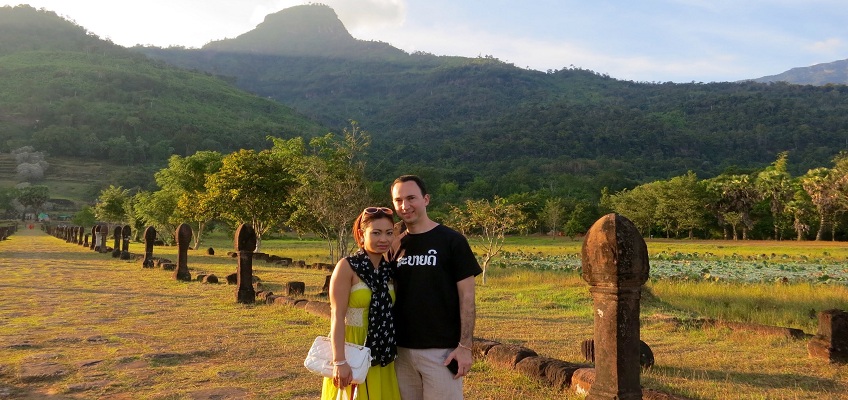
After exploring world-class waterfalls like Tad Fane Waterfall and Tad Yuang Waterfall, descend to the ancient Khmer temple complex of Vat Phou before reaching the watery paradise of Si Phan Don (the 4,000 Islands).
Feel the cool mist spray from Tad Fane Waterfall as twin torrents plunge over 100 meters into a lush jungle ravine. Later, pedal across historic French colonial rail bridges on Don Det and Don Khone, listening to the mighty roar of Khone Phapheng Falls—Southeast Asia's largest waterfall by volume.
Discover southern coffee routes and island trails with Pakse Laos Bike Tours.
For ambitious riders seeking transformative trans-national journeys across Southeast Asia, combining e-bike technology with long-distance border-crossing routes offers an incredible travel experience.
Conquer majestic mountain passes across international borders on a Cycling Vietnam Laos expedition.
Traverse untouched mountain corridors from east to west on a Cycling Laos Vietnam route.
Follow historical trade routes across river borders via Cycling Thailand to Laos.
Unite three magnificent nations on the ultimate Cycling Vietnam to Laos and Thailand journey.
Long-distance e-bike cycling burns calories and builds a healthy appetite for authentic Laotian cuisine, celebrated for its fresh wild herbs, vibrant aromatics, and rich savory flavors:
Larb: The national dish of finely hand-chopped meat, poultry, or mushrooms tossed with fresh mint, cilantro, lime juice, bird's-eye chilies, and ground roasted sticky rice powder (Khao Khua).
Mok Pa: Fresh river fish marinated with galangal, lemongrass, kaffir lime leaves, and dill, wrapped tightly in banana leaves and slow-steamed over wood coals.
Sai Oua: Coarse-ground herbal pork sausage packed with lemongrass, garlic, chilies, and lime leaves, grilled over open flames until golden and crispy.
Khao Soi: Fragrant rice noodle soup topped with a slow-simmered pork, garlic, tomato, and fermented soybean ragout, served with fresh river watercress.
Jaew & Khao Niew: Warm sticky rice served in hand-woven bamboo baskets (Thip Khao), rolled into small balls and dipped into roasted eggplant paste (Jaew Mak Keua) or smoky chili paste (Jaew Bong).
Highland Coffee: Dark, velvety coffee harvested from the rich volcanic soil of the Bolaven Plateau, brewed strong and sweet over ice.
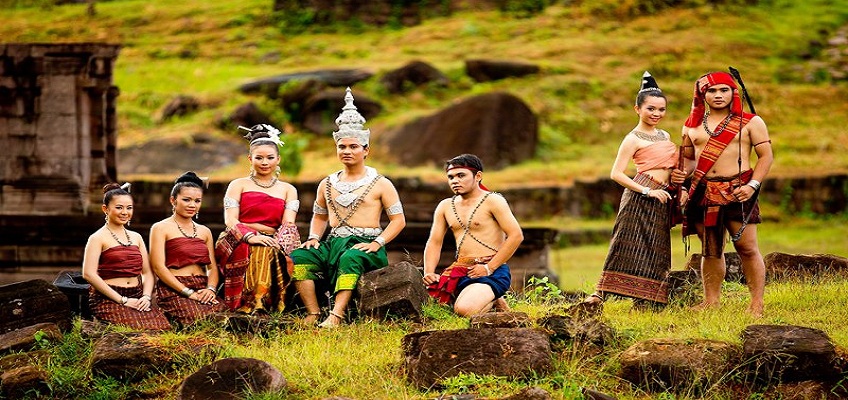
Cycling through rural villages provides intimate access to local communities. Respecting cultural heritage ensures warm hospitality throughout your journey.
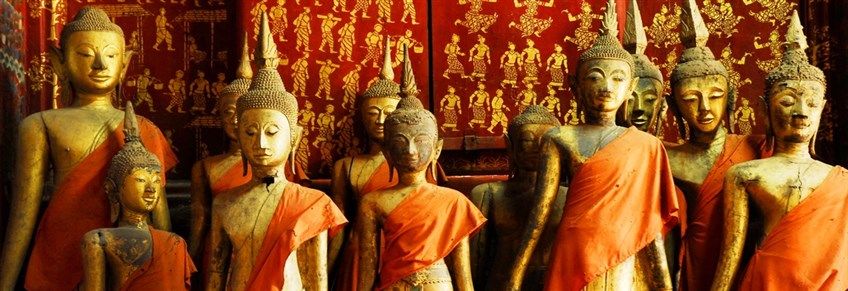
Every morning at dawn, Theravada Buddhist monks dressed in saffron robes walk silently through street avenues during Tak Bat (morning alms). If observing this ritual, dress modestly with shoulders and knees covered, maintain silence, and keep a respectful distance without flash photography.
When cycling through Hmong, Khmu, or Lao Loum villages:
Greeting: Greet elders and villagers with a warm "Sabaidee" and a polite Nop (placing your palms together gently at chest level).
Temple Etiquette: Always remove shoes, hats, and sunglasses before stepping into sacred temple halls (Wats) or local wooden homes.
Modest Apparel: Wear respectful cycling clothing that covers shoulders and knees when riding through rural villages and entering religious sites.
Photography: Politely ask permission before taking close-up portraits of villagers, monks, or children along the trail.
Tamarind Restaurant (Luang Prabang): Located along the Nam Khan River, renowned for authentic tasting platters, bamboo shoot stews, and traditional Lao cooking classes.
Bamboo Tree Restaurant (Luang Prabang): Famous for classic recipes served in a peaceful riverfront garden setting.
Amigo's Vang Vieng (Vang Vieng): A popular spot offering healthy power breakfasts, fresh juices, and international meals for active travelers.
Makphet Restaurant (Vientiane): A creative vocational training restaurant serving modern Laotian cuisine made with fresh local herbs.
Le Jardin de Pakse (Pakse): A charming garden restaurant in Pakse serving Lao-French fusion, fresh river fish, and boutique wines.
From luxury colonial sanctuaries to boutique riverside lodges, Laos offers excellent accommodations tailored for multi-day cycling travelers.
Amantaka (Luang Prabang): Situated near the foot of Phou Si Hill, offering classic colonial architecture, tranquil courtyards, and world-class spa facilities.
The River Resort (Champasak): A luxury eco-resort along the banks of the Mekong River, featuring private villas, infinity pools, and river views near Vat Phou.
3 Nagas Luang Prabang (MGallery): Located in the heart of the historic peninsula, offering Lao-French colonial heritage and immediate access to morning alms.
Inthira Vang Vieng: A modern boutique hotel along the Nam Song River offering stylish rooms and mountain balcony views.
My Ban Lao Hotel (Luang Prabang): Modern comfort, large swimming pool, and convenient facilities for bike storage and gear maintenance.
Pakse Hotel & Restaurant (Pakse): Central hotel in Pakse featuring a rooftop restaurant, bike storage amenities, and easy access to airport transfers.
By Air: Luang Prabang International Airport (LPQ), Wattay International Airport (VTE) in Vientiane, and Pakse International Airport (PKZ) offer direct connections to Bangkok, Hanoi, Chiang Mai, Siem Reap, and Ho Chi Minh City.
By High-Speed Train: The modern Laos-China Railway connects Vientiane, Vang Vieng, Luang Prabang, and Luang Namtha quickly and comfortably.
By River Boat: Scenic 2-day slow boat journeys depart from Huay Xai on the Thai border down the Mekong River to Luang Prabang.
Town centers are compact and highly walkable. Electric tuk-tuks, bicycles, and guided support vehicles handle local transport effortlessly.
Selecting the right season for your multi-day ride guarantees comfortable temperatures, dry mountain trails, and optimal battery efficiency.
Weather: Clear blue skies, crisp mountain air, lower humidity, daytime temperatures ranging between 20°C and 26°C.
Cycling Conditions: Exceptional. Dirt backroads and mountain passes are dry, firm, and perfect for all-day long-distance riding.
Weather: Tropical afternoon rain showers, warm weather, brilliant green jungle foliage and terraced rice paddies.
Cycling Conditions: Waterfalls like Kuang Si Falls, Tad Fane Waterfall, and Khone Phapheng Falls are at full capacity. E-bikes handle wet terrain easily with support vehicles nearby.
Weather: Warmer temperatures ranging between 30°C and 35°C.
Highlight: Mid-April features Lao New Year (Pi Mai), a lively water festival celebrated across Luang Prabang and Vientiane.
"Learning how to use electric bikes on long-distance Laos e-bike cycling tours made our multi-day mountain journey through Luang Prabang and Phou Khoun Pass an absolute joy! The pedal assist made steep climbs effortless, while our support vehicle from Golden Cycling Tours handled all our gear flawlessly." — David & Laura M., Vancouver, Canada
"Crossing the mountain passes of Northern Laos on an e-bike was the experience of a lifetime. The cadence tips from our local guide helped us maximize battery range, allowing us to explore remote Khmu villages off the main roads. Golden Cycling Tours provides top-tier bikes and impeccable service!" — Stefan & Birgit W., Munich, Germany
Yes! Electric bikes compensate for physical fitness differences. Riders can adjust the pedal-assist level to climb steep mountain passes comfortably without physical exhaustion.
On average, high-performance electric mountain bike batteries cover between 60 km and 100 km per charge, depending on terrain gradient, rider weight, and pedal-assist mode used. Support vehicles carry back-up batteries on longer stages.
All Golden Cycling Tours expeditions include dedicated support vehicles that accompany the group on long-distance stages. If a battery runs low, it can be swapped instantly with a fully charged spare.
Tour packages include premium electric mountain bikes, protective helmets, professional English-speaking cycling guides, water refills, snack packs, and full support vehicle coverage for luggage and passenger transfers.
Yes. Vegetarian, vegan, pescatarian, and gluten-free dietary preferences are easily catered to using fresh local vegetables, herbs, rice noodles, tofu, and fresh river produce.

Leave a Reply
Your email address will not be published. Required fields are marked *