- Call us Via Whatsapp: +84 (0) 832 126 699
4.9 stars on our site
(15,000 reviews)
- Monday - Sunday : 08:00 - 17:00
(15,000 reviews)

The trail narrows. Loose stones scatter beneath your tires, a sharp bend appears between ancient trees, and the mountain drops away into a valley wrapped in drifting cloud. Your fingers tighten around the brake levers. The chain clicks as you shift into a lower gear, your breathing deepens, and every muscle prepares for the next climb.
This is mountain biking in Vietnam—not simply a ride from one destination to another, but an immersive journey through rugged terrain, remote villages, dramatic mountain passes, and landscapes that seem to change with every turn.
Vietnam MTB Tours: Technical Trails & Mountain Adventures invites riders to discover a wilder side of the country. From rocky singletracks in the northern highlands to forest paths in limestone country and flowing trails beside emerald rice terraces, Vietnam offers an extraordinary range of cycling experiences for adventurous travelers.
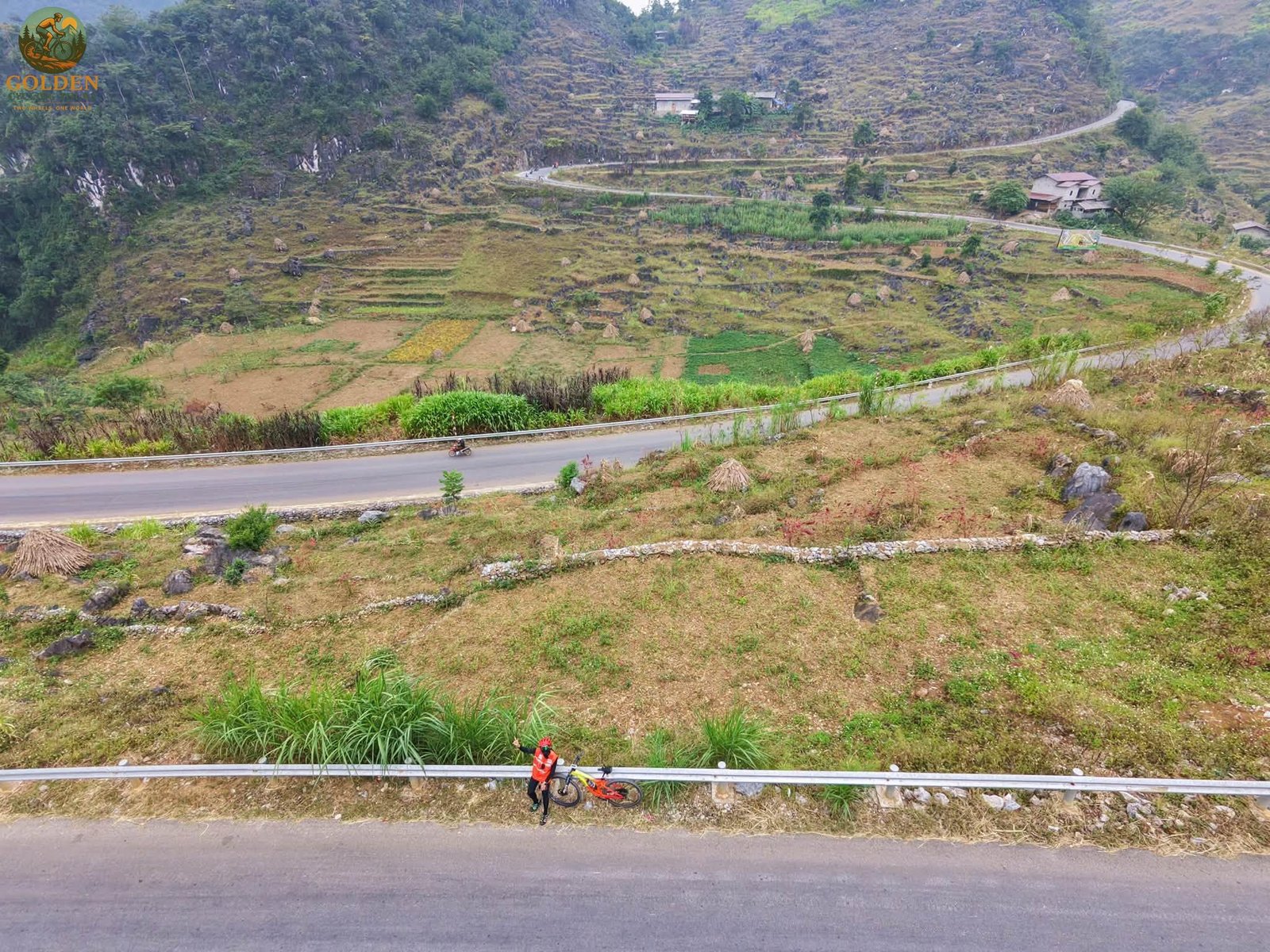
With Golden Cycling Tours, riders can explore northern Vietnam through cycling journeys that combine mountain scenery, local culture, challenging roads, and opportunities to venture beyond conventional tourist routes. Whether you are an experienced mountain biker seeking technical terrain or a fit traveler eager to discover Vietnam on two wheels, the key is choosing a route that matches your skills, interests, and appetite for adventure.
Vietnam rewards mountain bikers with an exceptional combination of geographical diversity, cultural richness, and constantly changing terrain. Within a single journey, you may ride through mist-covered mountains, descend into tropical valleys, cross bamboo forests, and follow quiet paths past villages where daily life continues at its own unhurried rhythm.
Unlike destinations known primarily for purpose-built bike parks, many Vietnamese mountain biking experiences revolve around natural terrain, rural roads, farm tracks, forest access routes, and selected technical trails. Conditions vary significantly by region, and not every scenic track is suitable for bicycles. Careful route selection is therefore essential.
The thrill begins when pavement gives way to dirt. The surface changes beneath your tires, from compact earth to loose gravel, exposed roots, embedded stones, and occasional muddy sections after rainfall.
On technical terrain, speed is only one part of the challenge. Reading the trail, choosing a smooth line, distributing your weight, and controlling your braking matter far more than simply pedaling harder.
A tight corner may require you to look beyond the immediate obstacle. A rocky step demands a balanced body position. A steep climb rewards smooth power and patient gear selection rather than frantic effort.
The soundscape becomes part of the experience: the soft crunch of tires, the rhythmic click of the drivetrain, the hiss of your breathing, and the wind brushing through leaves above the trail.
Technical singletrack availability varies by destination, and some routes require local guidance or permission. Riders should confirm the surface, difficulty, and trail access before booking a dedicated MTB expedition.
Northern Vietnam is especially compelling for riders who enjoy dramatic elevation changes and remote scenery.
In Ha Giang, limestone peaks rise above deep valleys, winding roads cling to mountainsides, and villages appear between folds of rugged terrain. In Sapa, highland landscapes combine terraced fields, forested slopes, and views toward the towering mountains of the northwest. Around Bac Ha, agricultural tracks and rural roads connect colorful market towns with hillsides and ethnic minority communities.
Farther southwest, Mai Chau and Pu Luong Nature Reserve offer a gentler visual rhythm: green valleys, traditional stilt houses, bamboo groves, and rice fields that glow gold during harvest season.
These destinations do not all provide the same type of riding. Some journeys emphasize steep road climbs and mountain descents, while others are better suited to mixed-terrain cycling, gravel exploration, and countryside discovery. The best Vietnam MTB Tours match the terrain to the rider rather than assuming every destination is a technical singletrack playground.
Mountain biking offers a slower, more intimate way to encounter Vietnam.
You may pass farmers tending rice terraces, hear livestock moving through village lanes, or stop beside a small roadside stall for a cup of strong Vietnamese coffee. In rural markets, baskets of vegetables, freshly harvested produce, embroidered textiles, and colorful clothing create a vivid picture of regional life.
The most rewarding encounters happen when travelers approach communities with curiosity and respect. Ask before photographing people, follow local guidance around homes and farmland, and remember that village paths are working routes—not private cycling facilities.
Vietnam's riding regions differ in elevation, climate, accessibility, and technical difficulty. The following destinations offer distinct experiences for mountain bikers and adventure cyclists.
Ha Giang is one of northern Vietnam's most spectacular regions for adventurous cycling. Towering limestone formations, winding mountain roads, remote settlements, and deep valleys create a landscape that feels immense even when you are moving at bicycle speed.
The celebrated Ma Pi Leng Pass is a highlight of the Ha Giang Loop, with sweeping views across jagged mountain ridges and the dramatic Nho Que River gorge.
As the road climbs, the air can feel cooler and thinner. Your breathing becomes more deliberate, your legs settle into a steady rhythm, and the landscape opens gradually around each bend. On a clear day, distant peaks emerge in layers of blue-gray rock. When clouds roll in, the same mountains disappear into shifting curtains of mist.
The pass is famous primarily for its spectacular mountain-road riding and scenery. It should not automatically be described as a technical singletrack route: the experience depends on the selected itinerary, road conditions, traffic, and any off-road sections included.
For travelers who want to explore the region, discover the Ha Giang Bike Tours destination guide.
Beyond the best-known viewpoints, the wider region offers opportunities to explore rural roads, highland villages, agricultural landscapes, and quieter mountain communities. Riders may encounter stone fences, traditional houses, local markets, and steep climbs that test endurance.
The 10-Day Ha Giang Loop and Hoang Su Phi Cycling Adventure is a relevant starting point for travelers interested in a longer northern mountain journey. Check the current itinerary, riding surfaces, daily distances, and support arrangements with Golden Cycling Tours before booking.
Sapa is known for its dramatic mountain scenery, terraced rice fields, and diverse highland communities. For cyclists, the attraction lies in the combination of climbing, changing weather, rural roads, and the possibility of exploring selected dirt tracks where access and conditions permit.
In the early morning, mist may hang over the valley while water glimmers between the terraces. The smell of damp soil rises from the fields, and the air feels cool against your face as the trail winds between green slopes.
During a descent, a compact dirt surface may flow smoothly beneath your tires before changing to stones or muddy patches. These transitions demand attention, especially after rain. Riders should reduce speed around blind corners and avoid skidding across fragile terrace edges.
Not every agricultural path is open to bicycles, and some tracks are steep, narrow, or used by local residents. A knowledgeable local guide can help identify suitable routes and avoid disturbing farmland.
Discover regional cycling possibilities through Sapa Bike Tours and the broader Northwest Vietnam Bike Tours destination collection.
Bac Ha offers a different character from the dramatic limestone landscapes of Ha Giang. Rolling hills, agricultural paths, small settlements, and market-day activity create a rewarding setting for riders who want to combine cycling with cultural discovery.
The well-known Bac Ha Market is a major regional attraction, especially on its traditional Sunday market day, although visitors should verify current schedules and any seasonal changes before traveling.
Arriving in the surrounding countryside by bicycle offers a contrast to the lively market atmosphere. Quiet lanes pass vegetable gardens, hillside farms, and homes where everyday routines unfold in the open air.
A ride may include firm dirt, gravel, paved roads, or uneven agricultural tracks, depending on the chosen route. Riders looking specifically for technical singletracks should confirm that the itinerary includes suitable trails rather than assuming every countryside cycling route is designed for MTB.
Explore the region through Bac Ha Bike Tours.
Cao Bang is a spectacular choice for cyclists who appreciate quiet mountain landscapes, limestone formations, and natural attractions away from the busiest tourist corridors.
The remarkable Ban Gioc Waterfall, on the border between Vietnam and China, is one of the region's defining sights. Water spills over broad limestone ledges into a green river landscape, creating a powerful soundtrack that contrasts with the quiet mountain roads leading toward it.
The surrounding area offers scenic riding, rural exploration, and opportunities to connect cycling with nature-focused sightseeing. However, the waterfall itself is a sightseeing destination, not a mountain-bike trail. Any ride involving nearby dirt tracks must be planned around legal access, terrain, weather, and local conditions.
Cyclists can learn more about the region through Cao Bang Bike Tours.
Nguom Ngao Cave offers a different perspective on Cao Bang's limestone geology, with impressive rock formations and underground chambers. Combine cave sightseeing with a carefully planned ride through nearby countryside for a more varied travel experience.
For a broader regional journey, consider the Best Vietnam Cycling Northeast Tour – 15 Days. Confirm whether the current itinerary includes these specific attractions and which sections are suitable for mountain bikes.
Ba Be National Park surrounds Ba Be Lake, a freshwater landscape framed by forested hills, limestone cliffs, and small settlements. It offers a slower, nature-oriented atmosphere for riders who want to combine cycling with walking, boating, and cultural experiences.
Here, the soundtrack of the journey may be the ripple of water along the shore, birds calling through the trees, or the quiet movement of a bicycle along a rural lane.
Routes around the lake vary in surface and difficulty. Some are suitable for scenic cycling, while rougher tracks may require mountain-bike handling skills and careful local planning. Forest access restrictions, wet weather, and steep terrain should always be considered.
Discover the region through Ba Be Lake Bike Tours.
Mai Chau is an excellent option for travelers seeking a combination of scenic cycling, rural culture, and accessible countryside exploration. Surrounded by green mountains and rice fields, the valley provides a gentler contrast to the steep terrain of Vietnam's northern frontier.
Early morning is especially atmospheric. Thin smoke may rise from village kitchens, roosters call across the valley, and the scent of rice plants and damp earth drifts through the air.
The riding experience often includes paved rural roads and selected dirt or gravel sections rather than continuous technical singletrack. That makes Mai Chau appealing to mixed-ability groups and riders who want time to enjoy the landscape between cycling sections.
Explore the area through Mai Chau Bike Tours.
Pu Luong Nature Reserve is celebrated for its forested mountains, rice terraces, traditional villages, and tranquil valleys. It can be a rewarding destination for travelers who want their cycling holiday to include nature, culture, and rural exploration.
The terrain rises and falls through green valleys and hillside settlements. Depending on the route, riders may encounter paved lanes, gravel, uneven village tracks, or muddy surfaces following rain.
On a climb, your breathing grows heavier as the rear tire searches for grip on loose ground. On a descent, shade from the trees cools your skin while the smell of leaves and wet earth rises from the trail.
Because parts of the reserve are environmentally sensitive, use designated or locally approved routes and avoid riding through cultivated fields or restricted areas.
Explore the Pu Luong Bike Tours collection or consider the 4-Day Mai Chau to Pu Luong Cycling Adventure.
A memorable mountain-bike journey requires more than beautiful scenery. The best expedition balances physical challenge, technical terrain, safe logistics, and enough time to appreciate the places along the way.
The phrase “mountain biking” can describe several different riding experiences in Vietnam:
Technical singletrack: Narrow trails requiring precise line choice, balance, and braking.
Gravel and dirt riding: Unpaved roads and tracks with varying degrees of looseness and roughness.
Mountain-road cycling: Paved climbs and descents through steep highland terrain.
Mixed-terrain expeditions: Routes combining road sections, gravel, dirt, and occasional trail riding.
Cultural countryside cycling: Easier rides connecting villages, rice fields, markets, and local attractions.
These categories overlap, but they are not interchangeable. A route with spectacular mountain passes may be physically demanding without containing technical singletrack. Before booking, ask for the actual riding surface, estimated daily elevation gain, technical grading, and any hike-a-bike sections.
Riders with limited off-road experience should prioritize stable surfaces, manageable gradients, shorter technical sections, and support arrangements that allow the group to adjust its pace.
Mai Chau and selected routes around Pu Luong may suit travelers seeking scenic mixed-terrain cycling, although individual routes can still include steep or slippery sections.
Experienced riders may prefer itineraries with sustained climbing, rougher descents, loose surfaces, and more demanding trail features. The best destination depends on which routes are legally accessible and whether the operator can verify their technical difficulty.
Ask for recent trail information rather than relying on a destination's reputation alone. Trail conditions can change substantially after storms, landslides, roadworks, or agricultural activity.
For riders who enjoy long days in the saddle, northern Vietnam offers substantial climbing and extended mountain-road journeys. Multi-day expeditions require consistent pacing, nutrition, hydration, and adequate recovery.
A challenging route should leave enough energy for the following day. The goal is not merely to reach a summit but to finish the expedition safely and enjoy the entire journey.
Before attempting demanding terrain, practice the following skills:
Looking ahead and selecting a safe line through rocks and roots.
Braking progressively instead of locking the wheels.
Maintaining a balanced position on steep descents.
Shifting gears before a climb becomes too steep.
Keeping enough momentum to cross small obstacles without losing control.
Walking technical sections that exceed your ability or the available trail conditions.
A successful mountain biker knows when to ride, when to slow down, and when to get off the bike.
Vietnam's climate varies substantially by region. Northern mountain destinations can be cool and misty while lowland areas remain warm, and rainfall may affect trail conditions more than air temperature alone.
Autumn is often an attractive period for exploring northern Vietnam. Temperatures can be comfortable for long rides, and mountain scenery may be particularly clear between weather systems.
In highland areas, changing agricultural seasons add color to the landscape. Rice terraces may shift from green to gold depending on the location and harvest calendar.
However, autumn can still bring rain and muddy sections. Confirm recent conditions before committing to technical off-road routes.
Spring often brings fresh vegetation, blossoming plants, and increasingly warm conditions. It can be a rewarding time to explore Ha Giang, Cao Bang, Mai Chau, and Pu Luong, depending on the weather.
Mist, drizzle, and sudden temperature changes remain possible in the mountains. A lightweight waterproof layer and quick-drying clothing are useful even when the forecast looks favorable.
Winter can bring crisp mornings and atmospheric fog to northern Vietnam. In higher areas, temperatures may drop considerably, and some days can feel damp and cold.
This season can appeal to riders who enjoy quiet landscapes and cool-weather exertion, but visibility and road conditions may be less predictable. Warm layers, gloves, and careful descent planning are essential.
Summer brings intense greenery, but also heat, humidity, and frequent rainfall in many northern regions. Trails can become slick, streams may rise, and heavy rain can trigger landslides or make remote roads unsafe.
Riders considering a summer expedition should prioritize flexible schedules, local weather advice, and routes with safe alternatives.
Best overall advice: For many northern Vietnam cycling holidays, spring and autumn are strong starting points. The ideal dates for technical MTB riding depend on the exact trail, recent rainfall, elevation, and the operator's assessment of current conditions.
Vietnamese food is an essential part of the cycling experience. Meals provide energy for the next climb while offering a taste of the region's local traditions.
A steaming bowl of pho offers fragrant broth, rice noodles, herbs, and tender meat or other regional variations. It is a familiar and comforting option before or after a day of riding.
In mountain towns, local noodle soups may vary from one restaurant to another. Ask about ingredients and spice levels if you have dietary restrictions.
Thang co is associated with highland food traditions, particularly in parts of the northern mountains. It is a distinctive dish that adventurous travelers may encounter at local markets or traditional eateries.
Recipes and ingredients vary, so ask what is included before ordering.
Com lam, rice cooked inside bamboo, is associated with several northern and northwestern highland food traditions. It may be served with grilled meat, vegetables, or local dipping sauces.
After a long ride, the combination of warm rice, smoky aromas, and fresh herbs can be especially satisfying.
In places such as Mai Chau, Pu Luong, and Bac Ha, some family-run guesthouses serve meals featuring rice, seasonal vegetables, eggs, tofu, fish, and locally prepared dishes.
These meals provide a chance to experience regional hospitality while replenishing energy after cycling.
Hanoi: Explore established local restaurants and street-food areas before or after your expedition.
Ha Giang City: Look for reputable local eateries serving noodle soups, rice dishes, and regional specialties.
Sapa: Choose restaurants offering Vietnamese highland dishes as well as simple meals suited to your dietary needs.
Bac Ha: Explore local restaurants and market-area food stalls, paying attention to hygiene and opening hours.
Mai Chau and Pu Luong: Ask your accommodation or local guide about family-run meals and restaurants serving seasonal ingredients.
Cao Bang: Seek local eateries serving noodle dishes, rice meals, and regional specialties before or after sightseeing.
Restaurant availability changes by season and village. In remote areas, it is sensible to arrange meals with your accommodation or tour operator rather than assume that restaurants will be open when you arrive.
For demanding riding days, eat a carbohydrate-rich meal before departure and carry snacks such as bananas, energy bars, or other foods you know you tolerate well.
Drink regularly, especially in hot and humid conditions. Electrolytes may be useful during prolonged exertion, and a balanced meal after riding supports recovery.
If you have food allergies or dietary requirements, communicate them in advance. Do not assume every rural restaurant can accommodate specialized diets.
Accommodation can shape the entire expedition. A good base offers comfortable recovery, reliable meals, secure bike storage, and convenient access to the next day's route.
In destinations such as Mai Chau, Pu Luong, and parts of the northern highlands, family-run homestays offer opportunities to experience village life and regional hospitality.
Some traditional houses feature wooden construction and communal spaces, while others provide private rooms and modern facilities. Standards vary, so confirm the amenities before booking.
A homestay can be particularly memorable after a long day on the bike: a warm shower, the aroma of dinner from the kitchen, and the quiet sounds of village life provide a welcome contrast to the effort of the trail.
Ha Giang City, Sapa, Cao Bang City, and Bac Ha offer a range of hotels and guesthouses. These can be practical choices for travelers who want private rooms, easier access to supplies, or a comfortable stop between riding stages.
Before booking, ask whether the property can store bicycles securely, accommodate early departures, provide breakfast at a suitable time, and arrange laundry if needed.
Around Pu Luong Nature Reserve and Ba Be National Park, nature-oriented lodges can provide a peaceful base for combining cycling with hiking, local food, and wildlife observation.
Choose accommodation that respects the surrounding environment and supports local communities where possible.
Consider the following before confirming your stay:
Secure bicycle storage and a place for basic maintenance.
Reliable access to drinking water and meals.
Room comfort and bathroom facilities.
Distance from the next day's starting point.
Flexibility if bad weather forces a change of plans.
Clear cancellation terms and any additional bicycle-handling fees.
Golden Cycling Tours can help travelers explore suitable trip options and clarify what accommodation or support is included in a specific itinerary. Confirm all inclusions directly before payment.
The right transport plan makes a major difference to comfort, safety, and how much time you spend riding.
Hanoi is a common starting point for trips to northern Vietnam. International travelers typically arrive through Noi Bai International Airport and continue to their hotel or departure point by arranged transfer, taxi, or another suitable service.
If you are bringing your own bike, check airline packing requirements, baggage allowances, and any additional fees before departure.
For multi-day expeditions, a private transfer or support vehicle can simplify logistics between regions and help transport luggage. Depending on the operator and itinerary, support may also be available during riding stages.
Do not assume that every tour includes a support vehicle, mechanic, luggage transfer, or emergency evacuation. Ask for written confirmation of the specific services included.
Cars and vans are often the most practical ways to reach remote northern destinations. Travel times can be long because mountain roads are winding, and road conditions may change after heavy rain.
Motorbikes are common locally, but carrying a full-size mountain bike on one is generally unsuitable unless a safe, legal, purpose-designed arrangement exists. Use appropriate vehicles and secure bicycle racks or packing systems.
Bringing your own bike can provide familiarity with the geometry, suspension, gearing, and fit you prefer. However, transport costs, airline handling, and repair logistics need consideration.
If renting, confirm the exact bicycle model or category, frame sizes, suspension, tire condition, brake setup, and whether pedals and helmets are provided.
For technical riding, a properly maintained bike matched to the trail is more important than having the most expensive equipment.
The landscapes that make Vietnam's mountain regions special are also home to communities with their own languages, traditions, livelihoods, and relationships with the land.
Northern Vietnam is home to diverse communities, including Hmong, Dao, Tay, Thai, Nung, and others. Clothing, food traditions, architecture, and languages vary across regions and villages.
A respectful visit begins with listening. Learn a few Vietnamese greetings, follow your guide's advice, and ask permission before photographing residents or entering private spaces.
Traditional clothing and cultural practices are part of everyday life, not a performance arranged for visitors. Approach encounters with genuine interest rather than treating people as attractions.
Mountain biking can bring travelers into places where residents work, children walk to school, and farmers move goods along narrow paths.
Follow these principles:
Slow down when approaching people, livestock, or village homes.
Yield on narrow tracks and communicate your presence calmly.
Never ride through crops or damage terrace edges.
Avoid loud music and unnecessary noise in quiet communities.
Carry out all litter, including food wrappers and damaged equipment.
Respect trail closures, private property, and protected areas.
Ask before photographing people, homes, or ceremonies.
Eating at locally owned restaurants, hiring knowledgeable local guides, and staying in community-run accommodation can help distribute tourism income more widely.
Buy crafts directly from makers where possible, agree on prices politely, and avoid pressuring people to pose for photographs.
A successful expedition should leave both travelers and host communities with positive memories.
Remote mountain riding demands thoughtful preparation. The correct equipment and a realistic understanding of your abilities can turn a difficult day into a rewarding one.
For rougher trails, a well-maintained mountain bike with suitable tires, reliable brakes, and gearing for steep climbs is essential. Suspension needs depend on the terrain; not every mixed-terrain journey requires a full-suspension bike.
Before departure, check:
Brake pads, rotors, and lever feel.
Tire condition and pressure.
Chain wear, lubrication, and shifting.
Suspension setup, if applicable.
Wheels, spokes, and essential fasteners.
Saddle comfort and bike fit.
Carry a spare tube or compatible repair solution, a pump, tire levers, a multitool, a quick link, and any model-specific tools you may need.
Conditions can change quickly with elevation. A practical packing list includes:
Certified cycling helmet.
Full-finger gloves for rough terrain.
Breathable riding clothing.
Lightweight waterproof jacket.
Warm layer for cool mornings.
Sunglasses or clear riding lenses.
Hydration bottles or a hydration pack.
Sunscreen and insect repellent.
Small first-aid kit and personal medication.
Offline maps and a charged phone.
Emergency contact details and travel insurance information.
For technical descents, knee and elbow protection may be appropriate depending on your skill level and the trail grading.
Prepare with a mix of endurance rides, sustained climbs, and controlled off-road practice. Build confidence with braking, cornering, and weight distribution before attempting steep or exposed trails.
If your itinerary includes several consecutive riding days, practice back-to-back rides so you understand how your body responds to accumulated fatigue.
Rest, hydration, and nutrition are part of training—not optional extras.
Remote areas may have limited mobile coverage and longer emergency response times. Confirm the group's communication plan, guide qualifications, support arrangements, and procedure for injuries or mechanical failures.
Never assume a trail is safe simply because it appears on a map. Heavy rain, loose rock, landslides, and low visibility can quickly change the risk level.
A responsible guide may shorten, reroute, or cancel a ride when conditions are unsafe. That is a sign of sound judgment, not a failed adventure.
The following is an illustrative itinerary concept, not a confirmed Golden Cycling Tours departure. Actual routes, travel times, accommodation, trail access, and riding difficulty must be verified before booking.
Arrive in Hanoi, settle into your accommodation, and check your bicycle. Explore the historic streets, enjoy a Vietnamese meal, and prepare for the journey north.
Travel toward Ha Giang through changing landscapes. Depending on arrival time and the confirmed itinerary, use the afternoon for a short spin, equipment check, or briefing.
Ride selected mountain roads and rural routes in the Ha Giang region. Expect climbs, winding descents, and expansive views. The precise route should be chosen according to the group's ability and current road conditions.
Discover the dramatic landscapes of the Dong Van Karst Plateau Geopark. A planned ride may combine mountain-road sections with selected local tracks where cycling access is appropriate.
Experience the celebrated scenery around Ma Pi Leng Pass and the Nho Que River. Because this is a famous mountain-road route, confirm traffic conditions, stopping points, and whether any off-road riding is actually included.
Continue through selected highland villages and countryside routes. Allow time for local food, photography, and respectful cultural encounters rather than making every day a race against the clock.
Travel back toward Hanoi or continue to another destination, depending on your onward plans. Allow a generous transfer buffer before any international flight.
For travelers who prefer a longer journey, explore the 8-Day Northern Vietnam Epic Ha Giang Loop Adventure or the 12-Day North Vietnam Cycling Adventure from Hanoi to Ninh Binh. Check the published itinerary to confirm route details and suitability for your preferred style of mountain biking.
A successful mountain biking holiday begins with the right match between rider, route, and support. Before selecting an expedition, clarify whether you want technical singletrack, rugged gravel, mountain-road climbing, cultural countryside cycling, or a combination of these experiences.
Golden Cycling Tours provides a starting point for exploring cycling journeys across Vietnam. Browse the official Golden Cycling Tours website to review available options and contact the team about your preferred riding style.
If you are still deciding where to ride, these destination pages can help you compare regions:
Cycling Northern Vietnam for an overview of northern cycling possibilities.
Vietnam Northeast Bike Tours for exploring the mountainous northeast.
Vietnam E-Bike Tours for travelers interested in electric-assist cycling.
Vietnam Luxury Bike Tours for exploring higher-comfort cycling options.
All Cycling Tours to browse the available tour collection.
Consider these published tour pages as starting points for your planning:
Best Vietnam Cycling Northeast Tour – 15 Days for a longer northeast cycling journey.
4-Day Mai Chau to Pu Luong Cycling Adventure for a shorter countryside-focused trip.
6-Day Mai Chau, Pu Luong, and Ninh Binh E-Bike Tour for an electric-assist option.
Ninh Binh Bike Tours for cycling among limestone landscapes and rural scenery.
The destination and tour pages above are useful for comparing locations and trip concepts. They should not be interpreted as confirmation that every tour includes technical singletrack, downhill trails, or specialist MTB equipment.
To ensure that the trip matches your expectations, ask Golden Cycling Tours:
Which days include genuine off-road trails or technical singletrack?
What percentage of the route is paved road, gravel, dirt track, or singletrack?
What are the expected daily distance and elevation gain?
How is technical difficulty graded, and are there hike-a-bike sections?
Are mountain bikes, helmets, tools, and spare parts included?
Is a guide or support vehicle provided, and under what conditions?
What accommodation, meals, transfers, and entrance fees are included?
What happens if heavy rain or trail closures make the planned route unsafe?
Clear answers help you select an expedition that delivers the experience you actually want.
Yes, some cycling journeys can suit beginners, but not every mountain route is appropriate for inexperienced riders. Choose an itinerary with manageable distances, suitable surfaces, and support arrangements. If you are new to off-road cycling, tell the operator about your experience before booking.
Vietnam has a variety of natural tracks and off-road riding opportunities, but the availability of purpose-suitable technical singletrack depends on the destination and specific route. Ask the operator to identify the actual trails, technical grading, access permissions, and current conditions rather than relying on general destination descriptions.
Ha Giang is compelling for dramatic mountain terrain and demanding climbing, while Sapa, Bac Ha, and other highland regions offer different combinations of rural tracks and mountainous scenery. The best destination for technical riders depends on confirmed trail access and the specific level of difficulty available during your travel dates.
Spring, from approximately March to May, and autumn, from approximately September to November, are often attractive periods for exploring northern Vietnam. Local weather varies, however, and recent rainfall can affect technical trails. Check conditions for your exact destination and travel dates.
A well-maintained mountain bike with reliable brakes, appropriate tires, and gearing for steep climbs is a good starting point. Suspension requirements depend on the route. Confirm the terrain with your operator before deciding whether a hardtail, full-suspension bike, or suitable rental bicycle is best.
Rental options vary by town, provider, and bicycle category. Confirm the available frame size, bike condition, suspension, brakes, pedals, helmet, and repair support before relying on a rental. For demanding technical trails, verify that the bike is suitable for the actual route.
Support vehicles may be available on some organized cycling tours, but services differ by itinerary. Ask whether luggage transfer, mechanical assistance, drinking water, and emergency support are included, and clarify which sections may be unsupported.
Bring a helmet, gloves, appropriate cycling clothing, waterproof and warm layers, hydration equipment, snacks, sunscreen, basic repair supplies, and personal medication. For technical riding, consider protective equipment suited to the trail difficulty.
It can be rewarding when routes are chosen responsibly and riders prepare appropriately. Mountain roads may have traffic, while off-road tracks can become slippery or unstable after rain. Follow local guidance, use suitable equipment, avoid riding beyond your ability, and confirm emergency procedures before departing.
Absolutely. Destinations such as Ha Giang, Bac Ha, Mai Chau, and Pu Luong offer opportunities to combine cycling with markets, village visits, regional food, and landscape photography. Arrange visits respectfully and confirm whether attractions are included in your selected tour.
Difficulty ranges from gentle countryside rides to long mountain climbs and challenging off-road sections. Daily distance alone does not determine difficulty; elevation gain, surface conditions, weather, and technical features all matter. Request a detailed itinerary before booking.
Start by browsing the Golden Cycling Tours website and reviewing the available cycling tour options. Contact the team with your travel dates, group size, cycling experience, preferred terrain, and accommodation expectations. Ask for written confirmation of itinerary, inclusions, difficulty, and availability before paying.
Vietnam is a country best experienced at the pace of discovery. It reveals itself in the climb that makes your legs burn, the cool air waiting beyond a mountain bend, the earthy scent of a forest after rain, and the welcoming meal shared at the end of a long day.
From the dramatic peaks of Ha Giang to the terraced hills of Sapa, the rural landscapes of Bac Ha, and the green valleys of Mai Chau and Pu Luong, the country offers countless reasons to travel with a bicycle.
Vietnam MTB Tours: Technical Trails & Mountain Adventures is more than a search for difficult terrain. It is an invitation to choose a route that challenges you, introduces you to unfamiliar landscapes, and creates space for meaningful encounters along the way.
Explore the options with Golden Cycling Tours, describe the riding experience you want, and confirm the trail details before you commit. Whether your ideal journey involves technical singletrack, gravel roads, mountain passes, or a carefully balanced mixture of all three, the right expedition can turn a cycling holiday into an unforgettable adventure.

.jpg "Thai Binh Vietnam Bicycle")
.jpg "Phu Tho Vietnam Cycling")
.jpg "Thai Nguyen Cycling Vietnam")
.jpg "Tuyen Quang Cycling Vietnam")
.jpg "Vinh Phuc Cycling Vietnam")
Leave a Reply
Your email address will not be published. Required fields are marked *