- Call us Via Whatsapp: +84 (0) 832 126 699
4.9 stars on our site
(15,000 reviews)
- Monday - Sunday : 08:00 - 17:00
(15,000 reviews)

Imagine the sound of your tires crunching over a forest trail, the rhythmic click of your gears as the road climbs into the mountains, and the cool morning air brushing across your face. Ahead, limestone peaks rise above a sea of clouds. Below, emerald rice terraces follow the contours of the valleys, while distant villages awaken to the smell of wood smoke and freshly cooked rice.
This is the spirit of Vietnam MTB Tours: a chance to discover Vietnam beyond the familiar tourist routes, one climb, one descent, and one unforgettable landscape at a time.
From the dramatic mountain roads of Ha Giang to the forested valleys of Pu Luong, from the remote highlands around Sapa and Bac Ha to the limestone scenery of Ninh Binh, Vietnam offers an extraordinary variety of cycling experiences. Depending on the route, mountain bikers can explore rural lanes, gravel roads, forest tracks, rolling farmland, and challenging mountain terrain.
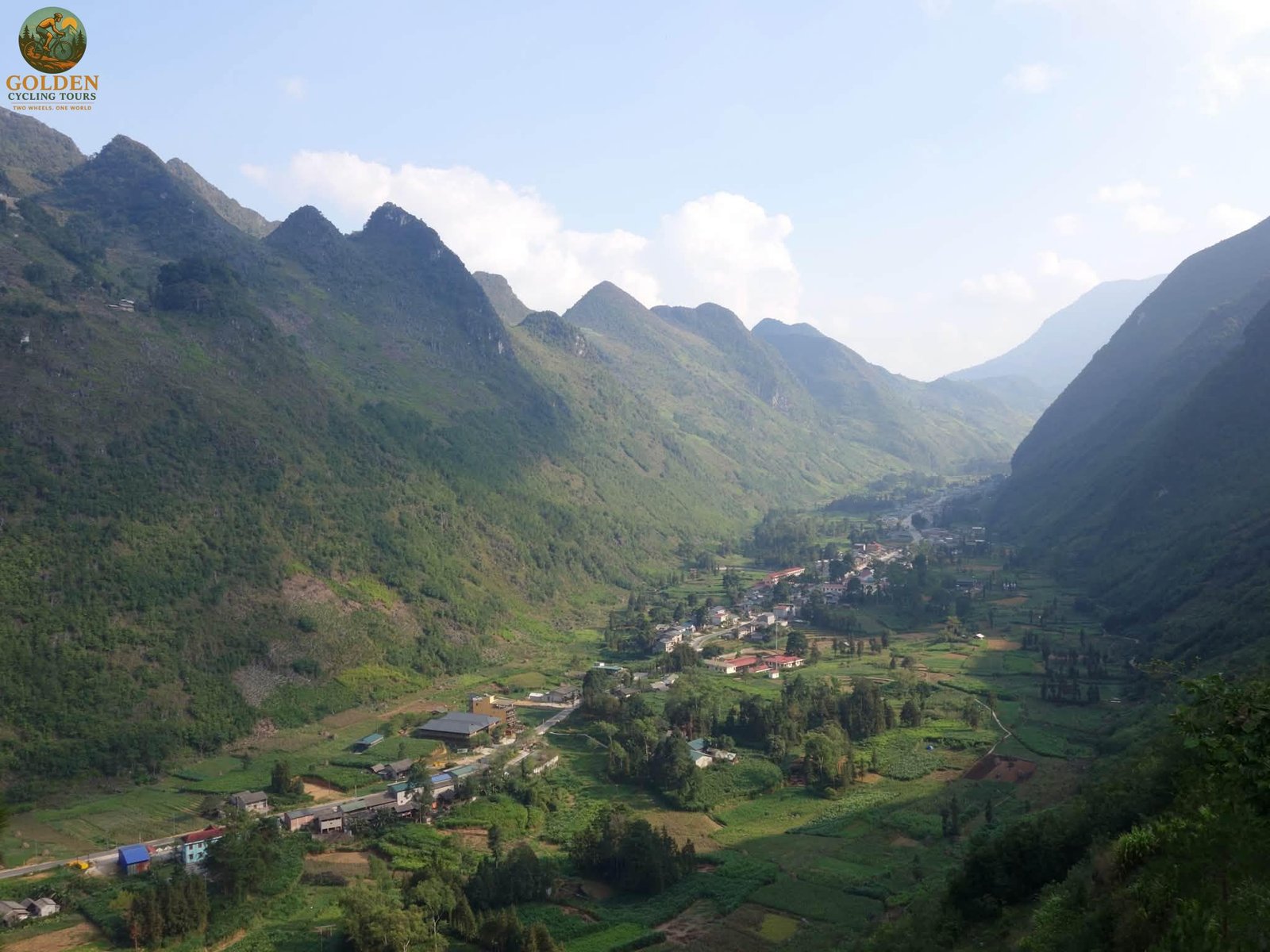
A great mountain biking holiday is not simply about how many kilometers you cover. It is about the feeling of reaching a ridge after a demanding climb, the rush of a controlled descent, the taste of a local meal after hours in the saddle, and the conversations that begin when you stop in a village far from the usual tourist trail.
Whether you are an experienced mountain biker searching for technical challenges or an adventurous traveler looking to combine cycling with culture and nature, Vietnam offers a rewarding destination.
With Golden Cycling Tours, you can explore cycling itineraries across Vietnam, compare regional landscapes, and discuss a trip that matches your fitness, interests, and travel schedule. Start by browsing the official Golden Cycling Tours website and discover the possibilities for your next cycling adventure.
Vietnam is a compelling mountain biking destination because its landscapes change dramatically across relatively short distances. Mountain ranges, river valleys, agricultural plains, limestone formations, and forested hills create a wide variety of environments for cycling.
The best mountain biking experiences often begin where the journey becomes less predictable. A quiet road may lead into a farming valley, a gravel track may climb toward a mountain pass, or a village lane may open onto a panorama of terraced hillsides.
In northern Vietnam, riders can discover the rugged scenery of Ha Giang, the agricultural landscapes around Mai Chau, and the forested countryside of Pu Luong. Further northwest, Sapa and Bac Ha offer access to dramatic highland scenery and culturally diverse rural communities.
Not every route is a technical mountain-bike trail. Some journeys combine paved roads, gravel, and rural tracks, while others may include more demanding off-road sections. Before booking, confirm the actual surface conditions and technical difficulty of your chosen itinerary.
Mountain biking in Vietnam can involve sustained climbs, sharp changes in gradient, and roads that wind through steep valleys.
As the slope steepens, your breathing grows heavier. You shift into an easier gear, feel the chain settle into a new rhythm, and concentrate on maintaining a smooth cadence. Sweat gathers beneath your helmet while the road seems to rise toward the clouds.
Then the gradient softens. You lift your head and discover a panorama of layered mountains, scattered houses, and green fields stretching toward the horizon.
That moment of relief is part of what makes Vietnam MTB Tours so appealing. The scenery is not simply something you photograph from a roadside viewpoint. You experience it through effort, movement, and the satisfaction of earning the view.
Vietnam's rural landscapes are closely connected to everyday life. Cycling can bring you past vegetable gardens, rice fields, traditional homes, small workshops, and local markets.
In northern mountain regions, communities including Hmong, Dao, Thai, Tay, and other ethnic groups maintain distinct traditions and local identities. The communities you encounter will depend on your route, and their customs should never be treated as interchangeable.
A thoughtful cycling itinerary creates time to learn about the region, enjoy local food, and meet people respectfully. Ask permission before taking photographs, follow your guide's advice around private homes, and remember that villages are living communities rather than outdoor attractions.
Ha Giang is one of northern Vietnam's most spectacular destinations for adventurous cyclists. Its rugged mountain scenery, winding roads, deep valleys, and remote settlements create an unforgettable setting for a challenging ride.
<PRIVATE_PERSON> The famous Ma Pi Leng Pass, within the broader Dong Van Karst Plateau Geopark, is renowned for its dramatic mountain views and the deep valley of the Nho Que River. The region's limestone peaks and exposed ridgelines can make every turn feel like the entrance to another landscape.
The riding experience depends on the selected route. Some itineraries focus on paved mountain roads, while others may incorporate gravel or rural tracks. Steep gradients and traffic on shared roads require concentration and good bicycle control.
Dong Van Karst Plateau Geopark for remarkable geological scenery.
Ma Pi Leng Pass for dramatic views over the mountain landscape.
Dong Van Old Quarter for historic architecture and local atmosphere.
Meo Vac for highland culture and access to surrounding mountain roads.
Nho Que River for its striking turquoise color when conditions allow.
Explore Ha Giang Bike Tours to compare cycling opportunities in the region.
You can also consider the 8-Day Ha Giang Loop Cycling Adventure or the 10-Day Ha Giang Loop and Hoang Su Phi Cycling Adventure. Confirm the exact route, trail surfaces, and inclusions before booking if you specifically want technical mountain biking.
Sapa, in Lao Cai Province, is known for its mountainous terrain, terraced fields, and views toward the Hoang Lien Son range.
A cycling trip around Sapa may combine quiet paved roads, rural tracks, and village visits. The terrain can be demanding, with steep climbs and variable road surfaces. Some tracks are suitable for mountain bikes, while others may be too narrow, muddy, or steep for comfortable riding depending on the season.
The sensory experience is distinctive. Mist may soften the distant ridges, damp earth releases a fresh scent after rain, and the sound of tires changes from a smooth hum on pavement to a rough crunch on gravel.
Muong Hoa Valley, known for its terraced agricultural landscape.
Fansipan, the highest mountain in Vietnam, visible from suitable viewpoints in favorable conditions.
Hoang Lien Son National Park, a protected area of important mountain ecosystems.
Local villages and viewpoints around the wider Sapa area, depending on access and route suitability.
For regional options, explore Sapa Bike Tours.
Bac Ha offers a different atmosphere from the steepest mountain areas. Rolling hills, agricultural valleys, village roads, and traditional market culture can make it appealing to riders who want a balance of cycling and cultural exploration.
The countryside around Bac Ha varies considerably. A route may follow paved roads between villages, climb into the hills, or include unpaved tracks. Ask for the precise route profile if you want a technically demanding MTB experience.
Bac Ha Market, generally associated with Sunday trading.
Hoang A Tuong Palace, a notable historical and architectural landmark.
Ban Pho, an area associated with local village life and agricultural landscapes.
The surrounding highland countryside, with route choices depending on weather and access.
Market schedules and road conditions should be confirmed before travel. For cycling inspiration, visit Bac Ha Bike Tours.
Mai Chau, in Hoa Binh Province, is a welcoming destination for travelers who enjoy cycling through rural landscapes at a more relaxed pace.
The valley is known for rice fields, villages, traditional stilt houses, and surrounding green hills. Depending on the itinerary, riders may follow quiet country roads, cycle between villages, and explore rolling routes outside the main valley.
The appeal here is not necessarily extreme technical riding. Instead, Mai Chau is well suited to a trip that combines outdoor activity, cultural experiences, and time to appreciate the countryside.
Cycle through the rice fields and villages around the valley.
Learn about traditional Thai stilt-house architecture.
Sample local food and explore village markets where available.
Enjoy views of the surrounding hills and agricultural landscape.
Discover Mai Chau Bike Tours for cycling options in this region.
Pu Luong Nature Reserve is known for its forested mountains, agricultural valleys, traditional villages, and terraced landscapes.
Cycling in the wider area can combine rolling roads, village routes, and selected unpaved sections. Trail suitability varies, and some narrow paths are better explored on foot than by bicycle. A local guide can help choose a route that respects the terrain and local access.
The experience is especially appealing to riders who value quiet scenery. The air may carry the scent of wet leaves and earth, while the soft sound of a freewheel accompanies a descent into a green valley.
The landscapes and village communities within the wider Pu Luong Nature Reserve.
Rice terraces and agricultural valleys, depending on the season.
Traditional Thai villages and local homestays.
Rural viewpoints and quiet roads suitable for the group's cycling ability.
Browse Pu Luong Bike Tours for regional trip ideas.
Cao Bang offers a striking combination of limestone mountains, rivers, rural settlements, and scenic roads.
The region is particularly well known for Ban Gioc Waterfall, on the border between Vietnam and China, and the surrounding karst landscapes. Cycling routes may follow roads through valleys and villages, while more demanding sections depend on the chosen itinerary.
Ban Gioc Waterfall, one of the region's most famous natural attractions.
Nguom Ngao Cave, known for its limestone formations.
Non Nuoc Cao Bang UNESCO Global Geopark, a landscape of geological and cultural significance.
Rural communities and scenic mountain roads throughout the province.
Explore Cao Bang Bike Tours to discover cycling opportunities in the region.
Ba Be National Park is known for its lake, forested hills, limestone scenery, and diverse ecosystems. It offers a different atmosphere from the exposed high mountain passes of Ha Giang.
A cycling itinerary in the wider area can combine scenic roads, village visits, and time near the lake. Depending on the route, travelers may also incorporate a boat excursion or a walk to appreciate the landscape from a different perspective.
Explore Ba Be Lake Bike Tours to learn about cycling options around this distinctive natural area.
Ninh Binh is famous for its limestone formations, rivers, rice fields, and historic landscapes. Although it is less associated with high-altitude MTB riding than Ha Giang, it is an excellent destination for combining cycling with nature and cultural sightseeing.
Many rides here are better described as countryside cycling than technical mountain biking. The appeal lies in quiet rural roads, flat-to-rolling terrain, and views of limestone cliffs rising above the fields.
Trang An Landscape Complex, a UNESCO World Heritage Site.
Tam Coc, known for its river, limestone scenery, and agricultural landscape.
Hoa Lu Ancient Capital, an important historical site.
Mua Cave viewpoint, reached by a steep stairway rather than a cycling trail.
Browse Ninh Binh Bike Tours for ideas that combine cycling and sightseeing.
Vietnam's climate varies significantly by region and elevation. The ideal travel dates depend on whether you want to ride in the northern mountains, explore the central highlands, or cycle through the warmer lowlands.
Spring is often a good period to consider for northern mountain cycling. Temperatures can be comfortable, vegetation is fresh, and conditions may suit long days in the saddle.
However, mountain fog and occasional rain can affect visibility and unpaved trails. Carry layers and confirm the forecast before riding at higher elevations.
The countryside becomes greener as agricultural activity intensifies. Longer daylight hours can provide more flexibility for sightseeing and riding.
Heat and humidity may increase, and rain can begin to affect dirt tracks. Plan hydration carefully and avoid assuming that every rural trail remains rideable after a heavy shower.
Summer can produce lush landscapes, dramatic skies, and strong green colors. It can also bring heavy rainfall, slippery surfaces, and a higher risk of travel disruption in mountainous areas.
Choose flexible itineraries, follow local weather advice, and be prepared to change the route when conditions become unsafe.
Autumn is often a popular period to consider for northern Vietnam cycling. Depending on location and agricultural schedules, hillsides may display harvest colors, and temperatures can be favorable for extended rides.
Conditions vary from year to year, so confirm the local forecast and the condition of your planned trails.
Winter can bring crisp air and clear views, but highland mornings may be cold, damp, or foggy. Riders should bring insulating layers, gloves, and suitable rain protection.
When should you book Vietnam MTB Tours? Spring and autumn are useful starting points for planning a northern Vietnam cycling holiday, but no season guarantees perfect weather. Choose dates according to the region, your riding style, and the latest local conditions.
Food is an essential part of a cycling journey. After a demanding climb, a hot meal can be as memorable as the landscape that surrounds you.
Vietnamese cuisine varies by region, but travelers may encounter:
Pho: A traditional noodle soup often served with herbs and meat.
Bun cha: Grilled pork served with noodles, herbs, and dipping sauce, particularly associated with Hanoi.
Sticky rice: A practical source of energy before or after a long ride.
Local grilled pork and chicken: Common in many mountain and rural areas, with preparation varying by community.
Seasonal vegetables: Fresh greens and other produce may feature in family meals.
Highland specialties: Dishes and ingredients vary across Hmong, Dao, Thai, Tay, and other communities.
Try local dishes with an open mind, but ask about ingredients if you have allergies or dietary restrictions.
In destinations such as Ha Giang, Sapa, Bac Ha, and Cao Bang, travelers can find local restaurants, small eateries, and family-run establishments. In remote villages, food options may be limited, and meals may need to be arranged in advance through a homestay or tour operator.
In areas such as Mai Chau and Pu Luong, some homestays provide home-cooked meals featuring rice, vegetables, meat, and regional dishes.
Ask your guide for recommendations based on hygiene, availability, and your dietary needs.
Larger towns generally offer a wider range of dining options, from traditional Vietnamese restaurants to cafés and international cuisine.
If your itinerary starts or finishes in Hanoi, allow time to explore its food scene before or after the ride. In smaller mountain towns, check opening times and book meals in advance when arriving late.
For a demanding MTB ride, begin with a balanced breakfast and carry snacks that are easy to eat while cycling. Drink water regularly and consider electrolytes during long, hot rides.
After cycling, choose a meal that provides carbohydrates, protein, and vegetables. A comfortable meal and adequate rest can help you recover for the next day's ride.
Accommodation depends on your route, budget, and preferred comfort level. Vietnam offers everything from simple village homestays to boutique hotels and luxury properties.
A homestay can provide an opportunity to learn about local food, architecture, and everyday life. Facilities vary: some properties have private rooms and modern bathrooms, while others offer simpler shared arrangements.
Before booking, ask about:
Private or shared rooms.
Bathroom facilities and hot water.
Heating and blankets in cold mountain areas.
Meal arrangements and dietary options.
Luggage transfers and bicycle storage.
Distance from the accommodation to the riding route.
A respectful stay means following household customs, keeping noise low, and asking before photographing residents.
Towns such as Ha Giang, Sapa, Bac Ha, and Cao Bang offer hotel or guesthouse options, although standards and availability vary.
These accommodations can be convenient for travelers who prefer private rooms, easier access to restaurants, and a comfortable place to recover after a long ride.
Book ahead during busy travel periods and confirm whether the property has secure bicycle storage.
Some travelers prefer a cycling holiday that combines active days with higher-comfort accommodation and private transfers. Others may want electric-assist bicycles to help manage long climbs.
Explore Vietnam Luxury Bike Tours for luxury-oriented cycling options and Vietnam E-Bike Tours for electric-assist possibilities.
Confirm the accommodation category, bicycle specification, support vehicle, and included services for the exact itinerary you choose.
Many international travelers begin their journey in Hanoi, which is a practical gateway to northern Vietnam. Depending on your itinerary, you may travel onward by private vehicle, bus, train, or a combination of transport services.
If you bring your own bicycle, check airline requirements, packing instructions, and transport arrangements before departure.
Destinations such as Ha Giang, Sapa, Bac Ha, and Cao Bang can require several hours of road travel from major transport hubs. Journey times depend on traffic, weather, road conditions, and the exact start point.
A private transfer can simplify travel with bicycles and luggage. If your tour includes a support vehicle, confirm whether it will carry your luggage, spare equipment, and riders who need a break.
Support vehicles can be particularly useful on long mountain routes. They may carry luggage, transport repair supplies, and provide assistance when weather or fatigue affects the ride.
However, support arrangements differ by operator and itinerary. Ask whether vehicle support is continuous or available only at selected points.
Bringing your own bicycle can provide a familiar fit and predictable handling. Renting locally can reduce transport complications, but availability and equipment quality vary.
Before deciding, confirm:
The bike type and frame size.
Suspension and tire suitability for the route.
Brake condition and maintenance support.
Helmet and spare-parts availability.
Bicycle transport arrangements during road transfers.
For technical trails, a properly maintained mountain bike with suitable tires and reliable brakes is especially important.
Northern Vietnam is home to many communities with different languages, histories, clothing traditions, and agricultural practices. A cycling route may pass through Hmong, Dao, Thai, Tay, and other communities, depending on the region.
Listen to your guide, ask respectful questions, and avoid assuming that a custom observed in one village applies everywhere.
The colorful clothing and daily activities of rural Vietnam can be visually compelling, but people deserve control over how their images are taken and used.
Ask before photographing residents, especially children. Do not enter private homes or sacred areas without permission, and avoid blocking paths or disrupting work.
Where practical, purchase meals from local restaurants, use community-based accommodation, and buy locally made products directly from artisans.
Responsible spending can help tourism support rural livelihoods while allowing visitors to learn about local culture in a more meaningful way.
Stay on appropriate routes, avoid disturbing crops and wildlife, and take all litter with you. Protected areas such as Pu Luong Nature Reserve and Ba Be National Park have ecological value beyond their appeal as cycling destinations.
Follow local regulations and your guide's advice when entering sensitive landscapes.
The difficulty of a mountain biking tour depends on several factors: total distance, cumulative elevation gain, trail surface, technical features, weather, and the amount of time spent in the saddle.
If you are new to mountain biking, look for itineraries with shorter days, moderate gradients, smoother surfaces, and access to support vehicles.
Areas around Mai Chau or Ninh Binh may offer suitable countryside cycling options, depending on the specific route. These destinations should not automatically be described as technical MTB terrain; confirm the surface and difficulty before booking.
Intermediate cyclists may enjoy a mix of rolling countryside, sustained climbs, gravel roads, and moderate off-road sections.
A good itinerary balances physical challenge with sufficient time for meals, sightseeing, and recovery. Ask for daily elevation figures and realistic riding times rather than relying only on a general difficulty label.
Experienced riders may prefer routes with longer climbs, remote mountain roads, rougher surfaces, and more demanding terrain where permitted and safe.
Not every advertised cycling tour includes technical singletrack. If you want narrow forest trails, rock gardens, steep technical descents, or other specific features, explain your expectations before booking and request confirmation that the route genuinely includes them.
Mountain roads can be narrow and shared with motorbikes, cars, pedestrians, and livestock. Keep a predictable line, stay alert around blind bends, and control your speed on descents.
Rain can increase braking distances and make gravel or dirt slippery. Do not attempt unfamiliar technical sections beyond your ability, and be prepared to change plans when weather or trail conditions deteriorate.
The following is an illustrative planning framework, not a confirmed tour departure or a guarantee of technical off-road trails. The actual route, distances, accommodation, and inclusions should be confirmed with the operator.
Arrive in Hanoi, organize your cycling equipment, and review the route with your guide. If time allows, explore the Old Quarter and enjoy a Vietnamese meal before the mountain journey begins.
Travel toward your selected cycling region, such as Ha Giang, Sapa, or Cao Bang. Depending on arrival time, complete a bicycle check and take a short warm-up ride if conditions permit.
Begin a full cycling day with a route matched to your fitness and experience. Expect changing gradients, rural scenery, and opportunities to stop at suitable viewpoints.
Continue cycling through selected countryside routes, with time for cultural visits and local meals. The exact communities and stops depend on the confirmed itinerary.
Enjoy another ride or a shorter excursion, depending on the group's energy and the route profile. Use the afternoon to recover, explore the local area, or prepare for the next transfer.
Return to Hanoi or continue to another destination, depending on the package. Travelers with more time can compare multi-day routes across northern Vietnam.
This framework can help you visualize a cycling holiday, but it is not a representation of a specific Golden Cycling Tours package. Request a detailed itinerary before making travel arrangements.
A mountain biking holiday should match your riding style, not just your destination wishlist. Golden Cycling Tours features a range of cycling itineraries and destination pages that can help you compare northern Vietnam's landscapes, trip lengths, and riding experiences.
Vietnam Northeast Bike Tours – Explore cycling opportunities across northeastern Vietnam.
Vietnam Northwest Bike Tours – Discover the mountain landscapes of the northwest.
Cycling Northern Vietnam – Compare cycling destinations across the north.
Ha Giang Bike Tours – Explore the dramatic scenery of Ha Giang.
Cao Bang Bike Tours – Discover limestone mountains and rural routes.
Mai Chau Bike Tours – Explore valley cycling and village scenery.
Pu Luong Bike Tours – Find cycling inspiration in the wider Pu Luong region.
Bac Ha Bike Tours – Explore highland countryside and local culture.
Sapa Bike Tours – Discover mountain cycling around Sapa.
Ba Be Lake Bike Tours – Explore the region around Ba Be Lake.
Ninh Binh Bike Tours – Combine countryside cycling with limestone scenery.
Best Vietnam Cycling Northeast Tour – 15 Days – A longer journey to consider when exploring northeastern Vietnam.
8-Day Ha Giang Loop Cycling Adventure – A multi-day option focused on the Ha Giang Loop.
10-Day Ha Giang Loop and Hoang Su Phi Cycling Adventure – Compare an extended northern mountain itinerary.
12-Day North Vietnam Cycling Adventure: Hanoi to Ninh Binh – A longer journey combining multiple northern landscapes.
4-Day Mai Chau to Pu Luong Cycling Adventure – Explore a shorter regional cycling itinerary.
6-Day Mai Chau, Pu Luong and Ninh Binh E-Bike Tour – Consider an electric-assist itinerary across several landscapes.
These tours are alternatives to compare, not confirmation that each package includes technical mountain-bike trails. Review the exact inclusions and contact Golden Cycling Tours to confirm whether a particular itinerary matches your preferred terrain.
For additional options, visit the complete tour collection.
Vietnam MTB Tours are cycling holidays that may include mountain roads, gravel routes, rural tracks, and off-road sections. The precise terrain varies by destination and itinerary, so travelers should confirm whether a tour focuses on technical mountain biking, mixed-surface cycling, or scenic road riding.
Vietnam offers diverse landscapes, from the high mountain roads of Ha Giang to the forested hills around Pu Luong and the limestone countryside of Ninh Binh. It can be an excellent destination for mountain biking, provided you choose a route suited to your skill level and confirm the actual trail conditions.
Spring and autumn are useful starting points when planning a northern Vietnam cycling holiday. However, weather varies by region and elevation. Check local forecasts, rainfall, road conditions, and seasonal travel information before choosing your dates.
Some cycling itineraries may suit beginners, particularly routes with moderate gradients and smoother surfaces. Technical mountain-bike routes can be much more demanding. Share your fitness level and previous riding experience with the operator before booking.
Bring a helmet, gloves, padded shorts, moisture-wicking clothing, a waterproof jacket, warm layers for highland mornings, sunscreen, sunglasses, water, snacks, and basic repair equipment. Your final packing list should reflect the season and the specific route.
Bringing your own bicycle offers a familiar fit and setup, while renting can simplify transport. Check the rental bike's condition, size, tires, brakes, and suitability for the intended terrain before deciding.
Yes. Depending on the itinerary, you can combine cycling with local markets, historical sites, village visits, regional food, and nature excursions. Respectful behavior and permission-based photography help ensure that cultural experiences benefit both visitors and local communities.
Options include hotels, guesthouses, boutique properties, and rural homestays. Availability and comfort levels differ by destination. Confirm room arrangements, meals, hot water, bicycle storage, and luggage transfers before booking.
A support vehicle can be valuable on long or remote routes, especially for luggage, repairs, fatigue, and changing weather. Whether it is necessary depends on the route and the group's experience. Confirm how support works on your specific tour.
Begin by visiting Golden Cycling Tours and browsing the available tours. Contact the team to confirm dates, route difficulty, bicycle arrangements, accommodation, transfers, support services, and availability. If you want technical off-road riding, explicitly request the route details and trail types before booking.
From the exposed mountain roads of Ha Giang to the green valleys of Mai Chau, from the cultural landscapes of Bac Ha to the limestone scenery of Cao Bang and Ninh Binh, Vietnam offers a rich collection of experiences for cyclists who want to explore beyond conventional sightseeing.
The most memorable rides are often defined by small moments: the click of a gear just before a climb, the feel of cool air after a hot ascent, the smell of wet forest soil, the distant sound of village life, and a satisfying local meal after a long day in the saddle.
The best Vietnam MTB Tours combine that sense of adventure with careful route planning, suitable equipment, respectful cultural encounters, and realistic expectations about weather and terrain.
Ready to explore? Visit Golden Cycling Tours, compare the available cycling itineraries, and contact the team to discuss the route that best matches your fitness, preferred terrain, and travel dates.
Before confirming your booking, request a detailed itinerary covering daily distance, elevation gain, trail surfaces, accommodation, transport, bicycle arrangements, and support services. With the right preparation, your Vietnam mountain biking holiday can become a journey filled with challenging climbs, unforgettable landscapes, and meaningful encounters along the way.

.jpg "Thai Binh Vietnam Bicycle")
.jpg "Phu Tho Vietnam Cycling")
.jpg "Thai Nguyen Cycling Vietnam")
.jpg "Tuyen Quang Cycling Vietnam")
.jpg "Vinh Phuc Cycling Vietnam")
Leave a Reply
Your email address will not be published. Required fields are marked *