- Call us Via Whatsapp: +84 (0) 832 126 699
4.9 stars on our site
(15,000 reviews)
- Monday - Sunday : 08:00 - 17:00
(15,000 reviews)

Vietnam MTB Tours: Off-Road Expeditions for Experienced Riders is the ultimate invitation to explore Vietnam beyond the familiar tourist trail. Imagine your mountain bike cutting through ancient forest tracks, climbing legendary mountain passes, descending into remote valleys, and tracing narrow paths between emerald rice terraces and traditional ethnic villages. Here, every turn brings a new challenge, every climb tests your endurance, and every summit rewards you with landscapes that seem to stretch into infinity.
For experienced riders, Vietnam is far more than a cycling destination. It is a country of dramatic limestone mountains, remote borderlands, dense tropical forests, rugged backroads, and winding trails that demand technical skill, physical strength, and a spirit of adventure.
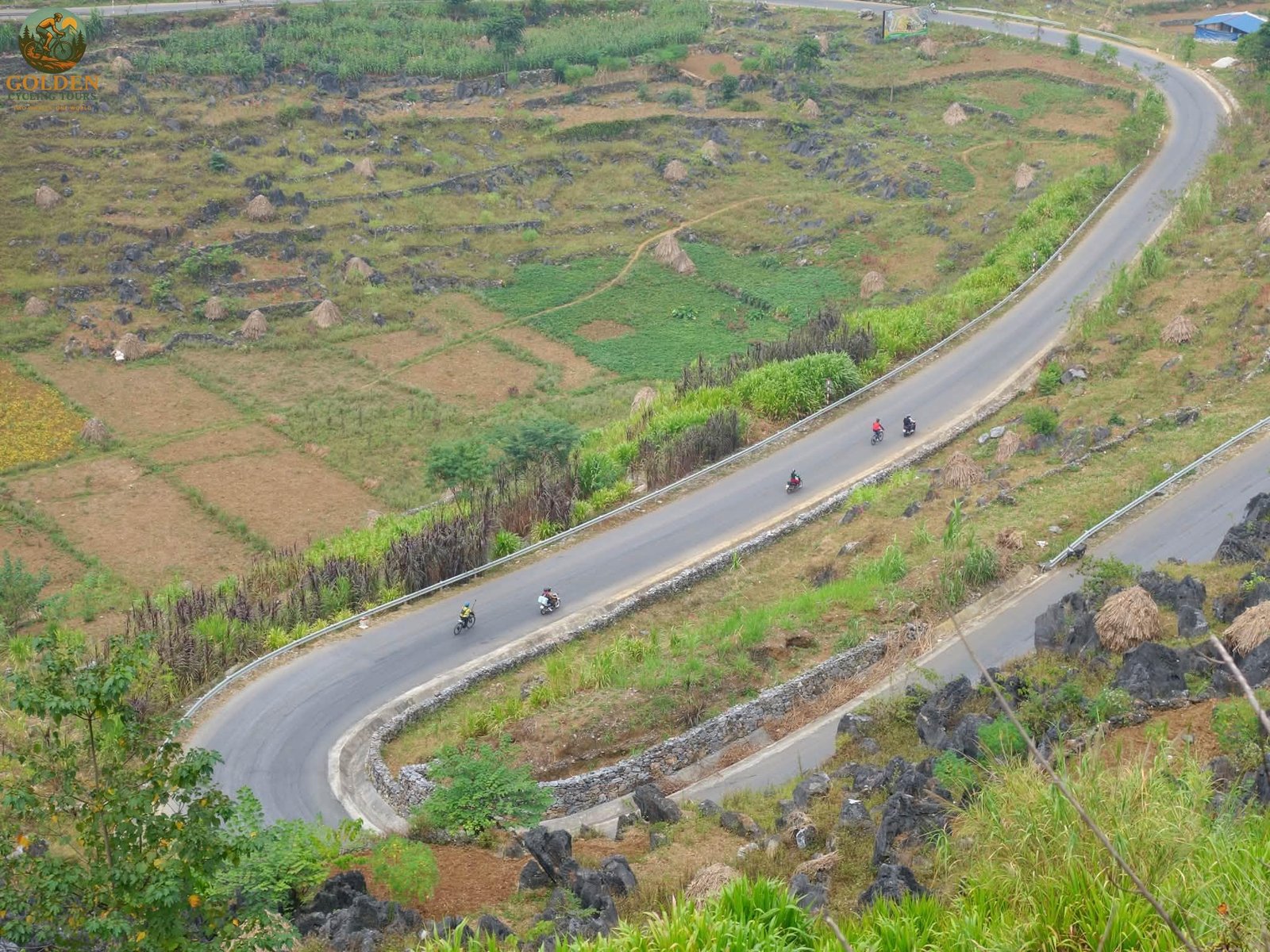
With Golden Cycling Tours, you can discover the raw beauty of Northern Vietnam through carefully planned cycling adventures that combine challenging terrain, authentic cultural encounters, spectacular scenery, and the freedom of exploring beyond the usual tourist routes.
Whether you dream of conquering the legendary mountain roads of Ha Giang, exploring the limestone wilderness of Cao Bang, riding through the remote highlands of Bac Ha and Sapa, or discovering the hidden trails around Mai Chau and Pu Luong Nature Reserve, Vietnam offers an extraordinary playground for adventurous mountain bikers.
Ready to discover your next great cycling expedition? Explore our Vietnam cycling tours and find an adventure that matches your riding experience, fitness, and appetite for exploration.
Vietnam's extraordinary geographical diversity makes it one of Southeast Asia's most rewarding destinations for experienced cyclists. In the north, mountain ranges rise sharply above deep valleys, rivers carve through limestone formations, and terraced hillsides change color with the seasons. Farther south, tropical forests, coastal landscapes, and rural trails offer different riding experiences.
Unlike destinations dominated by a single famous trail, Vietnam rewards riders who enjoy variety. A multi-day expedition may combine steep paved climbs, rough rural roads, gravel tracks, compact dirt, village lanes, and selected off-road sections where conditions permit.
The real attraction is not simply the distance covered. It is the changing character of the journey.
Experienced mountain bikers will appreciate the physical demands and changing conditions found across Northern Vietnam. Depending on the route, terrain may include:
Steep mountain climbs that require sustained power and efficient pacing.
Technical descents where braking control, balance, and line selection matter.
Rocky or uneven tracks that test handling skills and concentration.
Gravel roads that demand confidence on loose surfaces.
Remote rural lanes that wind through valleys, forests, and agricultural landscapes.
Long mountain-road stages with repeated climbs and descents.
Not every route is a singletrack mountain bike trail. Many Northern Vietnam expeditions combine paved mountain roads and rural tracks with off-road sections. The precise balance depends on the itinerary, weather, trail access, and the group's abilities.
This variety makes Vietnam particularly appealing to riders who enjoy endurance challenges as much as technical riding.
The visual rewards begin long before you reach the summit.
Morning mist settles over the rice fields of Mai Chau Valley, while distant mountains emerge in layers of blue and silver. In Ha Giang, towering limestone peaks frame narrow roads that cling to mountainsides. Around Cao Bang, rivers shimmer beneath forest-covered hills, and waterfalls thunder through lush green valleys.
In the northwest, Sapa and Bac Ha reveal dramatic highland scenery, terraced fields, and villages shaped by generations of mountain farming.
During a long climb, you may hear nothing but the rhythmic click of your drivetrain, your breathing, and the wind moving through roadside vegetation. At a remote viewpoint, the sound of traffic disappears, replaced by birdsong and the distant voices of farmers working in the fields.
These are the moments that make Vietnam MTB Tours unforgettable: the combination of physical effort, sensory discovery, and the satisfaction of reaching places that cannot be fully appreciated from a vehicle.
Off-road cycling allows you to travel at a pace that encourages genuine observation.
You may pass farmers tending rice paddies, buffalo grazing beside village paths, and families preparing meals outside traditional homes. In the northern mountains, communities including the Hmong, Tay, Dao, Thai, and Nung maintain distinctive traditions, architecture, clothing, and culinary practices.
A respectful cycling expedition creates opportunities to learn about local life without treating villages as attractions to be consumed. Stop when appropriate, ask permission before taking photographs, and support local businesses whenever possible.
For riders seeking more than a sporting challenge, these encounters add a human dimension to the adventure.
Choosing the right destination is essential for a successful mountain biking expedition. Each region offers a different combination of terrain, elevation, scenery, cultural experiences, and riding intensity.
Ha Giang is one of Northern Vietnam's most spectacular destinations for experienced cyclists. Its immense limestone mountains, deep valleys, remote settlements, and dramatic mountain roads create an unforgettable setting for multi-day expeditions.
Explore our dedicated Ha Giang Bike Tours to discover routes through this extraordinary frontier region.
Few places capture the drama of Northern Vietnam quite like Ma Pi Leng Pass. Towering cliffs rise above the turquoise waters of the Nho Que River, while the winding road reveals breathtaking views across the Dong Van Karst Plateau Geopark.
The ride demands concentration. Hairpin bends, exposed viewpoints, elevation changes, and occasional traffic require disciplined handling and awareness.
Feel the temperature shift as you climb into cooler mountain air. Watch clouds drift across jagged limestone peaks. At the summit, the landscape opens into a vast panorama of ridges, valleys, and distant villages.
For experienced riders, this is an iconic mountain-road experience. However, the famous pass is not a dedicated singletrack trail, and its steep sections and traffic mean that it should be approached with appropriate caution.
The historic town of Dong Van offers a glimpse into the cultural and architectural heritage of the northern highlands. Nearby, Meo Vac sits among rugged mountains and remote valleys where traditional livelihoods remain closely connected to the landscape.
Cycling between these settlements provides a powerful sense of scale. The climbs are demanding, but the rewards include striking geology, quiet villages, and views that change with every bend.
Recommended expedition: 10-Day Ha Giang Loop & Hoang Su Phi Cycling Adventure.
You can also explore the 8-Day Epic Ha Giang Loop Adventure or discover a broader regional journey through our Vietnam Northeast Bike Tours.
Cao Bang is an outstanding choice for cyclists who value remote landscapes and a quieter atmosphere. Its mountain roads wind through green valleys, rural settlements, limestone formations, and forested hills.
Discover the region through our Cao Bang Bike Tours.
The magnificent Ban Gioc Waterfall, on the border between Vietnam and China, is one of the region's most memorable natural landmarks.
Water tumbles over broad limestone ledges into a river framed by lush vegetation and steep green hills. The sound of rushing water builds as you approach, providing a dramatic contrast to the quieter roads through the surrounding countryside.
Cycling here combines scenic mountain riding with opportunities to explore local villages and rural landscapes. The waterfall itself is a sightseeing destination rather than a mountain biking trail, so the surrounding riding route should be selected according to the group's experience and current conditions.
Nguom Ngao Cave reveals an underground world of limestone formations, chambers, and sculpted rock. Its cool interior provides a striking contrast to the humid mountain air outside.
Farther west, Ba Be National Park and Ba Be Lake offer a different atmosphere: forested hills, quiet waterways, traditional villages, and peaceful lakeside scenery.
Explore Ba Be Lake Bike Tours for inspiration, or consider the broader Cycling Northern Vietnam collection.
Mai Chau is famous for its broad green valley, rice paddies, traditional stilt houses, and Thai ethnic villages. It is an excellent base for riders seeking a combination of rural cycling, challenging climbs, and cultural exploration.
Discover our Mai Chau Bike Tours.
The valley offers a different rhythm from the rugged northern frontier. Narrow lanes pass between rice fields, small farms, bamboo groves, and traditional villages.
The scent of wet earth rises after rain. Roosters call from behind wooden houses, and the breeze carries the smell of cooking rice from family kitchens.
Experienced riders can use the valley as a starting point for longer loops, mountain climbs, and routes connecting nearby rural communities. Terrain and difficulty vary considerably, making route selection important for riders seeking a genuine MTB challenge.
The roads and tracks beyond the valley introduce steeper gradients, winding mountain sections, and more demanding riding.
A well-designed itinerary balances sustained climbs with recovery time and scenic stops. Rather than rushing between destinations, riders can experience the transition from open farmland to forested slopes and isolated settlements.
For a focused regional expedition, consider the 4-Day Northern Vietnam Cycling: Mai Chau to Pu Luong Cycling Adventure.
Pu Luong Nature Reserve offers a more intimate encounter with Northern Vietnam's rural landscapes. Limestone mountains, tropical vegetation, terraced rice fields, and traditional villages create an atmosphere of remarkable tranquility.
Explore our Pu Luong Bike Tours.
The region's narrow roads and rural tracks pass through villages, agricultural land, and forested hillsides.
You may hear water flowing through traditional irrigation channels, see bamboo water wheels turning beside streams, and watch farmers tending their fields on steep slopes.
The terrain can be demanding, especially on wet or uneven sections. Some routes are better suited to gravel or cross-country cycling than aggressive downhill riding, so technical expectations should be discussed when booking.
After the mountains, Ninh Binh offers a striking change of scenery. Limestone karsts rise from rice fields and waterways, creating the landscape often described as “Ha Long Bay on Land.”
Explore the dramatic scenery of Trang An Landscape Complex, the historic temples of Hoa Lu Ancient Capital, and the panoramic viewpoints around Mua Cave.
For a multi-region experience, consider the 6-Day Mai Chau, Pu Luong & Ninh Binh E-Bike Tour. This is an e-bike itinerary, so riders seeking a demanding conventional MTB expedition should confirm the intended bike type and route difficulty before booking.
The northwest highlands offer some of Vietnam's most dramatic mountain scenery. Bac Ha is known for its colorful highland markets and rural landscapes, while Sapa is famous for its terraced mountains, ethnic villages, and the imposing Hoang Lien Son mountain range.
Discover Bac Ha Bike Tours and Sapa Bike Tours.
The highlands change dramatically with the seasons. Young rice plants brighten the fields in spring and early summer, while mature crops create golden patterns before harvest.
Steep gradients, cooler temperatures at elevation, and potentially slippery trails can make riding physically demanding. Weather changes quickly in the mountains, and fog can reduce visibility.
Experienced riders should select itineraries that account for elevation, trail conditions, technical ability, and sufficient recovery time.
For a longer journey through the region, explore Vietnam Northwest Bike Tours.
For riders who want to experience several landscapes in one journey, a multi-day expedition across Northern Vietnam can combine mountain passes, rural backroads, highland villages, and natural landmarks.
A longer route may connect Mai Chau, Pu Luong, Ninh Binh, Bac Ha, Ha Giang, Cao Bang, or Ba Be Lake, depending on the itinerary.
Not every destination belongs on the same short route. Distances between mountain regions can be substantial, and some transfers are better completed by support vehicle than by bicycle.
For riders who want to explore at greater depth, consider:
15-Day Best Vietnam Cycling Northeast Tour for an extended regional adventure.
12-Day North Vietnam Cycling Adventure: Off the Beaten Path from Hanoi to Ninh Binh for a longer journey through Northern Vietnam.
Vietnam Northeast Bike Tours for additional regional options.
These itineraries should be compared for actual route composition, riding surfaces, daily distance, elevation gain, and the proportion of off-road riding before choosing the most suitable expedition.
A memorable mountain biking holiday is about more than spectacular scenery. Experienced riders need a route that matches their skills, equipment that performs reliably, sensible daily stages, and support that allows them to concentrate on the ride.
The most rewarding routes combine physical challenge with manageable risk.
Long climbs test aerobic fitness and pacing. Repeated descents demand concentration and arm strength. Rough surfaces require relaxed handling, while changing weather can make familiar roads more demanding.
Before booking, consider your recent riding experience, climbing ability, comfort on loose gravel, technical descending skills, and typical daily distance.
A route with a high daily mileage but limited climbing may feel very different from a shorter stage containing repeated steep ascents. Ask for elevation profiles and route details rather than judging difficulty by distance alone.
A suitable mountain bike can make a substantial difference to comfort, control, and confidence.
For mixed mountain roads and rural tracks, a well-maintained hardtail MTB may be appropriate. More technical terrain may justify a full-suspension bike, depending on the route and rider preference.
Pay attention to:
Reliable hydraulic or mechanical disc brakes.
Appropriate tire width and tread for the expected surfaces.
A drivetrain with sufficiently low climbing gears.
Suspension settings suited to the terrain, where applicable.
Properly fitted handlebars, saddle, and contact points.
A repair kit, spare tube or tubeless repair supplies, and a dependable pump.
Riders bringing their own equipment should confirm transport arrangements, spare-parts availability, and bike assembly support in advance.
For a broader selection of riding styles, visit Golden Cycling Tours.
Remote mountain cycling requires careful logistics. Support vehicles may transport luggage, water, food, spare equipment, or riders who need to shorten a stage, depending on the tour.
An experienced local guide can help with route navigation, weather awareness, cultural etiquette, and communication in rural areas.
However, support arrangements differ by itinerary. Confirm whether the tour includes a support vehicle, mechanical assistance, emergency procedures, first-aid equipment, and alternative plans for severe weather.
The best expedition combines independence on the bike with reliable support when conditions change.
The best season depends on the region, the terrain, and the kind of riding you want to experience. Northern Vietnam has distinct seasonal patterns, and mountain conditions can differ significantly from those in Hanoi or the lowlands.
Autumn is often one of the most attractive periods for cycling in Northern Vietnam.
Temperatures can be more comfortable than during the summer heat, and the mountain landscapes are especially photogenic. In some areas, rice terraces turn golden before harvest, creating striking contrasts against green hills and limestone peaks.
This period can be excellent for routes through Ha Giang, Cao Bang, Bac Ha, and Sapa, although rainfall, fog, and local trail conditions still need to be considered.
For experienced riders seeking long days in the saddle and sweeping mountain views, autumn is a strong option.
Spring brings fresh vegetation, increasingly green valleys, and attractive conditions for many cycling itineraries.
The rice fields around Mai Chau and Pu Luong become especially appealing as the agricultural season progresses. Temperatures are often suitable for climbing, though rain, humidity, and mist may occur.
This is an excellent period for riders who want to combine challenging cycling with village visits and landscape photography.
Winter can bring a different atmosphere to the northern mountains. Mornings may be cold, and highland areas can experience dense fog, drizzle, or sharply reduced visibility.
For experienced riders, these conditions may add atmosphere, but they also require more preparation. Warm layers, gloves, waterproof protection, and flexible daily plans are important.
Routes at higher elevations may be less comfortable than those in lower valleys, so choose an itinerary based on current conditions rather than assuming all winter rides will be dry.
Summer transforms the countryside into a landscape of vibrant green vegetation. Rice fields flourish, forests appear especially lush, and rivers and waterfalls can become more powerful.
However, heat, humidity, heavy rain, and muddy trails can make mountain biking considerably more difficult. Landslides, damaged surfaces, and flash flooding may affect particular routes.
Experienced riders can still enjoy summer expeditions when the itinerary is planned carefully, but flexible scheduling and local weather guidance are essential.
When should you book your Vietnam MTB tour? For a first-choice autumn or spring departure, contact Golden Cycling Tours well in advance. If your dates are fixed, ask which region offers the most suitable conditions during your travel window.
Vietnamese food is an important part of the cycling experience. After hours of climbing, the aroma of a freshly prepared meal can be as memorable as the view from a mountain summit.
Common dishes you may encounter include:
Pho: A fragrant noodle soup, often served with beef or chicken, fresh herbs, and broth.
Bun cha: Grilled pork served with rice noodles, herbs, and dipping sauce, especially associated with Hanoi.
Com lam: Rice cooked in bamboo, found in several northern mountain communities.
Sticky rice: A convenient source of carbohydrates for breakfast or a snack.
Grilled chicken and vegetables: Common options in rural meals.
Fresh spring rolls: Light rolls with herbs and other fillings, depending on the region.
Seasonal fruit: Bananas, oranges, dragon fruit, and other locally available produce.
Mountain meals are often simple, fresh, and satisfying. In village homestays, you may share rice, vegetables, soup, meat, tofu, and regional specialties around a communal table.
In towns such as Ha Giang City, Dong Van, Cao Bang City, Mai Chau, Sapa, and Ninh Binh, you can usually find local restaurants, family-run eateries, and accommodation serving regional dishes.
On remote stages, food options may be limited to village kitchens, small roadside establishments, or meals arranged by the tour operator.
For long riding days, plan regular carbohydrate intake and carry convenient snacks. Drink water frequently, and consider electrolyte replacement during hot, humid stages.
Tell your tour operator about allergies, vegetarian preferences, religious dietary requirements, or other restrictions before departure. In remote areas, advance communication is particularly important.
Accommodation is part of the adventure, and the best choice depends on the region, your comfort preferences, and the style of tour.
A homestay offers a closer look at local hospitality and rural life. In places such as Mai Chau, Pu Luong, and selected northern mountain villages, traditional stilt houses and family-run guesthouses provide opportunities to share meals and learn about local customs.
Expect a more communal atmosphere than in a conventional hotel. Facilities vary, so ask about private rooms, bathrooms, hot water, bedding, and luggage storage.
Towns such as Dong Van, Meo Vac, Ha Giang City, Cao Bang City, and Bac Ha provide practical overnight stops for multi-day cycling routes.
These properties are useful for riders who need a comfortable shower, a private room, bike storage, and a chance to recover before another demanding stage.
Around Pu Luong Nature Reserve, selected eco-lodges offer views of forested mountains, terraced fields, and quiet valleys.
After a challenging day on the bike, imagine resting on a balcony while mist drifts across the hills and the evening air carries the scent of damp earth and woodsmoke.
Travelers who want challenging riding without sacrificing comfort can explore Vietnam Luxury Bike Tours.
Depending on the itinerary, a cycling holiday may combine demanding days in the saddle with boutique hotels, upgraded accommodation, private transfers, and carefully arranged meals.
Always confirm the actual accommodation category and included services for your selected tour.
A successful multi-day expedition requires a balance between riding time and efficient transfers.
Many Northern Vietnam cycling holidays begin in Hanoi, Vietnam's capital and a convenient gateway to the northern mountains.
Depending on the itinerary, travelers may use private transfers or support vehicles to reach destinations such as Mai Chau, Ha Giang, Cao Bang, or Sapa.
Travel times vary with road conditions, traffic, weather, and the exact starting point. Mountain transfers can take longer than expected, so avoid planning tight connections on the same day as a long ride.
Cycling directly between neighboring valleys can be an excellent way to experience changing landscapes. However, not every transfer is best completed on the bicycle.
A support vehicle can be useful when distances are long, roads are busy, weather deteriorates, or the group needs to reach a new riding region without adding unnecessary fatigue.
Ask your operator which sections are cycled, which are transferred by vehicle, and whether luggage is transported separately.
Depending on the tour, transportation may include a private minibus, luggage vehicle, airport transfers, or other arrangements.
If you are traveling with your own mountain bike, confirm whether the vehicle can accommodate it safely and whether a bike box or partial disassembly is required.
Clear logistics make a real difference: the less time you spend worrying about transport, the more energy you can devote to the ride.
Vietnam's mountain regions are home to diverse communities whose traditions and livelihoods are closely tied to the landscape.
Responsible cycling means more than leaving no litter. It means approaching local communities with curiosity, respect, and an understanding that village roads are living spaces rather than adventure parks.
The Hmong, Dao, Tay, Nung, and Thai communities are among the ethnic groups found across Northern Vietnam. Clothing, architecture, agricultural practices, festivals, and cuisine differ between communities and locations.
When passing through villages, reduce speed, greet people politely, and give livestock and pedestrians sufficient space.
Ask before photographing individuals, homes, religious sites, or ceremonies. Dress respectfully when visiting places of cultural significance, and follow local guidance.
Choose locally run restaurants, homestays, guides, and small shops whenever practical. Purchasing locally made crafts and paying fairly for services helps distribute tourism income beyond major cities.
A meaningful cultural encounter may be as simple as sharing a cup of tea, learning how a traditional meal is prepared, or listening to a guide explain the rhythm of planting and harvesting.
Stay on permitted routes, avoid disturbing wildlife, and carry all rubbish out of remote areas. Do not ride through crops or private land without permission.
In protected landscapes such as Pu Luong Nature Reserve and Ba Be National Park, follow local access rules and the guidance of authorized personnel.
Sustainable mountain biking protects the places that make these expeditions special and helps ensure that future riders can experience them responsibly.
The following is an illustrative eight-day itinerary for experienced riders. It is not a confirmed Golden Cycling Tours package, and the precise route, cycling distance, trail access, and elevation gain would need to be agreed upon before booking.
Arrive in Hanoi, meet the tour team, and check your equipment. Depending on arrival time, explore the Old Quarter, sample Vietnamese food, and prepare for the mountain journey.
Travel toward Ha Giang, watching the scenery change from busy urban streets to rural settlements and mountainous terrain.
Complete a bike check, confirm the riding plan, and prepare supplies for the following stages.
Begin cycling through the dramatic landscapes of Ha Giang, following the route selected for the group's experience and current conditions.
Expect demanding climbs, changing gradients, and spectacular views as the road rises toward the limestone highlands.
Ride through the celebrated mountain scenery around Ma Pi Leng Pass and Meo Vac, taking time to appreciate the views over the Nho Que River.
Traffic, weather, and road conditions will determine the safest riding approach on the pass.
Transfer or ride toward Cao Bang, according to the final itinerary. Discover quieter mountain roads and rural settlements while allowing sufficient time for recovery.
Visit Ban Gioc Waterfall and explore the surrounding landscape. A cycling loop can be incorporated where suitable, subject to road conditions and the group's riding goals.
Depending on the route, travel toward Ba Be Lake for a combination of forested landscapes, village visits, and peaceful waterside scenery.
Alternatively, dedicate the day to a more challenging local cycling stage if the itinerary and conditions permit.
Travel back to Hanoi, allowing sufficient time for the transfer. If your schedule permits, enjoy a final Vietnamese meal before continuing your journey.
For a longer and more comprehensive adventure, compare this outline with the published 15-Day Best Vietnam Cycling Northeast Tour and other options in the Golden Cycling Tours collection.
Planning an expedition through remote mountain regions involves more than choosing a destination. You need an itinerary that fits your abilities, reliable local logistics, and clear information about what is included.
Golden Cycling Tours offers a starting point for discovering cycling adventures across Northern Vietnam and beyond.
Explore a broad selection of destinations and cycling styles:
Ha Giang: Ha Giang Bike Tours
Cao Bang: Cao Bang Bike Tours
Mai Chau: Mai Chau Bike Tours
Pu Luong: Pu Luong Bike Tours
Ninh Binh: Ninh Binh Bike Tours
Bac Ha: Bac Ha Bike Tours
Sapa: Sapa Bike Tours
Northwest Vietnam: Vietnam Northwest Bike Tours
Northeast Vietnam: Vietnam Northeast Bike Tours
Northern Vietnam: Cycling Northern Vietnam
E-bike adventures: Vietnam E-Bike Tours
Luxury cycling holidays: Vietnam Luxury Bike Tours
Lake and forest scenery: Ba Be Lake Bike Tours
When enquiring, share your preferred travel dates, group size, average daily riding distance, climbing experience, technical riding ability, and preferred bicycle type.
Let the team know whether you want maximum off-road riding, a mix of mountain roads and gravel tracks, cultural exploration, or a more comfortable supported journey.
Ask for daily distances, elevation profiles, the expected proportion of off-road terrain, accommodation details, support vehicle arrangements, and equipment options.
This information helps establish whether a published tour matches your expectations or whether a customized itinerary would be more suitable.
The mountains of Vietnam reward those who are willing to work for the view. Every climb builds anticipation. Every descent brings a new test of control. Every remote village offers a reminder that the best journeys are measured not only in kilometers, but also in the moments that stay with you long after the ride ends.
If you are ready to trade ordinary sightseeing for a more active adventure, explore the available Vietnam cycling tours or visit the official Golden Cycling Tours website to begin planning your expedition.
Your next mountain biking adventure starts with the right route. Let Vietnam challenge your legs, sharpen your skills, and reward your curiosity.
Yes. Selected routes in Northern Vietnam offer demanding climbs, long mountain stages, gravel roads, rural tracks, and challenging terrain. However, not every cycling tour is a technical MTB expedition. Confirm the actual surfaces and difficulty before booking.
Ha Giang is an excellent choice for dramatic mountain scenery and challenging road cycling. Cao Bang offers quieter mountain landscapes, while Bac Ha and Sapa provide highland scenery and demanding gradients. Mai Chau and Pu Luong are attractive for rural riding and mixed-terrain adventures.
The best destination depends on your preferred balance of technical trails, climbing, endurance, and cultural experiences.
For many Northern Vietnam itineraries, March to May and September to November are attractive periods. Conditions vary by region and altitude, and rainfall can occur at any time. Check local forecasts and trail conditions before departure.
A shorter trip of four to six days can provide a rewarding regional experience. Eight to ten days allows more time for mountain riding and exploration, while a two-week expedition can cover a broader range of landscapes.
Your ideal duration depends on the destinations, transfers, daily distance, and how much time you want to spend exploring local communities.
Difficulty varies considerably. Some passes feature long, sustained climbs and steep descents, while others are shorter but have sharp gradients and tight bends. Traffic, road surfaces, heat, rain, and altitude can increase the challenge.
Ask for elevation profiles and the planned route before committing to an itinerary.
Not necessarily. Bike availability depends on the tour and equipment inventory. Ask Golden Cycling Tours about suitable MTB options, frame sizes, suspension, tire setup, pedals, and maintenance support.
If you bring your own bike, confirm transport arrangements and spare-parts requirements in advance.
Support vehicles may be available on selected itineraries, but arrangements differ. Confirm whether the vehicle follows the group, carries luggage, transports spare bicycles, provides refreshments, or can assist if a rider cannot complete a stage.
Do not assume that every remote section has continuous vehicle access.
Depending on the itinerary, accommodation may include hotels, guesthouses, traditional homestays, or eco-lodges. Facilities vary in remote mountain areas.
If you require private bathrooms, upgraded hotels, secure bike storage, or other specific amenities, communicate these preferences before booking.
Vietnamese meals commonly include rice, noodles, soup, vegetables, chicken, pork, fish, tofu, and fresh fruit. Options vary by region and the remoteness of the route.
Inform your tour operator about allergies and dietary restrictions before travel, and carry extra snacks for demanding stages.
Bring a suitable helmet, cycling gloves, padded shorts, moisture-wicking clothing, weather protection, sunglasses, sunscreen, and comfortable off-bike footwear.
For mountain routes, consider arm warmers, a lightweight insulating layer, a rain jacket, a hydration system, personal medication, and basic repair supplies.
Your final packing list should reflect the season, elevation, bike setup, and support arrangements.
Absolutely. Depending on the route, you may visit Ma Pi Leng Pass, Dong Van, Meo Vac, Ban Gioc Waterfall, Nguom Ngao Cave, Ba Be Lake, Mai Chau Valley, Pu Luong Nature Reserve, and Ninh Binh.
Some attractions require separate visits or vehicle transfers, so confirm which sightseeing activities are included in your chosen itinerary.
Solo travelers can enquire about private departures or joining available group tours. Availability, pricing, and minimum group requirements depend on the specific itinerary and travel dates.
If you prefer greater independence, ask about private guiding, flexible daily stages, and accommodation arrangements.
A customized itinerary may be possible depending on the operator's availability, regional logistics, and the suitability of the requested route.
Share your experience level, desired destinations, travel dates, preferred daily distance, technical requirements, and accommodation preferences when making an enquiry.
Start with your riding objectives. Decide whether you prioritize technical off-road terrain, mountain-road climbing, remote villages, multi-region exploration, or comfort.
Then compare daily distance, elevation gain, surface types, support arrangements, accommodation, and included services.
Browse the full Golden Cycling Tours collection and enquire about the itinerary that best matches your goals.
Visit goldencyclingtours.com and explore the available tours and destinations. Contact the team with your preferred dates, group size, riding experience, and desired route.
Before confirming, request a detailed itinerary, inclusions and exclusions, cancellation terms, equipment information, and a clear explanation of the expected riding conditions.
Vietnam MTB Tours offer experienced riders an opportunity to discover a country of extraordinary contrasts: demanding mountain roads, quiet rural tracks, emerald valleys, remote ethnic villages, and unforgettable highland panoramas.
From the legendary heights of Ma Pi Leng Pass to the cascading waters of Ban Gioc Waterfall, from the peaceful rice fields of Mai Chau to the forested valleys of Pu Luong Nature Reserve, Northern Vietnam invites cyclists to slow down, work hard, and experience the landscape one pedal stroke at a time.
With thoughtful preparation, an itinerary suited to your skills, and a responsible approach to local communities and natural environments, your next cycling expedition can become far more than a holiday.
Explore Golden Cycling Tours, compare the available Vietnam cycling adventures, and start planning a journey that challenges your limits while introducing you to the remarkable landscapes and cultures of Vietnam.
The trail is waiting. Are you ready to ride?

.jpg "Thai Binh Vietnam Bicycle")
.jpg "Phu Tho Vietnam Cycling")
.jpg "Thai Nguyen Cycling Vietnam")
.jpg "Tuyen Quang Cycling Vietnam")
.jpg "Vinh Phuc Cycling Vietnam")
Leave a Reply
Your email address will not be published. Required fields are marked *