• Call us Via Whatsapp: +84 (0) 832 126 699
4.9 stars on our site

(15,000 reviews)

  • Monday - Sunday : 08:00 - 17:00

Overview

Vientiane Travel Guide
Vientiane is the largest city of Laos, a landlocked country of South East Asia. Just like its entire country, this capital is at a pretty quiet and slow pace when compared to another bustling metropolis in the region. Lying on the mighty Mekong River, and was once a French trading post, Vientiane still keeps its colorful original colonial architecture intact.  Nowadays, Laos has slowly opened up to the world with more foreign investment and tourism. As a result, Vientiane is stepped by step, undergoing its changes, and continues to expand with more things to discover.
It will be good things to know when to go, how to get there, where to stay, what to do, where to eat, and more before traveling to Vientiane. Here is our ultimate Vientiane travel guide to help you plan your perfect Laos experience!

Overview
History.
According to the great Laotian epic, it was believed that Prince Thattaradtha was the one who founded the city. At first, the city was called Maha Thani Si Phan Phao on the western banks of the Mekong River which was today’s Udon Thani, Thailand. Then, following snake God Naga told, Prince Thattaradtha started a new city on the east bank of the river called Chanthabuly Si Sattanakhanahud which was considered as the predecessor of modern Vientiane.
In 1354, Vientiane became an important administrative city when Fa Ngum founded the kingdom of Lan Xang.
In the mid-16th century, King Setthathirath officially established Vientiane as the capital of Lan Xang from its previous traditional location at Luang Prabang to avoid Burmese invasion, and built Wat Ho Phra Kaew to house the sacred Emerald Buddha as well as the impressive That Luang stupa on the site of an ancient Khmer temple east of the city which remains a major symbol of Laos and an important center for major Buddhist festivals.

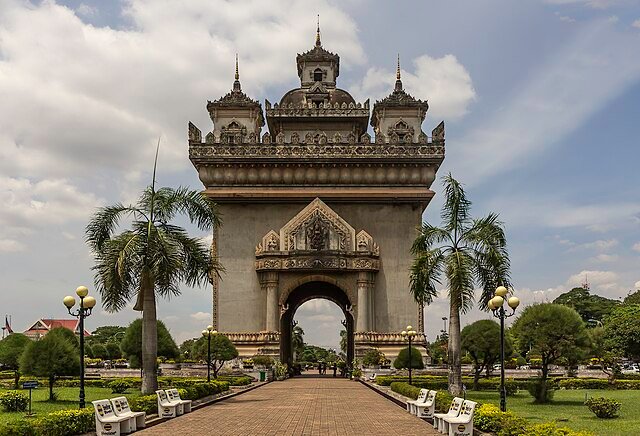
Vientiane view from patuxai - Vientiane Travel Guide
Vientiane became the independent Kingdom of Vientiane after Lan Xang fell apart in 1707 until it was conquered again by the Siamese in 1778 to become a vassal of Siam and the Emerald Buddha was taken to Siam and remains in the Grand Palace of Bangkok now. By that time, Wat Sisaket was the only temple to survive the attack.
In 1828, Vientiane was sacked and destroyed when King Anouvong raised an unsuccessful rebellion against Siamese hegemony. Except for the occupation of the Japanese in 1945, Vientiane was under French rule from 1899 to 1953. During this time, many temples were rebuilt. After the withdrawal of the French, a lot of buildings were left behind which are now integral of daily life in the Laos capital.
From 1959, Vientiane became unstable during the Laotian Civil War between the Royal Lao Government and the Pathet Lao. In 1975, the communist party of the Pathet Lao took over Vientiane, then defeated the Kingdom of Laos and renamed the country the Lao People’s Democratic Republic.
In 2010, Vientiane celebrated its 450th birthday. Today’s Vientiane is a mixture of old and new as the city undergoes development into a modern city.

Other facts.
Geographical location: on a bend of the Mekong River, at which point it forms the border with Thailand.
Total Area: 130 km2 (50 sq mi)
Population of the city: 948,477 people (by 2020)
Elevation: 174 m (570 ft)
Post Code: 0100
Telephone Code: 21
Time Zone: UTC+7 (ICT)
Ethnic groups: the lowland Lao Loum and Lao Sung in the mountains, consisting of smaller ethnicities in Vientiane including the Hmong, Yao, Khmu, and Lao Theung.
Official Currency: Lao Kip (LAK). The denominations of notes: 500, 1,000, 2,000, 5,000, 10,000, 20,000, and 50,000. Besides, US dollar (USD) and Thai baht (THB) are also widely accepted.
Laos Languages: The national language is Lao. Besides, a small population can speak English, French. Other languages are also spoken in Vientiane such as Thai and ethnic minorities.

When to Visit Vientiane?
Reclining Buddha Statue at Wat Pha That Luang, Vientiane.
Vientiane features a tropical savanna climate (Köppen Aw) with 2 distinct seasons: wet season from April to October and dry season from November through March. Although the capital tends to be hot and humid throughout the year, temperatures in the city are somewhat cooler during the dry season than in the wet season.
The annual precipitation in Vientiane at approximately 1,660.5mm (65.37in) with average rainy days of 118, average humidity at 75%, monthly sunshine hours of 2,434.7, and average annual high-low temperature at 31.1oC (88oF) – 21.8oC (71.2oF).
August is the wettest month of the year with an average rainfall of 334.6mm (13.17 in) while the hottest month comes to April at 34.3oC (93.7oF) on average high. The coolest month will be January at the average low of 16.4oC (61.5oF).
The dry season is the best time to visit Vientiane when the weather of the area is consistently warm and dry. However, this period is also the busiest time of year as covering peak season (December, January) when the service prices become higher.
If you plan the travel in the wet season, the benefits that you can get, are fewer crowds and cheaper rates. Whatever season you choose to fit your schedule, Vientiane is still worth visiting with its own advantages.

How to Get to Vientiane?
Air (Airport code: VTE)
go to vientiane by air
Wattay International Airport – the largest airport in Laos.
Located about 3km from the center of Vientiane, Wattay International Airport is currently the main and largest airport in Laos. Together with Luang Prabang International Airport, they are the two busiest airports of the country, serving both international and domestic flights.
There are intercontinental flights between Vientiane and some provinces of China, Eastern Asia, and South-Eastern Asia on Lao Airlines, AirAsia, China Eastern Airlines, China Southern Airlines, Air Busan, Jeju Air, Thai Airways, and Vietnam Airlines.
Domestic flights are operated on Lao Airlines – national brand and Laos Skyway which are two main carriers to Luang Prabang, Luang Namtha, Muang Xay, Pakse, Phonsavan, and Savannakhet.
At Wattay, travelers can find various services such as restaurants, currency exchange, shopping, tourist information, ATMs, and options for public transportation.

Road
Night Bus Adventure In Laos
As near the border with Thailand, visitors can enter Laos via Lao-Thai Friendship Bridge I (Nong Khai to Vientiane) where both visas on arrival and Laos E-Visa are accepted.
There are daily bus services operated between Vientiane and some provinces of Thailand such as Nong Khai, Udon Thani, and Khon Kaen.
Another regular bus service connecting Vientiane with the rest of the country is also provided. Vientiane’s public bus system is available but mostly from the outer suburbs than the city center.
Within the city, several options of vehicles that you can choose such as bicycles, motorbikes, tuk-tuk/jumbo, or taxis. Bicycle rental is a good way to get around Vientiane from 10,000-30,000 LAK (US $1.15-3.45) per day and can be made from your accommodation or shops around town (suggested Mixay Bike, Lao Bike). Tuk Tuk is also affordable at about 30,000LAK (US$ 3.45) for a 3-km ride. Jumbo is cheaper in larger group share, and usually costs no more than 10,000LAK (US$ 1.15) per trip. For taxis, try to negotiate before getting in if it is an unmetered taxi. You can hire a private taxi for a full day within the town at around 500,000LAK (US$ 55).

Thanaleng Station – the only station on the Lao side.
So far, Thanaleng Station is the only station on the Lao side for Bangkok–Thanaleng rail route. There are 4 direct trains from Hualamphong Station of Bangkok to Nong Khai or vice versa with estimated travel time is 9 hours 25 minutes by the fastest trains. Then, you take another train from Nong Khai to Thanaleng where you continue with bus/minivan to Vientiane (1-2 hours depending on vehicle type).
By the end of 2021, the Boten – Vientiane railway (also known as the China-Laos railway) will be expected to compete and become a new railway that connects Kunming in China to Vientiane in Laos in 414km.

What and Where to Eat in Vientiane?
When traveling to Vientiane, you will wonder what to eat and where to eat in this Laos capital.
Laotian cuisine in general and the food of Vientiane, in particular, are not too difficult to cook and do not add too many spices like in other countries. Despite this fact, every dish still has its own unique and retains the distinct flavor. Visitors can enjoy cuisine in Vientiane from street food stalls to high-end restaurants.
Best street food in Vientiane can be experienced at Ban Anou night market, Vientiane’s widest boulevard – Lane Xang, food market up near Pha That Luang, the stalls at Ban Haysoke, or night bazaar alongside the Mekong River…There are many Laos most popular dishes that you should not miss, such as sticky rice (khao niaw), green papaya salad (tam mak hoong), Lao sausage (sai oua), pork sausage (som moo), traditional Lao noodle soup (Khao piak sen), Lao beef noodle soup (feu), spicy rice noodle soup (khao poon), Laap (made from pork, chicken, beef, duck or fish with herbs), versatile Lao stew (or lam) or raw meat dish (koi), etc.

Laos cuisine
Laos cuisine is one of the attractive parts that cannot miss in any trip to this landlocked country.
Attending a cooking class in Vientiane is also an interesting experience to learn how to cook some Laos traditional dishes or desserts under the training of professional chefs. A tour around a local market before class is a highlight so you can feel the daily life and enjoy many rustic dishes, the specialty here. Pick up Laotian typical ingredients on your own from the local market and hands-on practice on some of the popular dishes in Laos. Last, take some rest time to enjoy the food you have just cooked. It’s worth a try.
In case street foods are not your favorite things, never mind. There are several good restaurants from mid-ranged to high-end services in the area for your great dining experience. The list of best restaurants in Vientiane can be found here.
In need, as the culinary hub of the country together with Luang Prabang, Vientiane is boasting excellent Lao food to both locals and tourists.

What to See and Do in Vientiane?
Being the capital of Laos, Vientiane still makes visitors feel like a small town with a relaxed and serene vibe. Used to be a French trading post, you can feel the influence of French architecture in Vientiane, from the old French quarter to Patuxai – a Laotian version of the famous Arc de Triomphe in Paris, etc. Besides, Buddhist temples galore and fabulous natural beauty also make this city a must-see stop on any Laos trip. Let’s explore a number of top attractions in Vientiane that make it the perfect place to spend a few days.

laos vientiane patuxay
Patuxai, a monument that provides some insight into the country’s national psyche.
Known as Victory Gate, Patuxay is a Laotian version of the Arc de Triomphe in Paris, lying on Lane Xang Avenue. This is considered one of the most beautiful symbols of the capital Vientiane to commemorative the Lao people who sacrificed their lives in the battles for national independence. You can also climb to the top for great views over Vientiane from the viewing area.

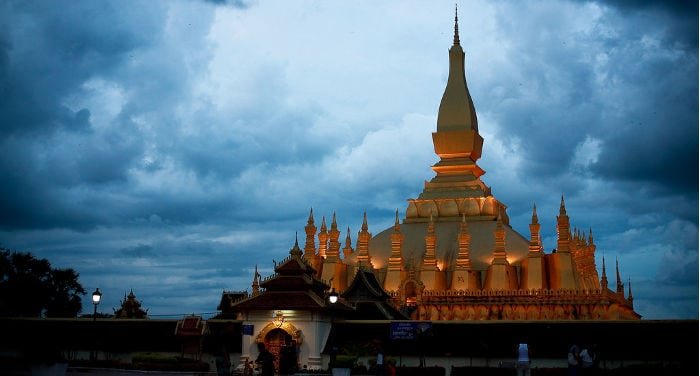
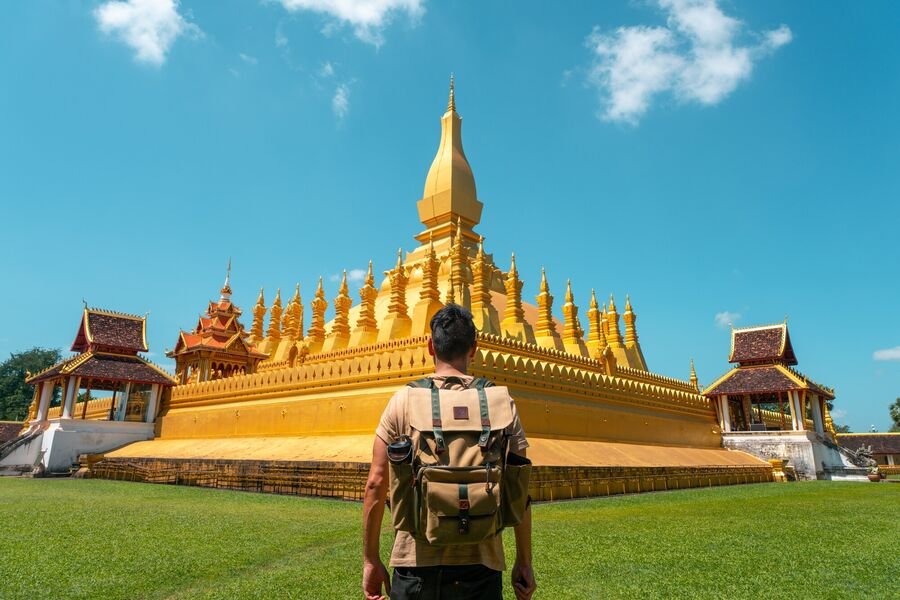
Pha That Luang – the national symbol of Laos.
Called the Vientiane Great Stupa, Pha That Luang is Laos’ most important cultural monument, both for its Buddhist significance, and as a symbol of its powerful ancient royal kingdoms. Visitors can wander the surrounding, admire the massive reclining golden Buddha or simply relax in the peaceful gardens. In mid-November of every year, Boun That Luang – Laos’s most important Buddhist festival is held here, attracting thousands of Buddhist followers to come, celebrate and pay their respects.

laos vientiane Haw Phra Kaew
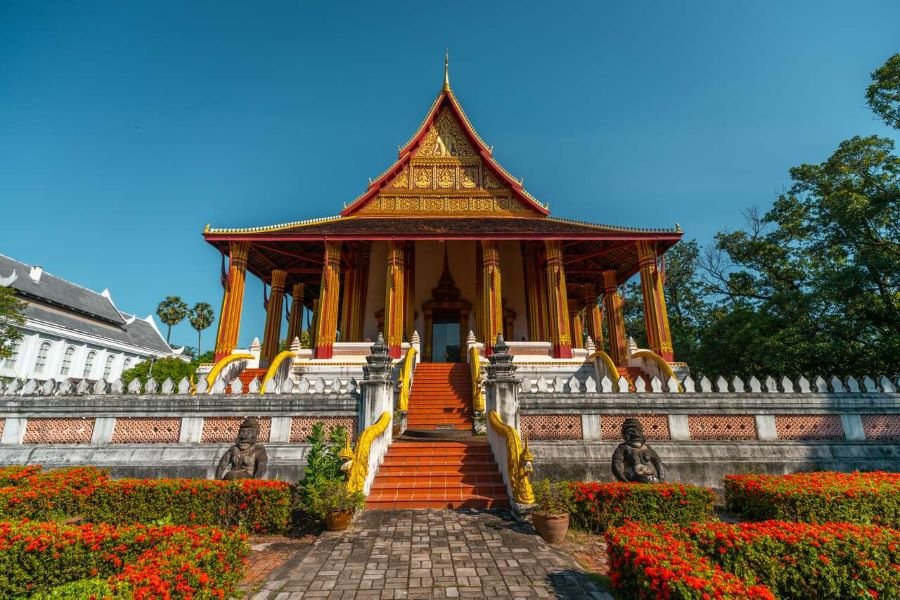
Beautiful Architecture at Haw Phra Kaew Temple, Vientiane
Also known as Ho Prakeo and Hor Pha Keo, Haw Phra Kaew shares a name with the one that sits in the Grand Palace of Bangkok. This temple was once the home to the sacred Emerald Buddha before it was snatched from the Siam Kingdom. Today, Haw Phra Kaew is still revered for its history and rich cultural significance and plays as a museum holding works of art representing the religious beauty of Laotians.

laos vientiane Wat Si Saket
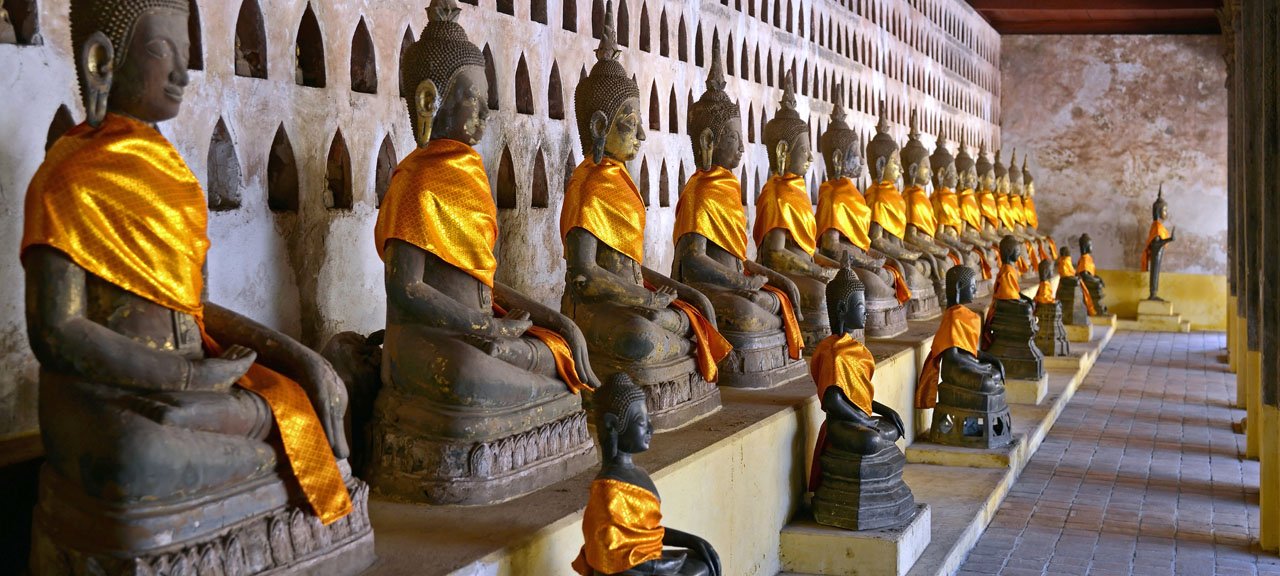
Wat Si Saket – A Historical Witness of Vientiane
Just cross the street from Haw Phre Kaew stands Wat Si Saket which was the only temple to survive the attack of the Siamese. This is home to a collection of more than 6,000 Buddha sculptures displayed around the temple which can take you even a whole day to visit.

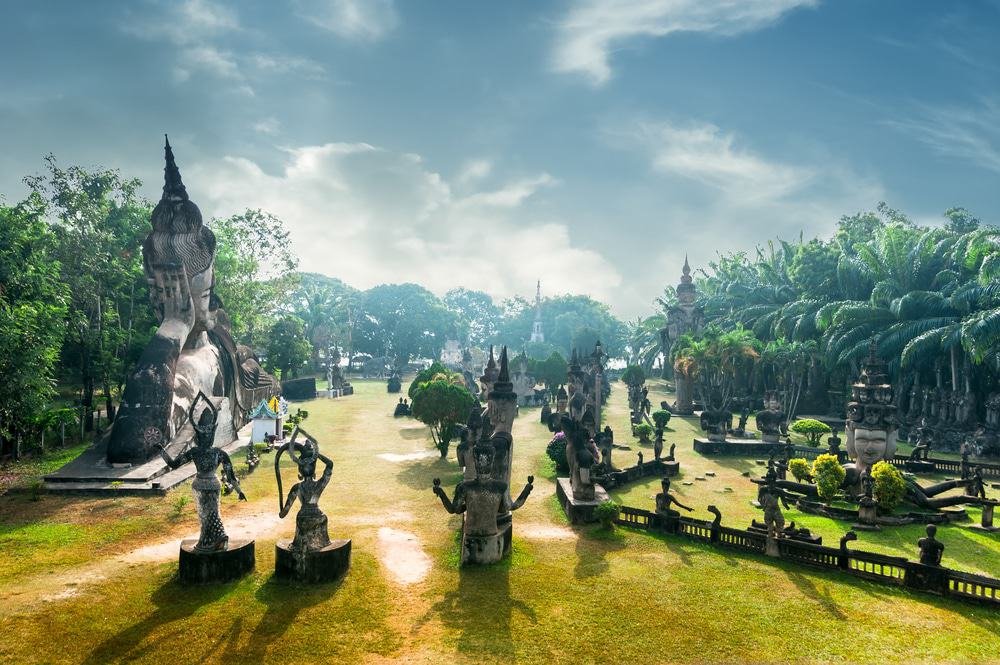
Buddha Park vientiane laos
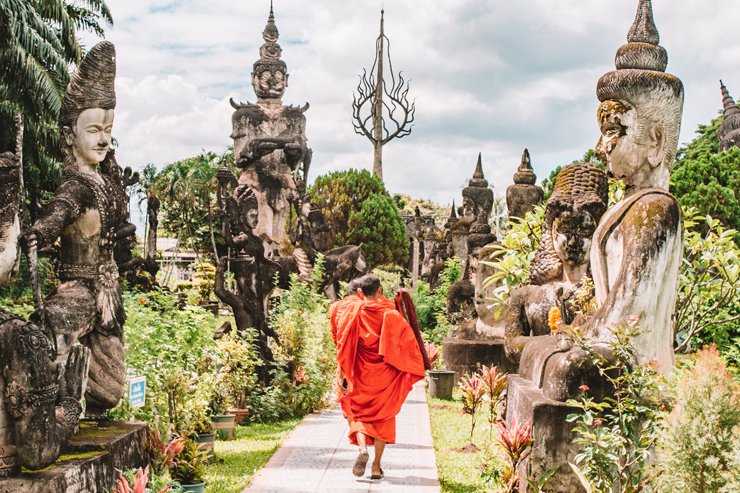
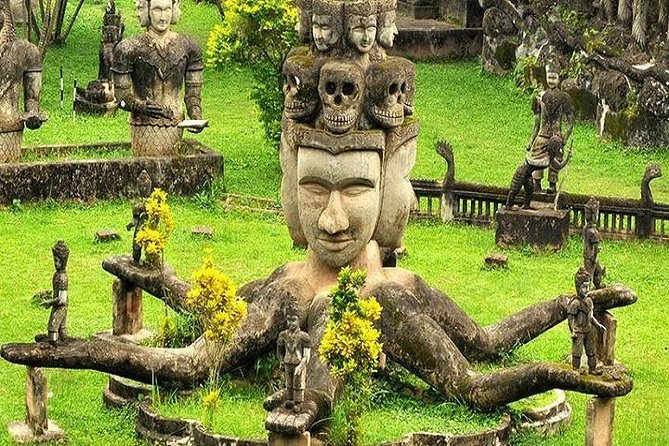
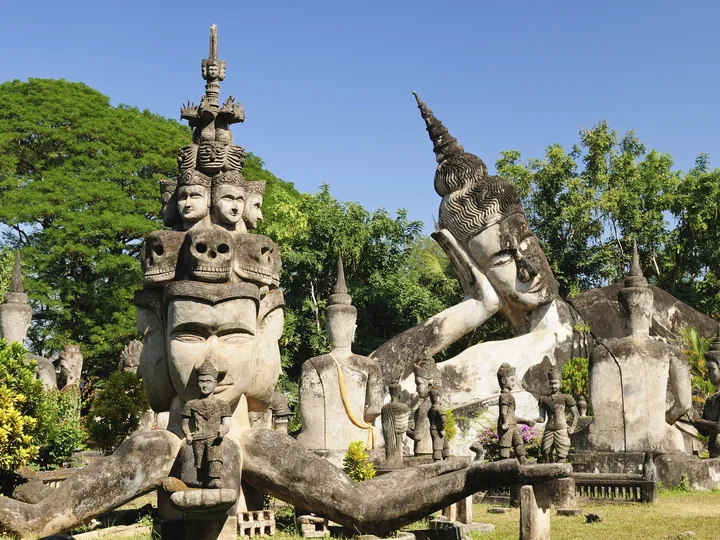
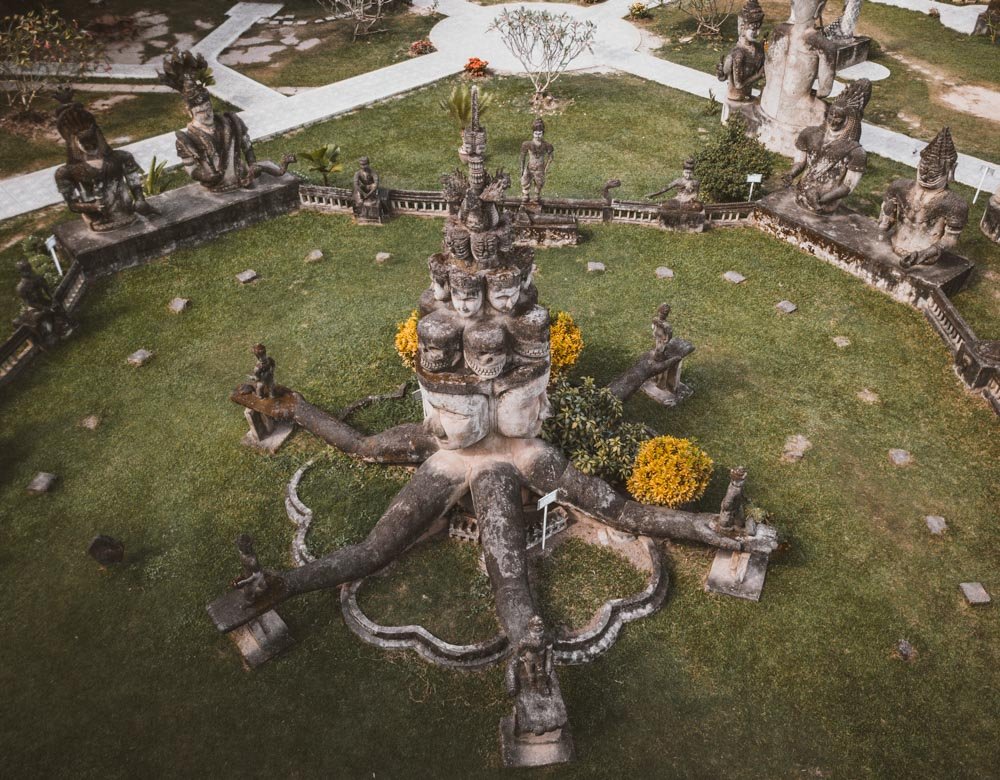
Locals refer to the Buddha Park as Xieng Khuan, which means ‘Spirit City.’, is an open-air sculpture park with giant sculptures of Buddha and Hindu deities.
Also known as Buddha Park, Xieng Khuan is located about 25 kilometers from the center of Vientiane. This is a very large garden with more than 200 Buddhist statues and Hindu deities that are crafted as unique works of art. The most prominent attraction of the garden is a giant reclining Buddha statue measuring 40 meters long.
The above is definitely not all best of Vientiane but you can find out many other interesting activities to explore this beautiful capital and its surrounding. Let’s see the list of unmissable things to do in Vientiane here  and get your fun experience. 

Where to Stay in Vientiane?
As one of the main hubs of the country, Vientiane offers plenty of places to stay from boutique family-run hotels to large, modern properties with full of charm and friendly welcome that will make your stay as comfortable and easy as possible. The hotel category is estimated by amenities and its price varying between 40$ – 250$ per room per night from 3-5star standards. There is also much difference in hotel rates by season (low-high peak).

Show more
Home Travel guide Bike Tour Across Southeast Asia Vientiane Cycling Tours
Pedaling for the Planet: The Definitive Guide to a Sustainable City Tour Vientiane
At Golden Cycling Tours, sustainability is not just a buzzword; it is the core of our business model. Our Vientiane Bike Tours are designed to minimize the carbon footprint of every traveler while providing an intimate connection to the city's heritage. In this guide, we will explore why choosing a bicycle or e-bike is the most responsible way to see the capital and how our Laos Cycling Tours are leading the way for eco-friendly travel in Indochina
Flavors of the Capital: The Ultimate Local Market E-Bike Tour Vientiane Guide
At Golden Cycling Tours, we believe that food and commerce are the best entry points into any culture. Our Vientiane Bike Tours are carefully designed to bypass the tourist traps and take you to the authentic hubs where Vientiane residents shop. In this guide, we’ll explore the magic of the capital’s markets and why our Laos Cycling Tours are the gold standard for cultural immersion.
Efficiency Meets Adventure: Discovering the Capital on a Half-Day Vientiane E-Bike Tour
At Golden Cycling Tours, we have mastered the art of the "compact experience." Our Vientiane Bike Tours are designed for maximum impact, ensuring you don't miss a single golden spire or hidden alleyway. In this guide, we will outline the perfect half-day itinerary and explain why our Laos Cycling Tours are the premier choice for busy explorers.
Discovering Vientiane on Two Wheels: The Ultimate Full-Day Electric Bike Tour Guide
Vientiane, the serene capital of Laos, is a city that defies the typical frantic energy of Southeast Asian metropolises. It is a place where golden stupas glint under the tropical sun, French colonial architecture whispers stories of the past, and the mighty Mekong River sets a tranquil pace for daily life. While many travelers opt for tuk-tuks or air-conditioned vans
Beyond the Stupas: Why a Private Vientiane E-Bike Tour is the Ultimate Way to Experience the Lao Capital
At Golden Cycling Tours, we understand that luxury is defined by flexibility, exclusivity, and authentic connection. Our private tours are designed to move at your pace, allowing you to linger over a cup of Lao coffee or dive deeper into the history of a hidden alleyway. With the silent power of an electric bike, you don't just see Vientiane—breathe it, feel it, and understand it.
Rolling Through the Land of a Million Elephants: The Rise of Small Group Electric Bike Laos Tours
At Golden Cycling Tours, we have pioneered a way to explore this stunning landscape that combines the social atmosphere of a small group with the effortless power of modern e-bike technology. Whether you are traversing the misty hills of the north or the riverine plains of the south, our tours ensure you are always in the heart of the action without the exhaustion of traditional cycling
Vientiane Without the Sweat: The Ultimate Easy E-Bike Tour for Beginners
At Golden Cycling Tours, we believe that everyone should have the opportunity to feel the wind in their hair and the spirit of Laos in their heart, regardless of their fitness level. Our electric bikes take the "work" out of "workout," allowing you to glide through the city’s history with a smile on your face.
Age is Just a Number: The Ultimate Guide to Senior-Friendly Electric Bike Tours in Laos
At Golden Cycling Tours, we specialize in creating experiences that prioritize comfort, safety, and meaningful connection. We believe that retirement is the perfect time for exploration, and our electric bikes provide the "gentle boost" needed to turn a challenging journey into a delightful breeze.
Navigating the City of Sandalwood: The Best Vientiane E-Bike Tour for First-Time Visitors
At Golden Cycling Tours, we specialize in introducing travelers to the authentic Laos. Our electric bikes remove the physical barriers of heat and distance, allowing you to focus on the storytelling, the spirituality, and the smiles that make Vientiane unique.
The Pulse of the Capital: Why a Guided Electric Bike Tour in Vientiane Laos is a Must-Do
At Golden Cycling Tours, we believe that a guide is more than just a navigator—they are a storyteller, a cultural bridge, and a local friend. When you combine local expertise with the effortless power of an e-bike, the city opens up in ways you never imagined. From the golden spires of the national monument to the hidden noodle shops in dusty alleys, our tours offer the most comprehensive and comfortable way to experience Vientiane
Golden Hour on Two Wheels: The Magic of a Vientiane City and Mekong Sunset E-Bike Tour
At Golden Cycling Tours, we have curated an evening experience that combines the historical grandeur of the city center with the vibrant, soul-stirring energy of the riverfront at dusk. With the effortless assistance of our premium electric bikes, you can glide through the streets as they come alive with the evening’s activities, ending your day with one of Southeast Asia’s most iconic sunsets
Pedaling for a Greener Tomorrow: The Ultimate Eco-Friendly Cycling Tour in Laos Capital
At Golden Cycling Tours, we believe that the best way to preserve the beauty of Laos is to experience it without leaving a trace. Our electric bike tours offer a silent, zero-emission alternative to noisy tuk-tuks and gasoline-powered vehicles, allowing the natural sounds of Vientiane—from the morning chants of monks to the rustle of riverside palms—to take center stage
Creating Lasting Memories: The Ultimate Family-Friendly E-Bike Tour in Vientiane
Traveling with family is a journey of shared discovery, but as any parent knows, it comes with its own set of challenges—especially in the tropical climate of Southeast Asia. When visiting the Lao capital, the question is how to keep the kids engaged, the teenagers excited, and the parents relaxed while exploring the city's rich heritage. The answer is a family-friendly e-bike tour Vientiane.

WhatsApp